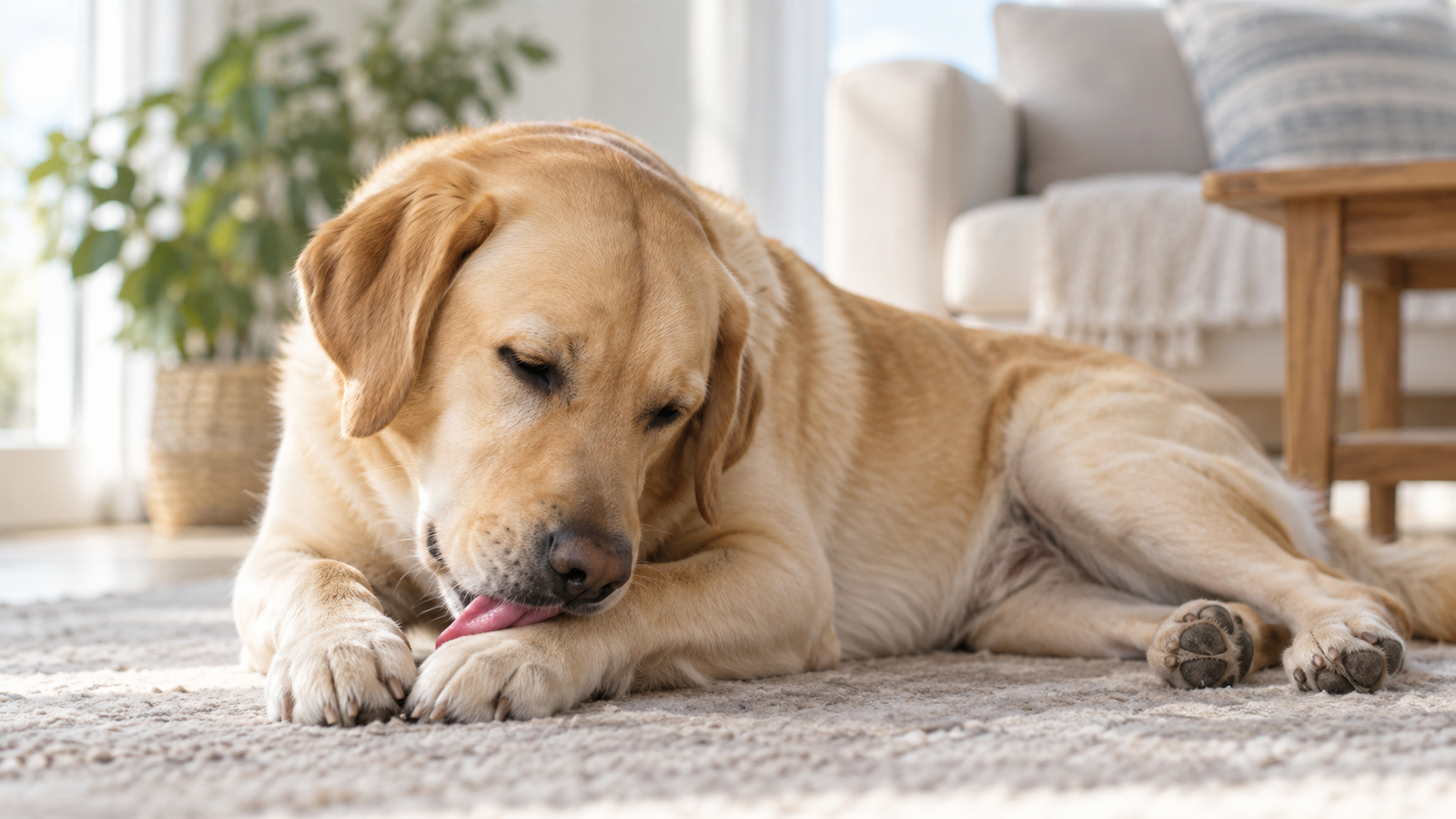

A bit of paw licking is normal. Dogs use their tongues to clean themselves, much like cats do. But frequent or intense licking often points to itchiness, irritation, allergies, pain or another problem that needs attention.
In short: allergies are one of the most common reasons dogs lick their paws, but irritants, injuries, infections and stress can all cause it too. Check the paws closely, and see your vet if the licking is constant, affects one paw more than the others, or comes with redness, swelling, sores or limping.
Common reasons dogs lick their paws
| Possible cause | Clues to look for |
|---|---|
| Allergies | Licking several paws, often along with itchy ears, face or belly |
| Skin irritation | Redness after walks, contact with chemicals, salt or hot ground |
| Injury or pain | Focus on one paw, limping, or something stuck in the paw |
| Infection | Musty or yeasty smell, greasy residue, discharge or swelling between the toes |
| Boredom or stress | Licking when left alone, bored or anxious, with no obvious skin problem |
Allergies
Environmental allergies (to things like pollen, dust mites or grasses) and food allergies can both make a dog’s paws itchy. Allergic dogs often lick several paws rather than just one, and may also scratch their ears, rub their face or chew at their belly. On dogs with light-colored fur, constant licking can leave reddish-brown staining on the paws from saliva.
Skin irritation
Grass, floor cleaners, lawn chemicals, winter road salt and de-icers can all irritate the skin between the toes and on the paw pads. Hot pavement can burn pads too. A quick test: if you can’t comfortably hold the back of your hand on the ground for several seconds, it’s too hot for your dog’s paws.
Injury or pain
A small cut, a cracked pad, a splinter, a grass seed, a thorn or a sore or overgrown nail can make a dog fixate on one paw. Some dogs also lick over painful joints, so licking can occasionally be a sign of arthritis or another source of pain rather than a paw problem.
Infection or parasites
Yeast and bacterial infections often develop in paws that stay warm and damp from licking. A musty or yeasty smell, greasy brown residue or swelling between the toes are common signs. Fleas and mites can also cause itching that shows up as paw licking.
Boredom or stress
Some dogs lick their paws when they’re anxious, under-stimulated or trying to settle themselves. This is more likely if the licking happens mainly when the dog is alone, bored or in a stressful situation, and the paws look healthy.
How to check your dog’s paws
Look closely at each paw in good light, gently spreading the toes. Check for:
- Redness or swelling
- Cuts, cracks or broken skin
- Damaged, torn or overgrown nails
- Foreign objects such as thorns, burrs or grass seeds
- Lumps or bumps between the toes
- An unusual smell or discharge
Compare all four paws. If only one looks different, an injury or something stuck in the paw is more likely. If several look red or itchy, allergies or irritation are more likely.
What you can do at home
- Rinse or wipe your dog’s paws after walks, especially after contact with salt, chemicals or pollen, then dry them well, including between the toes.
- Keep nails trimmed and the fur between the pads tidy.
- Avoid hot pavement in summer and icy, salted paths in winter where possible.
- Give plenty of exercise and mental enrichment if boredom seems to be the cause.
Don’t put human creams, ointments or medications on your dog’s paws unless your vet recommends them. Dogs lick them off, and some can be harmful if swallowed.
When to contact your vet
Book a vet visit if:
- The licking is persistent or keeps coming back
- It’s causing hair loss, sores or broken skin
- There’s swelling, bleeding, discharge or a bad smell
- Your dog is limping or reacts when you touch the paw
- You can see something embedded that you can’t easily and safely remove
Don’t ignore constant licking
Repeated licking keeps the skin damp and damaged, which can lead to infections and make the original problem worse. Over time, some dogs develop stubborn sores from licking the same spot. Finding and treating the underlying cause matters far more than just stopping the behavior. A cone or a protective boot can help short term, but it won’t fix the reason your dog is licking.
Regular grooming can also help you notice skin changes early. Our guide on how often you should bathe a dog covers bathing and drying tips.
Frequently asked questions
Why is my dog constantly licking its paws?
Common causes include allergies, skin irritation, injuries, yeast or bacterial infections, parasites, pain, boredom and stress. Allergies are among the most frequent reasons. If the licking is constant, it’s worth having your vet find the cause.
Is it normal for dogs to lick their paws?
Occasional licking to clean the paws is normal. Frequent, intense or long-lasting licking, or licking that causes redness, hair loss or sores, is not normal and usually has an underlying cause.
Why does my dog lick only one paw?
Licking just one paw often points to a local problem, such as a cut, cracked pad, thorn, grass seed, torn nail or swelling between the toes. Check the paw carefully and see your vet if you find a wound, swelling or limping.
Why do my dog’s paws smell like corn chips?
A mild smell is normal, but a strong musty or yeasty odor, especially with redness, greasy residue or licking, can be a sign of a yeast infection. Your vet can check and recommend treatment.