
How long your dog can comfortably stay home alone depends on its age, health, training and personality. Puppies, senior dogs and dogs with medical or behavioral needs usually need company or a break much more often than healthy adult dogs.
In short: many animal welfare organizations advise not regularly leaving an adult dog alone for more than about four hours at a time. Puppies need breaks far more often, and senior dogs may too. Build up alone time gradually, and get help if your dog shows signs of distress.
| Life stage | General guide |
|---|---|
| Young puppies | Very short periods only. A common rule of thumb is that a puppy can hold its bladder for about one hour per month of age, up to a limit. |
| Healthy adult dogs | Often advised as no more than about four hours at a time on a regular basis, once they’re trained and comfortable being alone. |
| Senior dogs or dogs with health needs | Often shorter periods, depending on bladder control, mobility and medical needs. |
These are general guidelines, and advice varies between organizations. Your dog’s individual needs matter more than any single number.
How long can adult dogs be left alone?
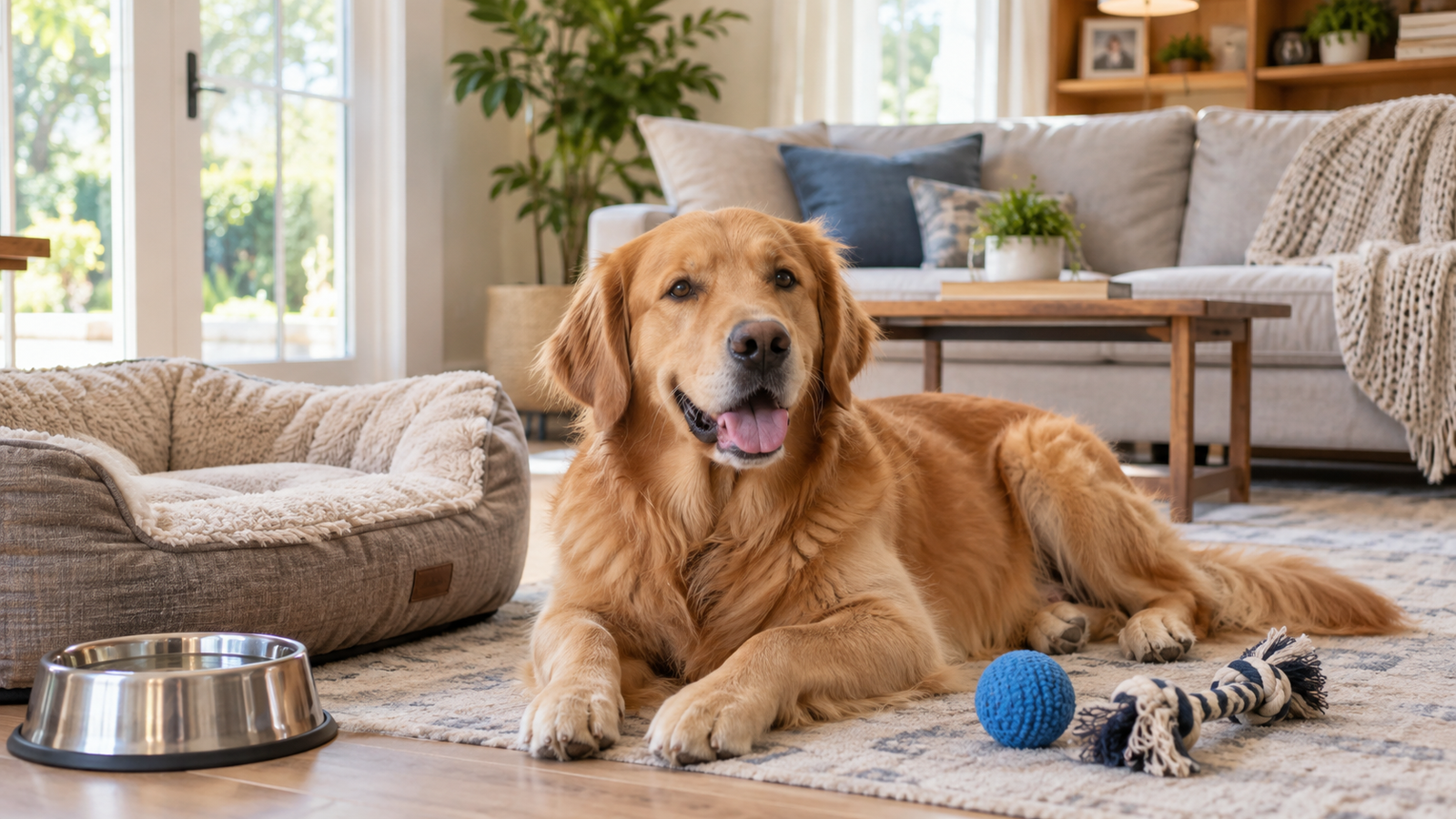
Many healthy adult dogs can cope with a few hours alone, as long as they’ve been trained to do it gradually and have water, a comfortable place to rest and something safe to keep them occupied. Dogs are social animals, though, and regularly leaving them alone for most of the day can lead to boredom, stress and toileting accidents.
If you work long hours, a dog walker, a trusted neighbor, a friend or doggy daycare can break up the day and make a big difference.
Puppies need much more frequent breaks
Puppies have small bladders, lots of energy and very little experience of being on their own. They need frequent toilet breaks, several meals a day and plenty of supervision. The “one hour per month of age” rule gives a rough idea of how long a puppy can hold on. A three-month-old puppy may manage around three hours, while a very young puppy needs to go out much more often.
Being alone is a skill puppies need to learn. Start with just a few minutes while you’re in another room, and build up slowly.
Senior dogs may need extra care
Older dogs often need shorter periods alone, especially if they have mobility problems, a medical condition, reduced bladder control or confusion linked to aging. Some also become more anxious when left as they get older. Talk to your vet if your senior dog’s needs seem to be changing.
Signs your dog is struggling when left alone
- Destroying things, especially around doors and windows
- Persistent barking, whining or howling
- Toileting indoors when it’s otherwise house trained
- Pacing, restlessness or not settling
- Drooling, heavy panting or trying to escape
- Signs of distress as you get ready to leave
If you’re not sure how your dog behaves while you’re out, a simple pet camera or a recording from your phone can show you.
These signs can point to separation-related problems, which are a form of real distress, not bad behavior. Never punish your dog for things that happened while you were out, as it makes anxiety worse. Speak to your vet, who can rule out medical causes and refer you to a qualified behaviorist if needed.
How to make alone time easier
- Give your dog a good walk or play session before you leave.
- Make sure your dog has had a chance to go to the toilet.
- Leave fresh water and a comfortable bed in a safe, dog-proofed area.
- Offer a food puzzle or a long-lasting chew that’s safe to leave with your dog.
- Keep departures and returns calm and low-key.
- Build up time alone gradually rather than jumping to long absences.
Every dog is different
There’s no single number that suits every dog. A realistic routine takes into account your dog’s age, health, confidence and daily needs. If your schedule regularly leaves your dog alone for long stretches, plan for extra help rather than hoping it will cope.
If you have a puppy, our guide on how to socialize a puppy safely can help it grow into a calm, confident adult dog.
Frequently asked questions
How long can a dog be left alone?
It depends on the dog. Many animal welfare organizations advise not regularly leaving an adult dog alone for more than about four hours at a time. Puppies need breaks much more often, and senior dogs or dogs with health problems may need shorter periods too.
How long can a puppy be left alone?
A common rule of thumb is about one hour per month of age for bladder control, so a three-month-old puppy may manage around three hours. Very young puppies need much shorter periods, and alone time should be built up gradually.
Is it okay to leave a dog alone while I work?
A full working day is usually too long for most dogs to be alone regularly. A dog walker, a neighbor, a friend or doggy daycare can break up the day so your dog gets company, exercise and a toilet break.
What are signs of separation anxiety in dogs?
Common signs include destructive behavior near doors or windows, persistent barking or howling, toileting indoors, pacing, drooling and panic when left. If you see these, speak to your vet, who can refer you to a qualified behaviorist.