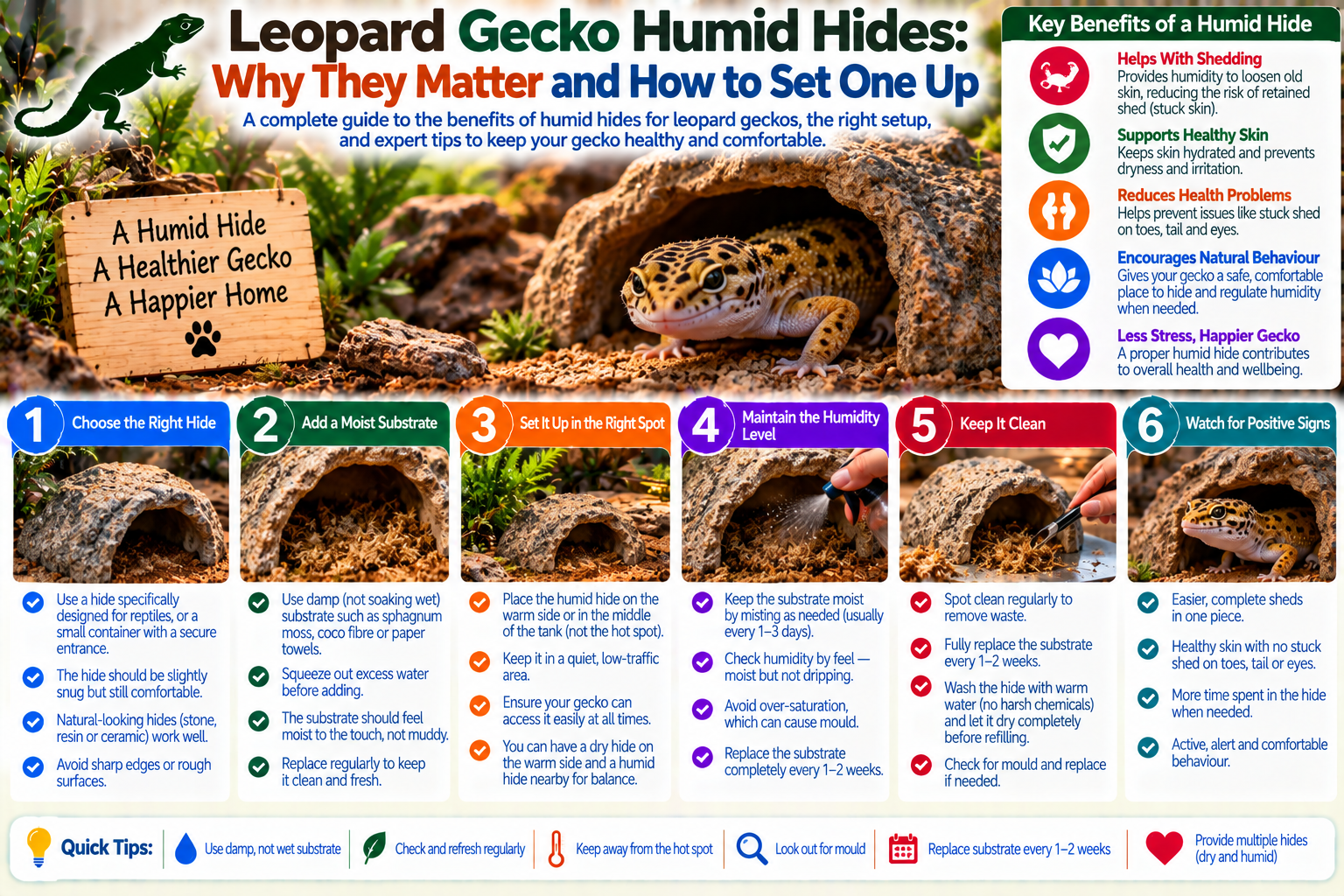

A leopard gecko needs access to a moist refuge during shedding, even though the wider enclosure should not stay wet. A humid hide creates that local choice. It is a simple piece of equipment, but placement and upkeep matter.
Provide more than one hide
Keep a warm hide and a cool hide as part of the normal temperature gradient. Add a humid hide where your gecko can reach it without abandoning the rest of its environment. It should be stable, easy to enter and large enough for the animal to turn around.
Check the hide and the shed
A humid hide should offer a damp retreat without making the whole enclosure wet.
| What you notice | Try this | Check next |
|---|---|---|
| Hide dries quickly | Recheck moisture and placement | Material remains lightly damp |
| Skin stays on toes or eyes | Contact a reptile vet | No injury from forced removal |
Choose a suitable lining
Use a safe, moisture-holding material recommended for leopard geckos and follow current husbandry guidance. It should be damp, not dripping. Some loose materials can be swallowed or stick to a gecko during feeding, so keep insects and food away from the hide.
Check conditions with instruments
Use reliable thermometers and a hygrometer to monitor the enclosure rather than guessing from touch. The humid hide offers localized moisture; soaking the whole tank can create a different problem. Reptile husbandry advice evolves, so check species-specific guidance and your exotic-animal veterinarian.
Keep it clean
Inspect the lining routinely and replace it when soiled or moldy. Wash and dry the hide safely before returning it. Observe whether the gecko uses the hide, but do not force it inside. A secure enclosure still needs suitable heat, UVB and nutrition.
Get help with a difficult shed
Stuck shed around toes or eyes can cause harm. Do not pull firmly at attached skin or apply household products without veterinary advice. An experienced reptile veterinarian can check the gecko and the underlying setup.
This guide complements our article on leopard gecko shedding problems. ReptiFiles explains enclosure humidity and humid hides here: ReptiFiles guide.
Keep the hide damp, not soggy
Check the material daily: it should feel lightly damp without standing water or mold. Replace soiled material and keep the hide accessible during shedding. Retained skin around toes or eyes can need reptile-veterinary attention; see our shedding problems guide.
A small daily maintenance habit
Lift the hide briefly when your gecko is elsewhere and check the material for dryness, waste and mold. Re-dampen or replace it as needed, then put the entrance back where the animal can find it. The hide should remain usable throughout the shedding period, not just on the day you notice dull skin.
After a shed, look at the toes and the area around the eyes without trying to peel attached skin. A reptile veterinarian can help if shed is retained or the gecko seems uncomfortable.
Frequently asked questions
Should the whole tank be humid?
The hide provides a localized humid retreat while the rest of the enclosure follows the species’ needs.
Can I pull off retained shed?
Do not tug at attached skin, especially around toes or eyes. Ask a reptile veterinarian for guidance.