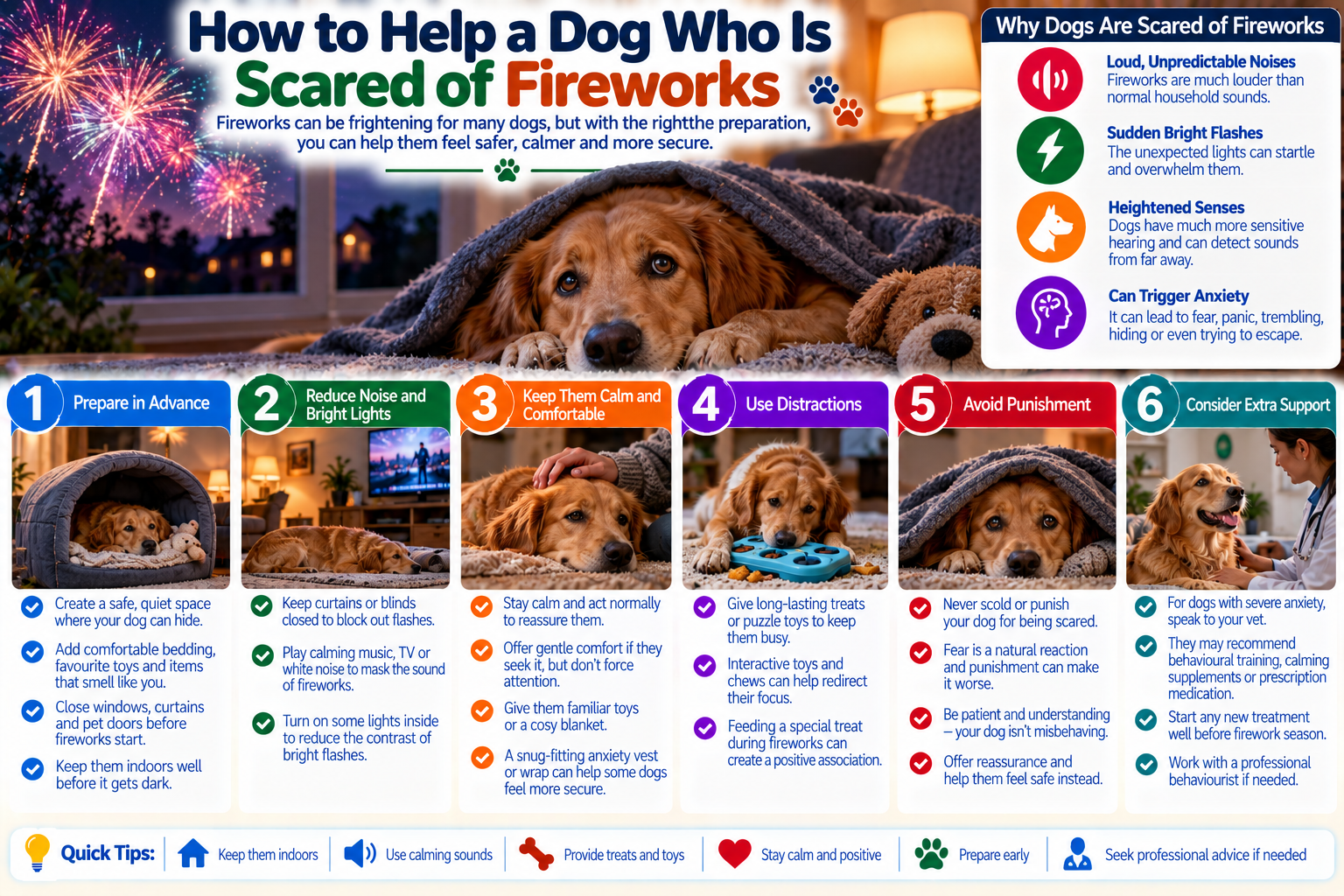

When your dog is scared of fireworks, the most useful preparation happens before the first bang. A frightened dog may shake, hide, pace, bark, refuse food, or try to escape. The aim is to reduce distress and keep them safe, not to make them endure the noise until they stop reacting.
Quick answer: Prepare a quiet retreat, walk before fireworks begin, secure exits, and stay available for reassurance. Let your dog choose whether to hide or sit near you. If previous fireworks caused significant fear, speak with your vet well ahead of the next event.
Plan around your dog’s previous response
Make a brief record of the last noisy event. Note the sounds, your dog’s behaviour, how long recovery took, and what seemed to help. Video taken safely can help your vet understand the response, but do not delay comfort or transport to record it.
Ask your vet about a tailored plan if your dog panicked, damaged doors, hurt themselves, or remained distressed long afterward. Medication may be appropriate for some dogs alongside environmental and behavioural support. Never share another pet’s prescription or improvise with human sedatives.
Build a retreat before you need it
Choose a familiar interior space where sound and flashes are reduced. Add comfortable bedding and make it available during ordinary quiet days. An open crate can work for a dog who already loves it; suddenly shutting an untrained dog inside may worsen panic. Ensure ventilation and a comfortable temperature.
Test your arrangements while the house is calm. Can your dog enter and leave easily? Is the water nearby? Can you close curtains without blocking the dog’s exit? A retreat beside your usual evening chair may suit a dog who seeks company better than a remote room.
| When | Practical priorities |
|---|---|
| Well before the event | Discuss severe fear with your vet; introduce the retreat; check identification details |
| Earlier that day | Walk in daylight where possible; inspect gates and doors; arrange company |
| Before noise starts | Bring the dog indoors, close curtains, provide water, start familiar background sound |
| During fireworks | Stay calm, allow hiding or contact, supervise necessary toilet trips on a lead |
| Afterward | Allow recovery and record what worked for the next veterinary discussion |
Support your dog during the noise
Use television, music, or another familiar sound at a comfortable volume; trying to drown out explosions with loud speakers can add another stressor. Offer a familiar food toy only if your dog is willing to eat and it is safe for them. Refusing a favourite reward is a reason to reduce demands, not to push harder.
Comfort is appropriate when your dog seeks it. Speak gently or sit nearby without restraining them. Do not pull a hiding dog out for photographs, cuddles, or exposure to the window. Let them choose a safe coping position.
For a toilet break, use secure walking equipment and a lead even in a normally secure garden. Check the immediate surroundings first and keep the trip brief. If your dog is too frightened to go out, ask your vet or behaviour professional about suitable planning for future events.
Why last-minute sound training is different
Playing firework recordings loudly on the day is not a treatment. Gradual sound work starts at a level that causes no fearful response, paired with positive experiences, and progresses according to the dog. Real fireworks also include vibration, flashes, and unpredictable timing, so recordings alone may not reproduce the problem.
A qualified reward-based professional can help design that process between events. Stop and seek advice if practice causes tension, hiding, or avoidance. Progress should be measured by comfort, not speaker volume.
Check unexpected or worsening fear
New noise sensitivity can accompany pain or other health changes, especially when a dog previously coped well. Arrange a veterinary assessment rather than assuming age or stubbornness explains it.
Urgent help: Contact an emergency vet if your dog injures themselves, collapses, has difficulty breathing, or remains in severe distress. Keep them away from escape routes while arranging assistance.
If fear also appears when you leave, read separation anxiety in dogs. For a comfortable indoor retreat, build on gradual positive crate training where appropriate.
Frequently asked questions
Will comforting my dog reinforce fear?
You can offer calm reassurance when your dog wants contact. Avoid forcing interaction or turning the situation into a noisy, exciting event.
Should I take my dog to a fireworks display?
No. Keep them in a secure, familiar setting away from the display and arrange appropriate company and support.
Are calming supplements enough?
Their suitability and evidence vary. Significant fear deserves a veterinary plan; do not delay effective support while trying multiple products.