
A new bag of food can look like a simple swap, but changes in ingredients, fat, fibre, and calories can affect digestion and portion size. A planned transition makes it easier to see how the new diet suits your dog. It also prevents feeding the same scoop of a much more energy-dense food.
Quick answer: For a healthy dog, introduce a new food gradually over roughly one to two weeks, adjusting to tolerance. Start with a small proportion and increase it in stages. Medical diets, ongoing digestive signs, and growing puppies need individual veterinary guidance.
Decide why you are changing diets
A useful reason might be a life-stage change, availability, or a veterinary recommendation. Words such as “premium” and “natural” do not establish nutritional suitability. Choose a complete diet appropriate for your dog’s life stage and health. Ask the manufacturer or your veterinary team when the label is unclear.
For a suspected food allergy, a casual brand swap is not the same as a veterinary elimination trial. Treats, chews, and flavoured medicines can affect a prescribed trial. If the current food is working, frequent changes to chase marketing claims may make feeding harder to assess.
Prepare before the old food runs out
Keep enough familiar food for a gradual transition. Record the old and new feeding amounts, calories if listed, meal schedule, and normal stool pattern. Use a kitchen scale where practical instead of estimating by eye.
Change one major variable at a time. Starting a new diet, several treats, and a supplement together makes it difficult to identify the reason for an upset. Continue access to fresh water.
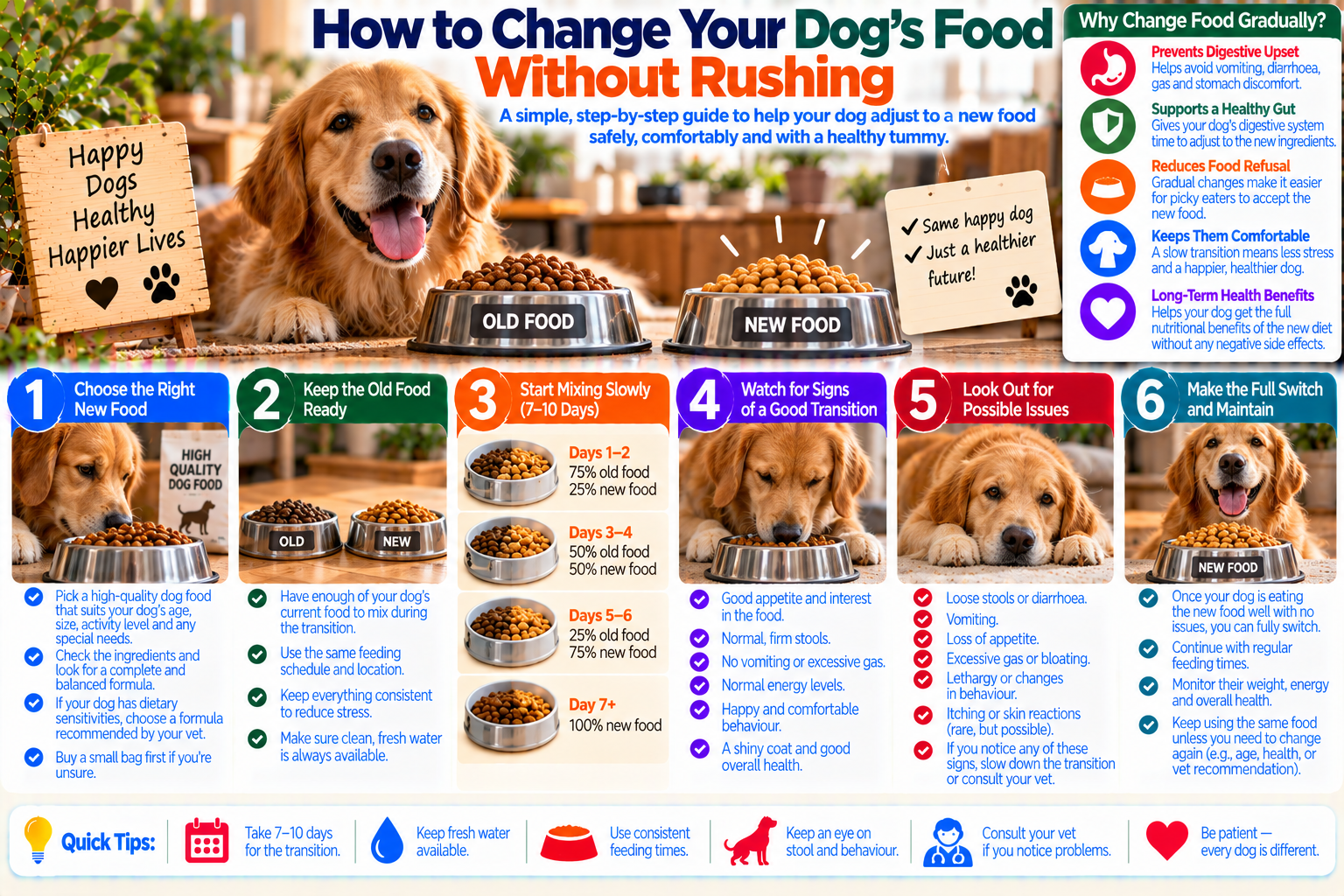
| Stage | Old diet | New diet |
|---|---|---|
| First stage | About three quarters | About one quarter |
| Middle stage | About half | About half |
| Later stage | About one quarter | About three quarters |
| Complete | None | All new diet |
Each stage may last several days; sensitive dogs may need longer. Advance only when your dog is comfortable. These proportions describe the share of the planned ration, not extra food added on top. Different foods have different calorie densities, so ask for help calculating mixed portions when the difference is substantial.
Keep a useful food-and-stool note
An entry might read: “Half new ration today; normal appetite; slightly softer but formed stool; no vomiting.” Record meaningful changes and accidental extras. A stolen sandwich can confuse an otherwise careful transition.
If mild digestive changes appear, do not automatically increase the new proportion. Ask your vet whether to pause, slow down, or use another plan. Repeatedly switching foods after every soft stool makes the pattern harder to understand. Do not withhold food from a puppy or medically vulnerable dog without advice.
Know when the problem needs assessment
Vomiting, diarrhoea, poor appetite, and discomfort have many possible causes. Seek prompt veterinary advice for repeated vomiting, blood, marked lethargy, abdominal pain, dehydration concerns, or symptoms in a puppy or vulnerable dog. Suspected toxin ingestion or a swollen painful abdomen with unsuccessful retching needs urgent help.
Prescription diets: Follow the treating vet’s instructions. Some conditions require a different pace, and adding familiar food may undermine a diet intended for a specific medical purpose.
Review portions after the switch
Check body condition and weight over the following weeks, not just whether the bowl is empty. Keep packaging and batch details while assessing tolerance. Adjust portions with your veterinary team rather than assuming the amount on the bag suits every dog.
See our guides to meal frequency by age and checking body condition.
Frequently asked questions
Can I switch food in one day?
A gradual change is usually easier to monitor. If a recall, medical problem, or lack of food makes an immediate change necessary, ask your vet for a practical plan.
Can I mix wet and dry food by equal scoop sizes?
No. Water content and calories differ. Work from the planned ration or veterinary calorie guidance rather than matching volume.
Does diarrhoea prove the new food is unsuitable?
No. Timing does not establish the cause. Rapid change, unrelated illness, parasites, or extras may be involved; significant or persistent symptoms need assessment.