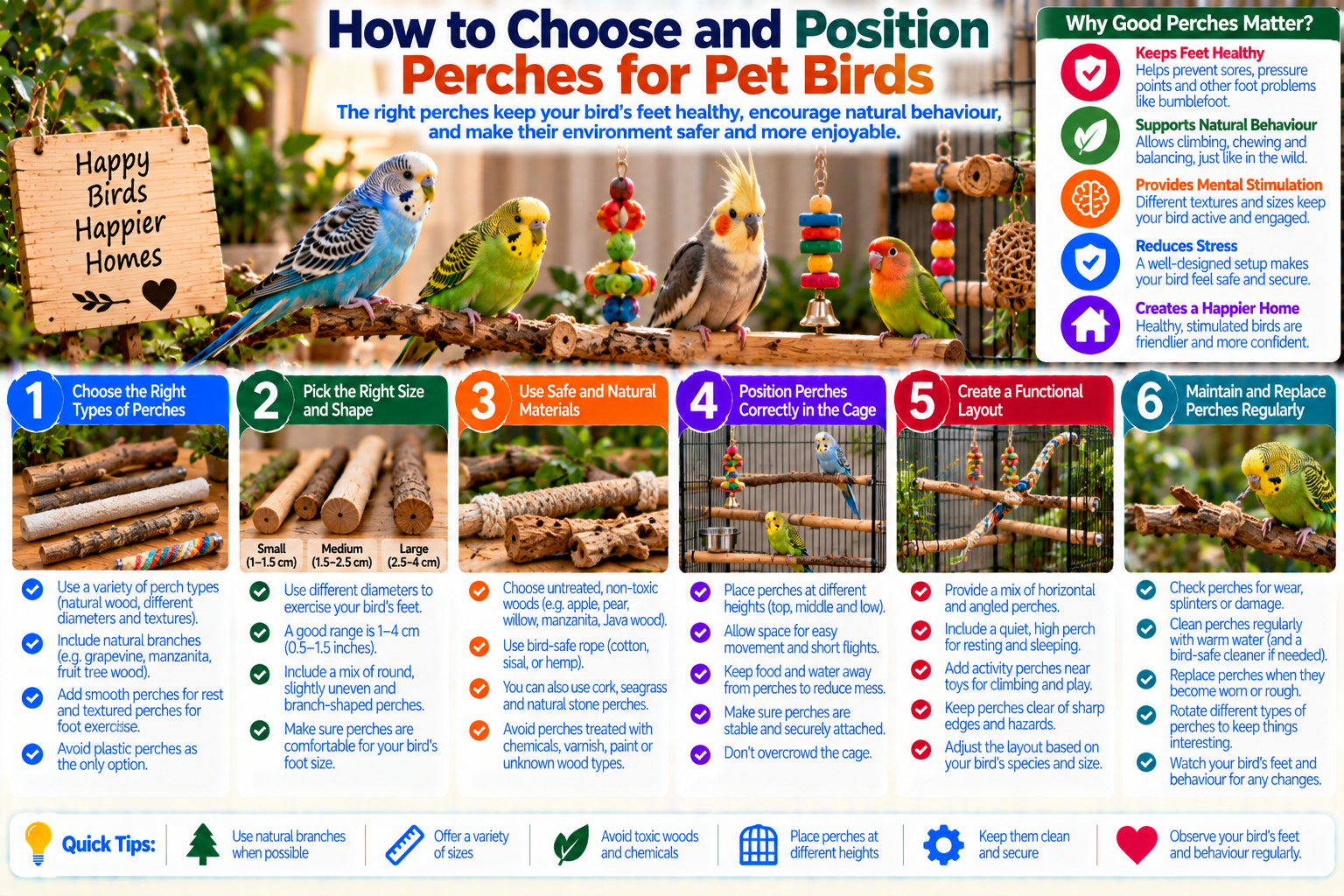

A perch is a surface your bird may use for many hours, so its shape and position matter. A cage filled with identical smooth dowels offers little variety. Choosing perches involves your bird’s size, mobility, chewing habits, and the routes they use between food, rest, and activity.
Quick answer: Provide several suitable perch shapes and diameters, often including bird-safe natural wood, while leaving room to move and stretch. Avoid sandpaper covers and damaged materials. Position perches so droppings do not fall into food or water, and check feet and fixings regularly.
Choose variety that fits the individual bird
The foot should grip comfortably rather than remain stretched flat or wrap awkwardly around a uniformly tiny surface. Different diameters and textures allow changes in foot position. There is no single diameter suitable for every species or every perch in a cage.
Birds with arthritis, missing toes, weakness, or balance problems may need lower perches, platforms, or other adjustments planned with an avian vet. A standard layout for an agile young bird may be unsuitable for a senior companion.
Understand material trade-offs
Natural wood can offer useful variation, but the species, surface treatment, and cleanliness matter. Buy from a reputable bird supplier or seek reliable species-specific advice before using a branch. Avoid unknown wood, pesticides, paint, toxic plants, and unsafe metal fittings.
| Material | Potential use | What to check |
|---|---|---|
| Bird-safe natural wood | Varied grip and chewing interest | Known safe source, no sharp damage or contamination |
| Rope | Flexible positioning for suitable birds | Fraying, loose loops, chewing and ingestion risk |
| Platform | Alternative resting position | Cleanliness, secure fixing, individual mobility needs |
| Uniform dowel | May form one part of a varied setup | Do not make every resting surface identical |
Sandpaper covers are not a sensible solution to nail care and can damage feet. Abrasive products should not become the bird’s only or main resting surface. Ask your avian vet about nails and foot condition rather than trying to grind them down through the cage layout.
Map the cage before adding more
Watch which routes your bird already uses. Place perches to make food and water accessible without forcing awkward stretching. Keep droppings away from bowls and lower resting spots. Preserve open space for appropriate movement and wing extension; more accessories do not always mean a better cage.
For example, sketch the cage from the side and mark the usual sleeping perch, bowls, door, and play area. Draw where droppings would fall. This simple check can reveal that an attractive high perch sits directly above the drinking bowl.
Secure and introduce changes gradually
Check that mounts fit the cage and cannot rotate unexpectedly. Look for sharp threads, gaps that could trap toes, and chewable pieces that may detach. Gently test stability before the bird uses the perch.
Some birds are cautious around new objects. Introduce one change at a time and allow investigation from a comfortable distance. Keep a familiar safe resting option while the new perch becomes familiar. Do not crowd a frightened bird with a complete overnight redesign.
Inspect feet as well as equipment
Look for sores, redness, swelling, changes in grip, repeated shifting, or reluctance to bear weight. These signs need avian veterinary advice. A perch change may be part of the solution, but it cannot diagnose or treat an existing foot problem.
Remove unsafe frayed rope and damaged perches promptly. Clean materials appropriately and allow them to dry before reuse. Keep a spare suitable perch so necessary cleaning does not leave the cage poorly equipped.
See safe bird toys and signs of illness in pet birds.
Frequently asked questions
Should every perch be natural wood?
Not necessarily. A thoughtful mix can offer different resting positions. Safety, suitability, and condition matter more than using one material everywhere.
Will a rough perch keep nails short?
Do not rely on it as a nail-care plan. Abrasive surfaces can harm feet; ask an avian professional about appropriate nail maintenance.
How many perches does a cage need?
Enough suitable resting and travel options without blocking movement. The answer depends on cage dimensions, species, number of birds, and mobility.