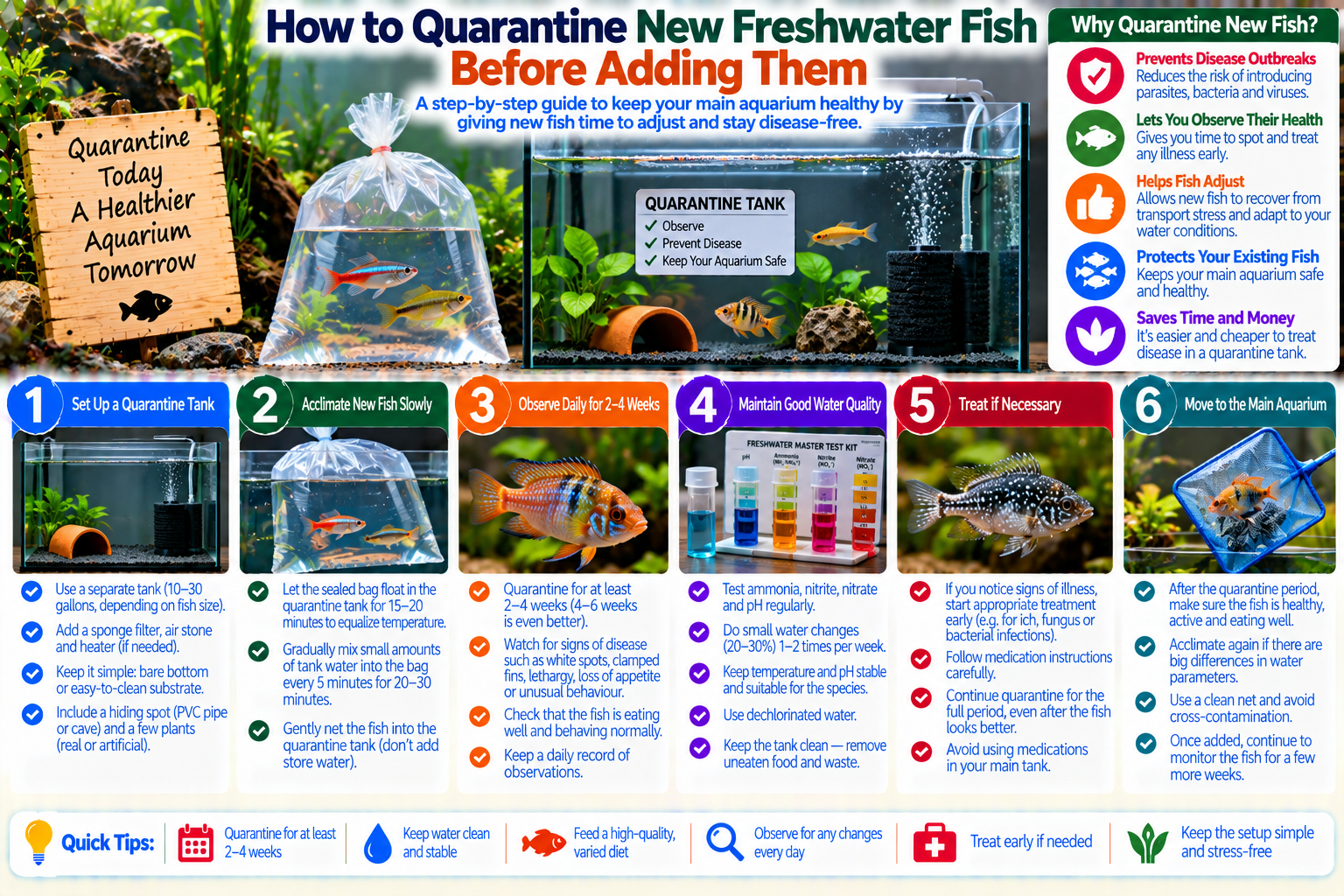

New fish can look active in the shop and still introduce a health problem to an established aquarium. Quarantine creates a separate observation period before they join your existing fish. It only helps when the temporary tank itself provides suitable water quality, space, temperature, and cover.
Quick answer: Prepare a separate, appropriately sized and biologically established aquarium before buying fish. Use dedicated equipment and observe the newcomers for several weeks; a commonly recommended minimum is 30 days, with the plan adjusted for species, symptoms, and professional advice. Do not use an unfiltered bowl as quarantine.
Prepare the system before the purchase
Choose a tank appropriate to the number, size, and behaviour of the fish. Include suitable filtration, a thermometer, heating where required, a secure cover for jumping species, and safe hiding options. A sparse layout can make observation and cleaning easier, but it must still meet the animal’s needs.
Establish biological filtration without using fish to endure ammonia or nitrite exposure. A clean-looking new tank is not necessarily cycled. Use testing to confirm readiness, and keep a plan for monitoring and maintaining the filter between groups of fish.
Keep quarantine genuinely separate
Label a dedicated net, siphon, bucket, and other tools. Do not move water, wet decorations, or filter media from an occupied quarantine tank back into the display. Clean hands and avoid splashing between systems.
For example, keep the quarantine kit in a clearly marked container and ask everyone in the household to use it only there. A second tank offers little protection if the same wet net moves back and forth every day.
| Need | Practical check |
|---|---|
| Stable water | Established filtration and appropriate ammonia, nitrite, nitrate, pH and temperature monitoring |
| Species-appropriate environment | Enough space, safe cover, suitable temperature and oxygenation |
| Separate equipment | Clearly labelled net, siphon and cleaning supplies |
| Observation | Daily view of feeding, breathing, swimming and appearance |
| Help if needed | Contact for a fish vet or knowledgeable aquatic professional |
Observe the fish and the water together
Record appetite, breathing, swimming, skin, fins, and interactions. Check water parameters regularly, especially in a small or newly established system. Rapid breathing or lethargy may reflect water quality as well as disease, so do not reach for medication before checking the environment.
A brief log can include date, test results, food offered, and unusual signs. Photographs or a short video help a professional assess changes, but they do not replace examination or testing when needed.
Avoid automatic medication cocktails
Do not mix treatments or add salt “just in case” without a suitable plan. Species differ in tolerance, products can affect filtration, and an incorrect treatment may delay identifying the problem. Follow professional advice and product directions for the actual water volume and livestock.
Quarantine is observation and prevention, not a guarantee that every infection will be detected. If symptoms appear, seek guidance and revise the timeline. Do not transfer fish simply because the original calendar end date has arrived.
Finish quarantine thoughtfully
Before transfer, confirm that fish are eating and behaving normally and that any health concerns have been resolved. Check compatibility, capacity, and water conditions in the receiving aquarium. Use an appropriate acclimation method for the species and conditions, and avoid adding quarantine water unnecessarily.
After the group leaves, clean and manage the quarantine system according to a suitable biosecurity plan. Do not expose a new group to an unresolved problem. Equipment that has been disinfected must be safely rinsed or neutralised as required by the method before reuse.
Plan before buying: If you cannot provide safe quarantine, postpone the purchase while arranging a workable setup. Poor water quality in an improvised container creates its own welfare problem.
Review aquarium cycling and recognising common fish health problems.
Frequently asked questions
Is a week of quarantine enough?
It may miss problems that take longer to appear. Several weeks are commonly recommended; use a plan appropriate to the species, source, and health findings.
Can I quarantine fish in the display tank in a breeder box?
No. Shared water does not separate disease exposure. A physically separate system is needed.
Should I add new purchases to a quarantine group already halfway through?
That introduces a new exposure. Keep arrivals separate where possible and seek advice about restarting or adjusting the observation period.