
Spotting something wrong with a fish is unsettling, partly because fish can’t show illness the way a dog or cat can. By the time you notice white spots, ragged fins or a swollen belly, the problem has often been building for a while. Still, most common aquarium fish diseases share the same few triggers, and many of them can be prevented.
Key points: the most common aquarium fish diseases include ich (white spot), fin rot, fungal infections, velvet, dropsy and swim bladder problems. Poor water quality and stress sit behind many of them, so test your water first. Quarantine new fish, treat only once you know what you’re dealing with, follow product instructions exactly and ask a vet or aquatic specialist for help with anything serious or unclear.
Why water quality comes first
Many fish diseases are caused by organisms that are often around in aquariums at low levels. Healthy fish usually cope with them. What tips the balance is stress, and the biggest source of stress in a home aquarium is poor water: ammonia or nitrite from an overloaded or immature filter, high nitrate from too few water changes, sudden temperature swings, or overcrowding.
That’s why the first step, whatever the symptoms, is to test the water. Use a liquid or strip test kit for ammonia, nitrite, nitrate and pH, and check the thermometer. Ammonia and nitrite should both read zero in an established tank. If they don’t, a partial water change with dechlorinated, temperature-matched water is usually the most useful thing you can do straight away, and medication added to poor water often does little good.
Common fish diseases at a glance
| Disease | Signs to look for | Common cause |
|---|---|---|
| Ich (white spot) | Small white dots like grains of salt on body and fins; rubbing against objects; clamped fins | A parasite, often brought in by new fish; outbreaks follow stress or temperature changes |
| Fin rot | Frayed, ragged or shrinking fins; whitish or reddened edges | Bacterial infection, usually linked to poor water quality or fin damage from nipping |
| Fungal infection | Fluffy, cotton-like white or gray growths on skin, fins or mouth | Usually secondary to injury, other illness or poor conditions |
| Velvet | Fine gold, rust or yellowish dust on the skin; rubbing; rapid breathing; lethargy | A parasite; often linked to stress and new arrivals |
| Dropsy | Swollen body; scales sticking out like a pinecone; sometimes bulging eyes | A sign of internal problems such as organ failure, often with infection |
| Swim bladder problems | Floating, sinking, swimming on the side or upside down | Varied: water quality, feeding, infection or body shape |
Ich (white spot disease)
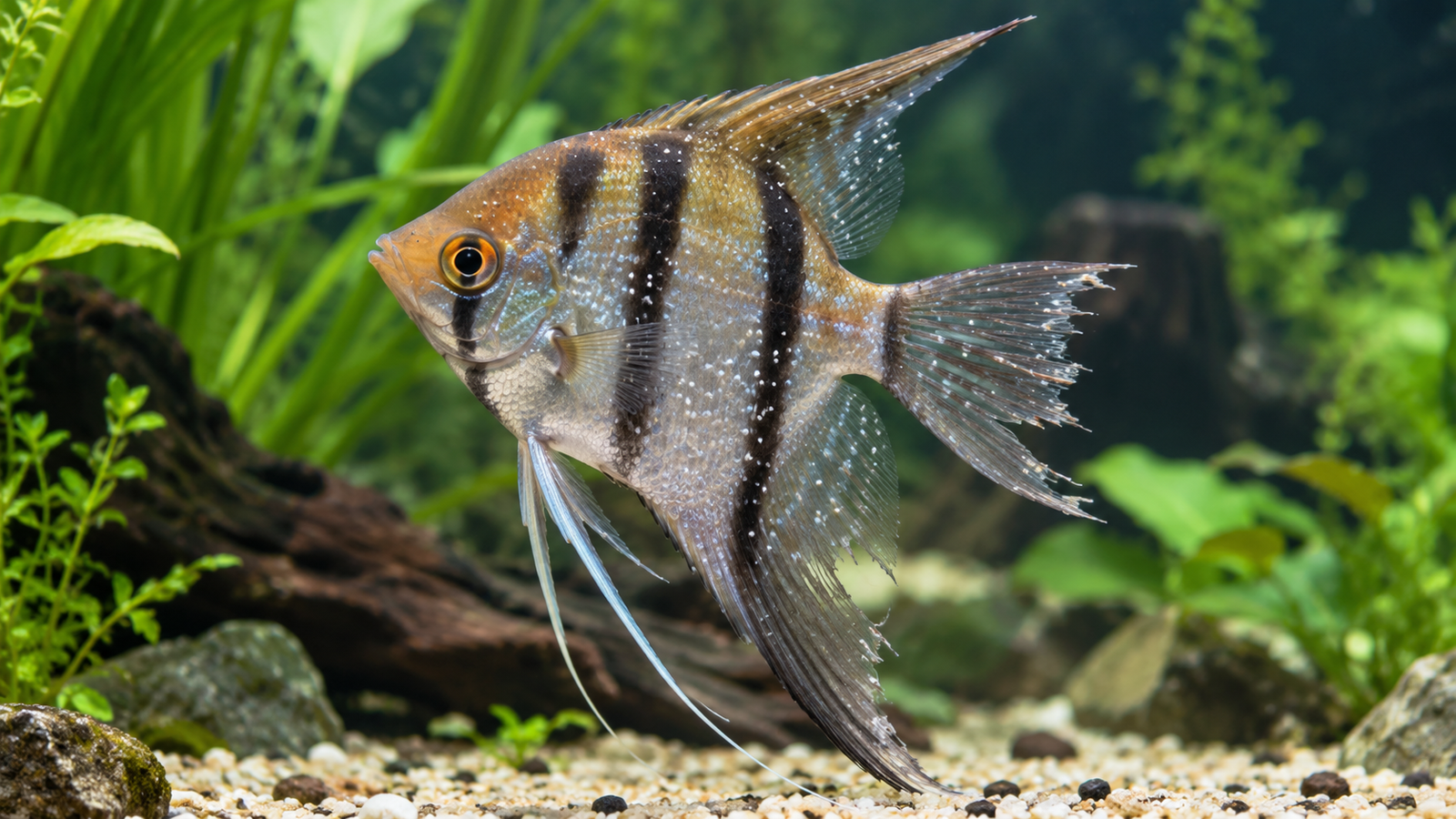
Ich is probably the most familiar fish disease. Infected fish look as though they’ve been sprinkled with salt, and they may flick or rub against decorations, hold their fins close to the body and breathe faster. The gills can be affected before spots are obvious.
The parasite has a life cycle that includes a stage off the fish, where it multiplies and releases many new parasites into the water. Treatments generally only work on the free-swimming stage, which is why ich medications are given over a course of days, and why stopping early can let it return.
Fin rot
Fin rot starts at the edges of the fins, which look frayed, milky or red and gradually shorten. It’s different from a simple tear, which has clean edges and heals in good water. Fin rot is closely tied to water quality and to fin damage from nipping tankmates, so fixing those is part of any treatment. If the rot reaches the body, or the fish becomes lethargic, get professional advice quickly.
Fungal infections
True fungal infections show up as fluffy, cotton-wool-like growths, often on a wound or damaged area. They are usually a secondary problem, taking hold after an injury, another disease or a period of poor water. Some bacterial infections, such as columnaris, can look similar, which is one reason an expert diagnosis helps before treating.
Velvet
Velvet is caused by a parasite that gives the skin a fine gold or rust-colored dusting. It’s much harder to see than ich, and shining a flashlight across the fish can help. Affected fish often breathe fast, rub against surfaces, lose their appetite and become sluggish. Velvet can spread and worsen quickly, so it’s worth acting early.
Dropsy
Dropsy isn’t a single disease. It describes fluid building up inside the body, which makes the fish swell and pushes the scales outward so they stick up like a pinecone. It usually means something serious is going on internally, such as kidney problems, often alongside bacterial infection and long-term stress. The outlook is often poor, especially once the scales have lifted. Separate the fish and speak to a vet.
Swim bladder problems
The swim bladder helps fish control their buoyancy. A fish with a swim bladder problem may float at the top, struggle to leave the bottom, or swim tilted or upside down. This is a symptom with many possible causes, including poor water quality, feeding issues, infection and internal problems. Round-bodied fish such as fancy goldfish and some bettas seem more prone to it. Check the water first. If the problem doesn’t improve, an aquatic vet can investigate, sometimes with X-rays.
Quarantine tanks: the best prevention
New fish are one of the most common ways disease enters a tank. A quarantine tank is a simple, separate setup, usually a small tank with a heater, a gentle filter such as a sponge filter and a few hiding places, where new arrivals stay for several weeks before joining the main tank. Many keepers use around three to four weeks, although there’s no single agreed period.
The same tank works as a hospital tank for sick fish. Keep separate nets and siphons for it, so you don’t carry problems back to your main aquarium.
Treating sick fish safely
Aquarium medications are widely sold, but using the wrong one, or the right one incorrectly, can make things worse. A few ground rules:
- Test and correct the water before treating.
- Be as sure as you can about what the disease is. Many look alike.
- Follow the product instructions exactly, including the full course length.
- Check the label for warnings. Some treatments can harm snails, shrimp or plants, and some instructions say to remove activated carbon from the filter because it can absorb the medication.
- Don’t combine different treatments unless a professional advises it.
Not every vet treats fish, but some vets, particularly exotic and aquatic specialists, do. They can examine skin and gill samples under a microscope, test water and prescribe treatments that aren’t available over the counter.
Urgent: get help quickly if several fish become sick or die in a short time, if fish are gasping at the surface, or if a fish has spreading sores, swelling with raised scales or can’t stay upright. Test the water straight away and do a partial water change if readings are off.
If your fish are hanging at the surface, our guide on why fish gasp at the surface covers the oxygen and water quality checks to make. For goldfish that sit on the tank floor, see why a goldfish stays at the bottom of the tank.
Frequently asked questions
What are the white spots on my fish?
Small white spots that look like grains of salt are usually ich (white spot disease), a common parasite. Test your water, look for other signs such as rubbing and clamped fins, and treat with a suitable product, following the instructions for the full course.
Can fin rot heal on its own?
Mild fin damage can regrow once water quality improves and the cause, such as fin-nipping tankmates, is removed. Fin rot that keeps spreading, reaches the body or comes with lethargy needs treatment and professional advice.
Is dropsy contagious?
Dropsy itself is a sign of internal illness rather than a single disease, but the underlying cause, such as a bacterial infection or poor water quality, can affect other fish. Separate the affected fish, test the water and speak to a vet.
How long should I quarantine new fish?
Many keepers quarantine new fish for around three to four weeks, although there is no single agreed period. Watch them closely for signs of illness before moving them to the main tank.