
A pet first aid kit is most useful when it is paired with a plan. Gauze is easier to find if everyone knows where it lives, and an emergency clinic is easier to reach if its location has already been checked. Prepare for the animals in your household rather than buying a large kit filled with unfamiliar products.
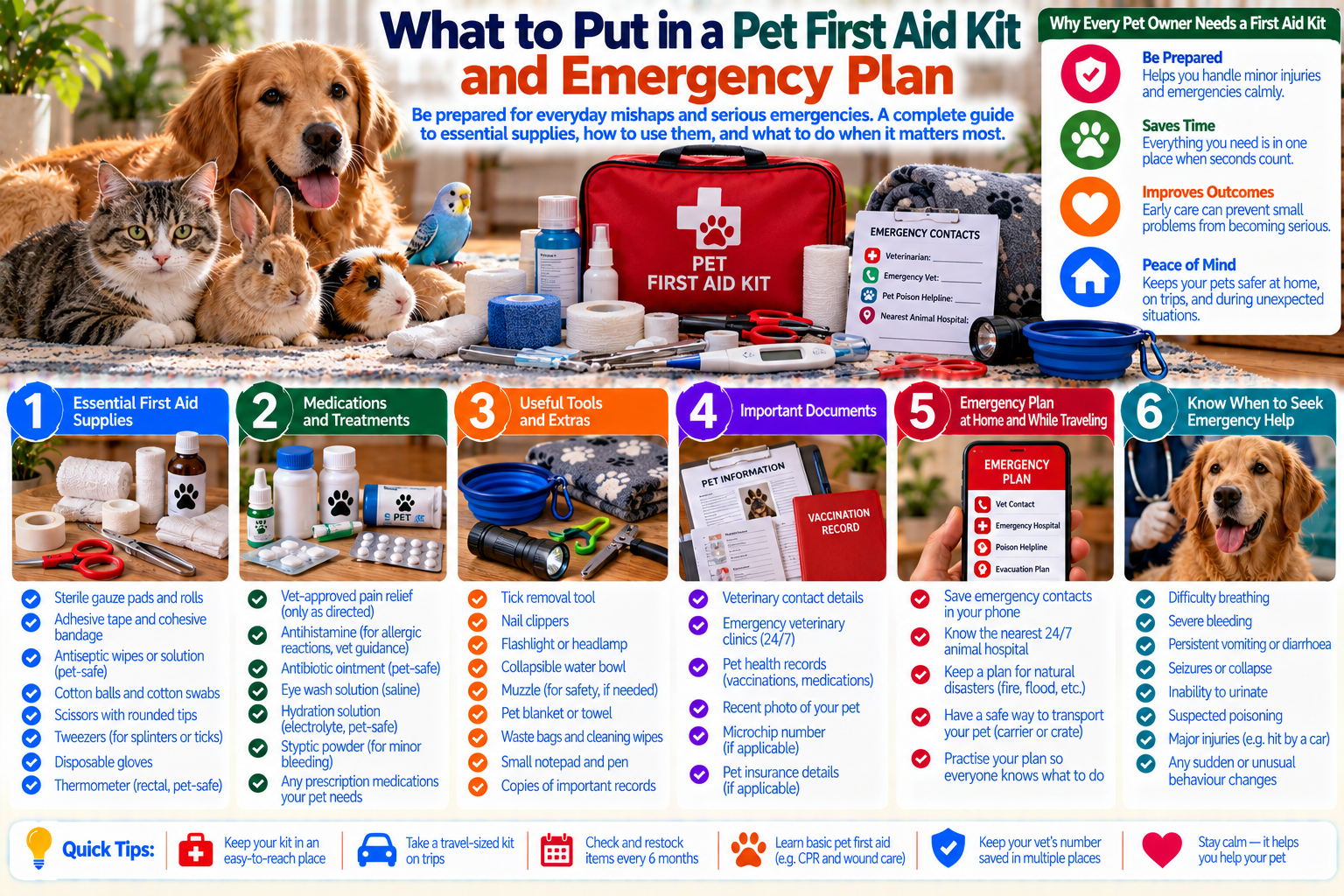
Quick answer: Keep clean dressings, gauze, gloves, towels, a small torch, suitable saline, and practical transport supplies together with veterinary contacts and medical records. Ask your vet about species-specific additions. First aid supports your pet while you obtain professional care; it does not replace it.
Put contact information at the front
Include the regular veterinary practice, its out-of-hours instructions, and an emergency hospital that treats your species. A clinic that handles dogs and cats may not provide overnight care for birds, rabbits, reptiles, or fish. Check this before an emergency.
Add your contact details, a backup carer, the pet’s identification information, current medicines, allergies or previous reactions, and significant medical conditions. Keep a paper copy alongside a phone copy so a flat battery or locked device does not prevent access.
Build a compact supplies kit
| Item | Practical purpose | Important limit |
|---|---|---|
| Disposable gloves and clean gauze | Hygiene and gentle pressure on bleeding | Severe bleeding needs urgent veterinary care |
| Nonstick dressings and bandage materials | Temporary wound protection when advised | Poorly applied bandages can cause harm |
| Sterile saline suitable for first aid | Rinsing when directed | Avoid medicated or unsuitable substitutes |
| Clean towels and blanket | Padding and supported transport | Do not restrict breathing or overheat the pet |
| Blunt-ended scissors and small torch | Prepare materials and see clearly | Keep sharp tools away from a struggling animal |
| Spare lead or secure carrier | Safer movement to the clinic | Match equipment to the species and injury |
Ask your vet whether a thermometer or other equipment belongs in your kit and how to use it safely. Owning a tool does not mean it should be used during every emergency. Avoid delaying transport to collect readings when your pet is in distress.
Keep medications under a separate plan
Do not stock human painkillers for casual pet use or give leftover prescriptions from another animal. If your pet has a prescribed emergency medicine, keep the written instructions, labelled packaging, storage requirements, and expiry date together.
Suspected poisoning: Call your vet, emergency clinic, or an appropriate animal poison service promptly. Keep the product packaging and relevant details available. Do not induce vomiting or give charcoal, peroxide, or another remedy unless specifically directed by a veterinary professional.
Prepare safe transport before it is needed
Keep carriers accessible rather than buried behind storage boxes. Check doors and fastenings. For a large dog, discuss how you would move them with help if they could not walk. Avoid rehearsals that frighten or risk injuring the animal; practise equipment access and household roles instead.
An injured pet may bite or scratch through pain and fear. Keep your face away and avoid unnecessary restraint. Ask your vet about safe handling appropriate to your pet. A muzzle is not suitable for an animal with breathing difficulty or vomiting, and improvised restraint can make an emergency worse.
Use a simple household response sequence
- Make the immediate area safer without putting yourself at risk.
- Call the veterinary service and describe the main signs clearly.
- Follow the specific advice given and arrange transport.
- Bring the medical record, relevant packaging, and prescribed medicines.
- Let the clinic know you are coming when possible.
For example, one adult can call while another retrieves the carrier and kit. A written role plan reduces confusion more effectively than relying on everyone to improvise. Children should know which adult to alert rather than being responsible for treating an injured pet.
Review the kit regularly
Check expiry dates, replace opened sterile supplies, and update medication and contact details after changes. Store the kit dry, accessible to carers, and away from pets and children. Consider a separate travel kit if you often take your pet away from home.
Read foods toxic to dogs, cat poisoning hazards, and bird household dangers to reduce preventable emergencies.
Frequently asked questions
Can I use a human first aid kit?
Some basic supplies overlap, but adapt it with your vet for your pets. Human medicines and products are not automatically safe for animals.
Should I bandage every injury before travelling?
No. Incorrect bandaging can worsen an injury. Call the clinic and follow its guidance; do not delay urgent transport to attempt an unfamiliar procedure.
Where should the kit be stored?
In a labelled, dry place known to every carer, away from pets and children. Keep carriers and emergency contact information easy to reach.