
Cats have a reputation for being fussy eaters, and it’s true that they’re less likely than dogs to wolf down a whole box of chocolates. But they groom obsessively, nibble houseplants and walk through things, and their bodies are unusually poor at breaking down certain chemicals. That combination means some plants and foods that are poisonous to cats can do serious harm in amounts that seem tiny.
You don’t need to memorize a list of hundreds of plants. A handful of hazards cause most of the serious cases, and knowing those, plus what to do if something happens, covers most of the risk in a typical home.
Key points: true lilies and daylilies are the biggest plant danger, and even pollen or vase water can cause kidney failure. Keep onions, garlic, chocolate, grapes and raisins away from cats, don’t use concentrated essential oils around them and never give human painkillers. Dog flea products containing permethrin can be deadly to cats. If you suspect poisoning, call a vet or animal poison line straight away and don’t try to make your cat vomit.
Lilies: the one plant to keep out of the house
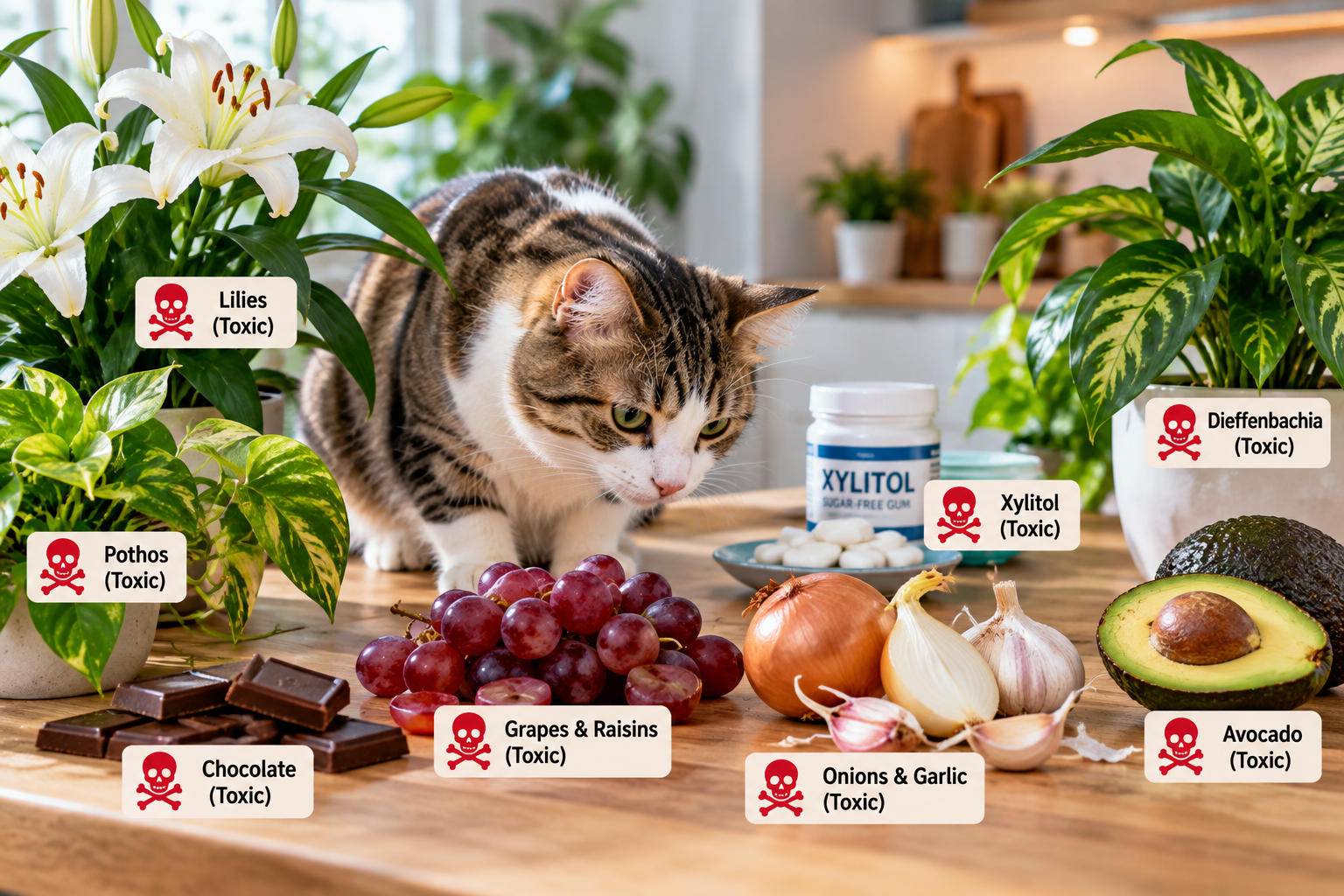
If you remember only one thing, make it this. Lilies in the Lilium genus (such as Easter, tiger, Asiatic, Oriental and stargazer lilies) and daylilies (Hemerocallis) can cause sudden kidney failure in cats. Petals, leaves, stems and pollen are all toxic, and so is water from the vase they stand in. A cat can be poisoned simply by brushing past a bouquet and then licking pollen off its fur.
Early signs, such as vomiting, drooling, hiding or not eating, can appear within hours and may then seem to ease. That apparent recovery is misleading, because kidney damage continues in the background. Cats that get treatment quickly have a much better outlook; once treatment is delayed by about 18 hours or more, the damage is often permanent.
Urgent: if your cat has chewed any part of a lily, drunk vase water or has lily pollen on its fur or face, contact a vet immediately, even if your cat seems completely normal. Don’t wait for symptoms. Take the plant or a photo of it with you.
Not everything called a “lily” behaves the same way. Peace lilies and calla lilies aren’t true lilies. They irritate the mouth and can cause drooling, pawing at the mouth and vomiting, but they don’t cause kidney failure. Still, if you’re not sure which kind your cat got into, treat it as an emergency. The simplest approach in a cat household is to keep lilies out of bouquets and gardens altogether, and to ask friends not to send them.
Foods to keep off the counter
Most kitchen poisonings in cats come from licking plates, raiding a pan or being offered a “treat.” These are the foods to be firm about:
- Onions, garlic, leeks, chives and shallots. All forms are a problem, including cooked, dried and powdered. Watch for gravy, soup, stock, baby food and seasoned meat. These plants damage red blood cells, and signs of anemia may not show until several days later.
- Chocolate. It contains theobromine and caffeine. The darker the chocolate, and especially baking chocolate and cocoa powder, the more dangerous it is. Cats rarely eat much, but even small amounts can cause vomiting, restlessness and a racing heart.
- Grapes, raisins, currants and sultanas. These are best known for causing kidney failure in dogs. Cases in cats are much less common and less well studied, but kidney damage has been reported, so vets advise keeping them away from cats too.
Hidden dangers around the house
Human painkillers
Acetaminophen (paracetamol, sold as Tylenol in the US) is one of the most dangerous medicines for cats. Cats lack enough of a liver enzyme needed to process it safely, and a single tablet can be enough to poison a cat. Signs include brown or bluish gums, a swollen face or paws, trouble breathing and weakness. Ibuprofen and other anti-inflammatories made for people are also risky for cats. Never give your cat any human medicine unless your vet has told you to, and keep dropped pills off the floor.
Dog flea treatments containing permethrin
Some spot-on flea treatments for dogs contain permethrin, an insecticide dogs tolerate but cats do not. Poisoning happens when a dog product is put on a cat by mistake, or when a cat rubs against or cuddles up with a recently treated dog. Signs include twitching, tremors and seizures, and it’s an emergency. Read the label of any flea product, only use products made for cats on cats and keep treated dogs away from cats for as long as the label or your vet advises.
Concentrated essential oils
Cats are sensitive to many essential oils, including tea tree, eucalyptus, peppermint, cinnamon, clove, pine, wintergreen and citrus oils. Oils can be absorbed through the skin, swallowed during grooming or inhaled. Never apply oils to your cat, clean up spills quickly and think twice about diffusers that release droplets into the air, especially around cats with asthma. Drooling, vomiting, wobbliness, tremors or breathing trouble after exposure means a vet call.
Quick reference
| Hazard | Where cats meet it | Main concern |
|---|---|---|
| True lilies and daylilies | Bouquets, gardens, pollen on fur, vase water | Sudden kidney failure |
| Onion, garlic, leeks, chives | Leftovers, gravy, stock, seasoned food | Damage to red blood cells (anemia) |
| Chocolate | Baking, cocoa powder, snacks | Vomiting, restlessness, heart rhythm problems, seizures |
| Grapes and raisins | Fruit bowls, baked goods, trail mix | Possible kidney damage |
| Acetaminophen (paracetamol) | Dropped tablets, well-meant home treatment | Damage to red blood cells; can be fatal |
| Permethrin | Dog spot-on flea treatments, recently treated dogs | Tremors and seizures |
| Essential oils | Diffusers, spills, oils put on skin | Drooling, vomiting, wobbliness, breathing and liver problems |
If you suspect your cat has been poisoned
- Move your cat away from the plant, food or product, and keep other pets away from it too.
- Call your vet or an emergency clinic right away. In the US you can also call the ASPCA Animal Poison Control Center at (888) 426-4435 or Pet Poison Helpline at (855) 764-7661. Both are open around the clock and a consultation fee may apply.
- Don’t make your cat vomit or give milk, oil, salt or hydrogen peroxide. Home remedies can cause more harm, and hydrogen peroxide is not safe for cats.
- Gather evidence. Bring the packaging, the plant or a photo, and a rough idea of how much was eaten and when.
Many poisons cause few signs at first, so a cat that “seems fine” is not a reason to wait.
Some poisons, lilies and grapes among them, do their damage through the kidneys. Our article on why a cat isn’t drinking much water explains which thirst and litter box changes are worth reporting to your vet.
Frequently asked questions
Is lily pollen really dangerous to cats?
Yes. Pollen from true lilies and daylilies can cause kidney failure if a cat licks it off its fur. Contact a vet straight away if you see pollen on your cat, even if it seems well.
Are peace lilies toxic to cats?
Peace lilies are not true lilies. They can irritate the mouth and cause drooling and vomiting, but they don’t cause kidney failure. If you’re not sure what kind of lily your cat chewed, treat it as an emergency.
Can a small amount of garlic hurt my cat?
It can. Garlic and onions in any form, including powder and cooked food, can damage a cat’s red blood cells, and signs may take days to appear. Call your vet if your cat has eaten food containing them.
Can I use my dog’s flea treatment on my cat?
No. Some dog flea products contain permethrin, which can cause tremors, seizures and death in cats. Only use products labeled for cats, and keep cats away from dogs that were just treated.
Should I make my cat vomit if it ate something toxic?
No. Don’t try to make a cat vomit at home. Call your vet or an animal poison line and follow their advice.