
A home that is perfectly safe for people, dogs and cats can still hold real risks for a pet bird. Birds are small, curious, able to fly into places you’d never expect, and they test almost everything with their beak. Their lungs are also extraordinarily sensitive to anything in the air.
Most household dangers for pet birds are easy to manage once you know where they are, from invisible fumes to the family cat.
In short: keep birds well away from the kitchen and anything that produces fumes, especially overheated non-stick cookware, aerosols, scented candles and smoke. Before any out-of-cage time, turn off ceiling fans, close windows and doors, cover open water and put other pets in another room. Never share avocado, chocolate, caffeine, alcohol or salty food, and check cages and toys for chewable zinc and lead. If your bird is struggling to breathe, collapses or has been bitten, get to an avian vet at once.
Why fumes hit birds so hard
A bird’s breathing system is built for flight. Air moves through a network of air sacs as well as the lungs, and oxygen is taken up very efficiently. The downside is that airborne toxins are absorbed very efficiently too. A level of fumes that barely bothers you can seriously harm a bird, and a few minutes of exposure can be enough.
Non-stick cookware and PTFE
The best-known danger is PTFE, the coating on many non-stick pans. When it overheats, above about 536°F (280°C), it gives off fumes that can kill a bird quickly, sometimes before any signs are noticed. An empty pan left on a hot burner can reach that point fast.
PTFE isn’t only found in frying pans. It can turn up in some air fryers, waffle makers, drip pans, self-cleaning oven cycles, clothes irons, ironing board covers and heat lamps. Many bird keepers switch to stainless steel, cast iron or glass cookware. If you keep non-stick pans, never heat them empty, never leave them unattended, run the kitchen fan and keep your bird in a room well away from the kitchen with the door closed.
Sprays, scents and smoke
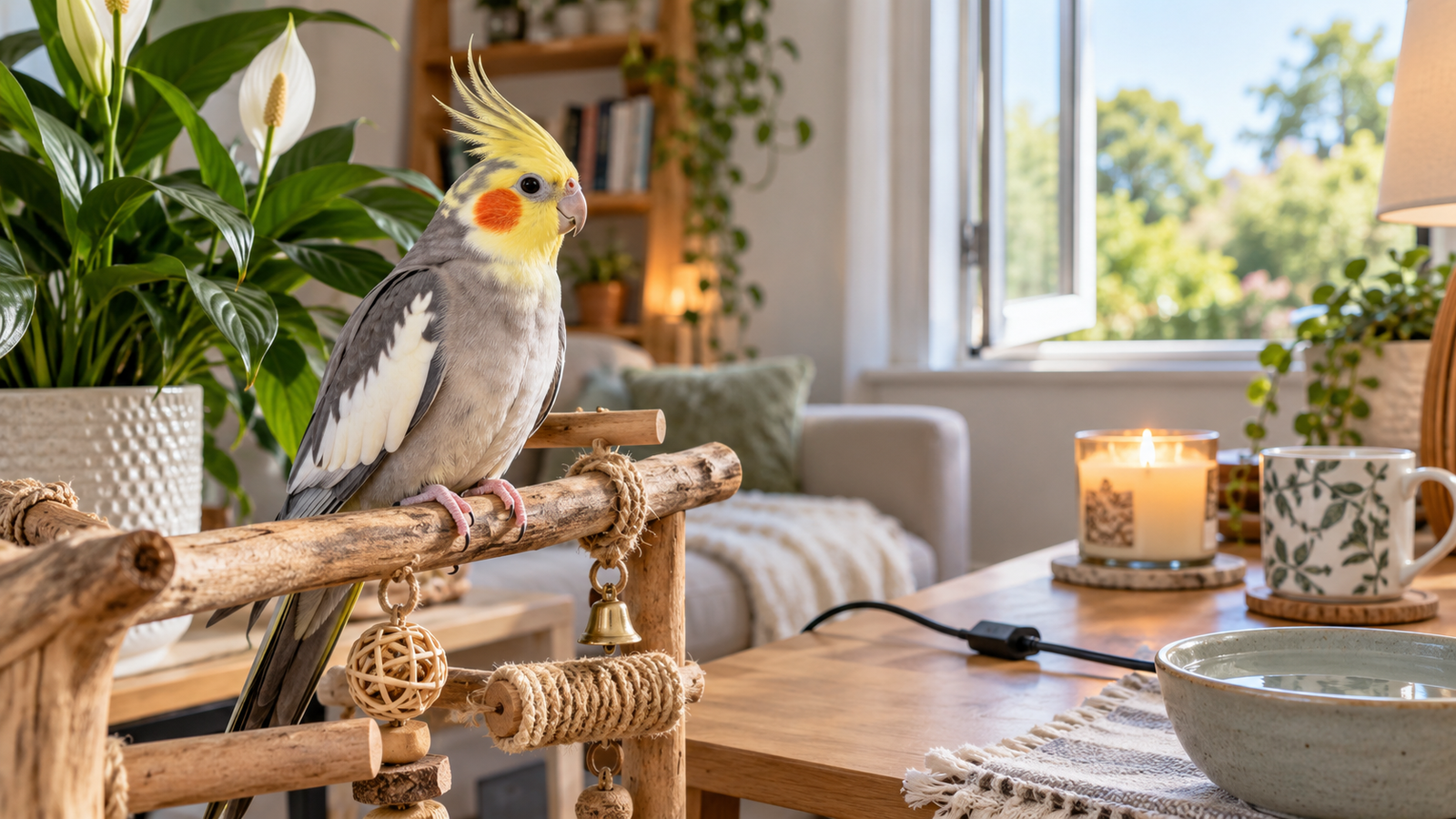
Anything that fills the room with a smell or a mist can irritate a bird’s airways. The usual culprits are:
- Aerosol sprays, including air fresheners, hairspray, deodorant and furniture polish
- Scented candles, plug-in fresheners, wax melts and incense
- Cleaning products, especially bleach, ammonia and oven cleaners
- Paint, varnish, glue and solvent fumes
- Smoke of any kind, from cigarettes and cooking to fireplaces
- Insect sprays and pest foggers
A sensible rule is that if a product smells strong to you, your bird shouldn’t be in the room. Move the cage away, open windows elsewhere in the house, and wait until the air has fully cleared before bringing your bird back. For the cage itself, hot water and a mild, unscented soap handle most routine cleaning.
Hazards during out-of-cage time
Free time outside the cage brings its own set of hazards. Run through this quick check before you open the cage door:
- Ceiling fans must be off and fully stopped. Birds can’t judge moving blades, and collisions cause serious injuries.
- Windows and outside doors should be shut. Even hand-tame birds can bolt when startled, and few find their way home.
- Glass and mirrors look like open space to a bird in flight. Window decals, blinds or light curtains help your bird learn where the edges are.
- Open water in toilets, sinks, bathtubs, pet bowls, vases and cooking pots can drown a small bird. Put lids down and cover containers.
- Hot surfaces such as stovetops, kettles and fireplaces can burn feet and wings.
- Electrical cords are tempting to chew and can cause burns or electrocution.
Cats, dogs and other pets
However gentle your cat or dog seems, to them a bird is prey. Never leave them in the same room unsupervised, even with the bird in its cage, since a cage knocked to the floor or a paw through the bars can be enough.
Cat bites and scratches deserve special mention. Bacteria from a cat’s mouth and claws can cause a fast, severe infection in birds, so treat any contact as an emergency and see an avian vet the same day, even if you can’t find a wound.
Food that should stay off your bird’s menu
Some human foods are genuinely dangerous to birds.
| Food | Why it’s a problem |
|---|---|
| Avocado (all parts, including guacamole) | Contains persin, which can damage the heart and cause breathing problems and death in birds |
| Chocolate and cocoa | Theobromine and caffeine can cause hyperactivity, heart rhythm changes, seizures and death |
| Coffee, tea, cola and energy drinks | Caffeine affects the heart and nervous system |
| Alcohol | Even small amounts can cause incoordination, depression and death in a small body |
| Salty snacks (chips, crackers, salted nuts) | Too much salt can cause excessive thirst, tremors, seizures and even death |
| Onion, garlic and sugar-free foods with xylitol | Onion and garlic contain compounds that can damage red blood cells; xylitol’s effects in birds are less studied, so it’s safest avoided |
Remove fruit pits and apple seeds before offering fruit.
Metal your bird might chew
Birds chew to explore, and tiny amounts of zinc or lead swallowed over time can cause heavy metal poisoning. Common sources include:
- Zinc: galvanized wire and mesh, some cage clips, nuts, bolts and washers, poorly made or imported cages with flaking coatings, and US pennies minted after 1982
- Lead: old paint in older homes, curtain weights, fishing weights, solder, stained glass, some costume jewelry and old or imported cages
Signs are often vague: weakness, poor appetite, vomiting, changes in droppings, tremors or wobbling, and sometimes feather damage. An avian vet can confirm it with blood tests, so don’t wait for signs to become obvious. Buy cages and toys made for birds, check them regularly for chipping or loose parts, and keep keys, coins and jewelry out of reach.
What to do in an emergency
Urgent: labored or open-mouthed breathing, tail bobbing with each breath, sitting fluffed on the cage floor, falling off the perch, seizures, bleeding, or any contact with a cat or dog are emergencies. Call an avian or emergency vet immediately.
- Remove the danger. For suspected fume exposure, move your bird to fresh air right away, turn off the source and open windows (keeping your bird safely enclosed).
- Call for help. Phone your avian vet or the nearest emergency clinic and say what happened. In the US, the ASPCA Animal Poison Control Center (888-426-4435) and Pet Poison Helpline (855-764-7661) both take calls about birds around the clock; both charge a consultation fee.
- Keep your bird warm, dark and quiet in a small carrier or covered box for the trip.
- Skip home remedies. Don’t give oil, milk, salt or any medicine, and don’t try to make your bird vomit, unless a vet tells you to.
- Bring evidence, such as the product packaging, food or suspect item, to help the vet.
Find an avian vet before you need one. For the everyday side of safety, our guide to setting up a lovebird cage covers choosing a spot away from kitchens and drafts, and our budgie diet guide lists safe foods to share instead.
Frequently asked questions
Is it safe to use non-stick pans if I have a bird?
Overheated non-stick coatings containing PTFE release fumes that can kill birds quickly. Many bird owners switch to stainless steel, cast iron or glass. If you keep non-stick pans, never heat them empty or leave them unattended, ventilate well and keep your bird far from the kitchen.
Can scented candles hurt birds?
Yes, they can. Scented candles, plug-in air fresheners, incense and aerosol sprays release particles and chemicals that can irritate a bird’s sensitive airways. It’s safest not to use them in the same room as your bird, or at all in a small home.
What should I do if my cat scratches or bites my bird?
Take your bird to an avian vet the same day, even if you can’t see a wound. Bacteria from a cat’s mouth or claws can cause a rapid, serious infection in birds that needs prompt veterinary treatment.
What are the signs of heavy metal poisoning in birds?
Signs are often vague and can include weakness, poor appetite, vomiting, changes in droppings, wobbling, tremors and feather problems. Contact an avian vet promptly, as diagnosis needs blood tests and treatment works best when started early.