
Constipation makes stools difficult or infrequent to pass. Recognising the signs matters, but first make sure repeated litter-box visits are not a urinary emergency.
A cat repeatedly straining with little or no urine needs emergency veterinary care immediately. Urinary blockage can look like constipation and is particularly concerning in male cats. If you cannot tell whether your cat is trying to urinate or defecate, contact an emergency clinic rather than assume the problem is constipation.
What does constipation look like in cats?
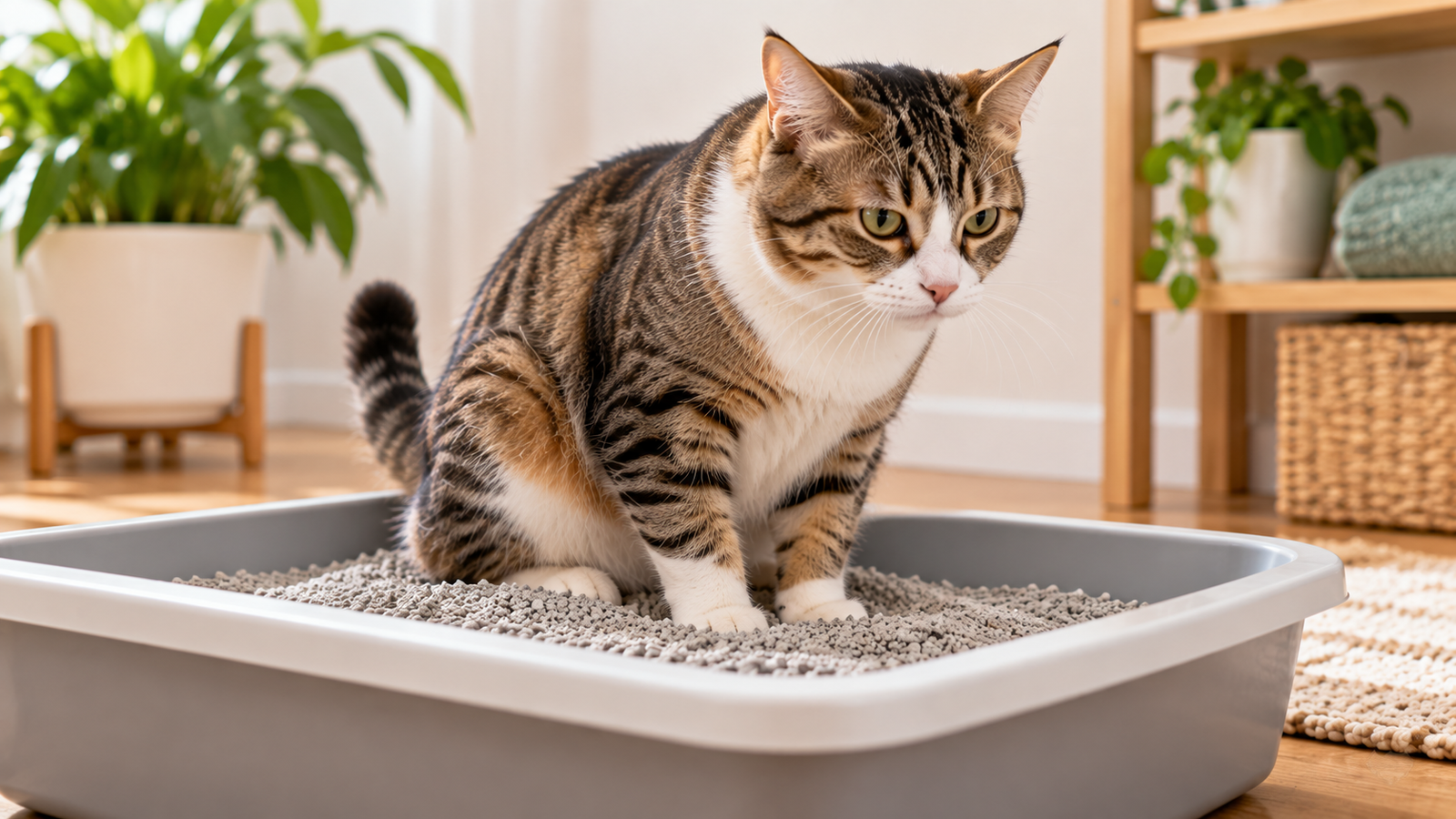
You may notice small, hard, dry stools, repeated unsuccessful attempts to defecate, or discomfort in the litter box. Some cats pass stool outside the tray. Reduced appetite, vomiting or unusual quietness can accompany the problem.
A constipated cat may occasionally pass a small amount of liquid stool around retained faeces. Apparent diarrhoea therefore does not always rule out constipation.
Look for a change from your cat’s usual pattern. In a multi-cat household, make sure you know which animal produced the stool or urine you found. Do not delay an urgent call while trying to collect more evidence.
When should you contact a vet?
Seek emergency care now
Possible inability to urinate, collapse, severe abdominal pain, a swollen abdomen or repeated vomiting with an inability to keep water down requires immediate veterinary contact. These signs can indicate conditions more serious than uncomplicated constipation.
Ask for same-day advice
Contact your clinic the same day for repeated straining, painful defecation, reduced appetite, vomiting or a cat that seems unwell. Recurring constipation also needs an assessment, even if your cat eventually passes some stool.
Do not use the clock as the only guide
VCA advises contacting a veterinarian when a cat has not passed stool within 48–72 hours of its previous bowel movement. This is not permission to wait when symptoms are present. A kitten, an unwell cat or a cat already being treated for bowel problems may need an earlier plan from its own vet.
Why constipation develops
Several problems can contribute, including dehydration, painful movement, swallowed material, narrowing of the bowel or pelvis, certain medicines, and disorders affecting the colon’s nerves or muscles. Sometimes the underlying cause remains unknown.
Tell your vet about recent diet changes, medication, previous injuries and anything unusual your cat might have swallowed. A symptom alone cannot establish whether the cause is dietary, painful or obstructive.
Obstipation is severe, persistent constipation in which retained stool cannot be passed normally. Megacolon describes an enlarged colon with impaired movement. Both require veterinary assessment; they cannot be diagnosed from litter-box behaviour alone.
What you can do while arranging advice
Keep fresh water available and provide a clean, accessible litter box. A low entrance may help a cat with mobility problems. Note the last known bowel movement, urine output, appetite and any vomiting so you can give the clinic a clear history.
If your vet advises home monitoring, follow the agreed time limit and escalation instructions. Continue prescribed treatment as directed, and contact the clinic before changing it.
Do not give human laxatives, enemas, mineral oil or supplements without specific veterinary instructions. Phosphate-containing human enemas must never be used in cats: they can cause life-threatening electrolyte disturbances.
How vets investigate and treat constipation
Your vet will consider the history and examine your cat. Depending on the findings, abdominal X-rays, blood tests or urine tests may help assess retained stool, hydration and an underlying condition.
Treatment is chosen for the cause and severity. It may involve fluids, prescribed medicines, dietary changes or veterinary removal of impacted stool under sedation or anaesthesia. Severe megacolon that does not respond adequately to medical management sometimes requires surgery.
An enema administered in a clinic is not equivalent to using an over-the-counter product at home. The solution, technique and your cat’s condition all affect safety.
Can diet help prevent another episode?
Diet can be part of a longer-term plan, but adding more fibre is not right for every cat. Hydration, the underlying cause and the colon’s ability to move stool matter. Your vet may recommend a fibre-enriched diet or a different nutritional approach.
Wet food or pumpkin cannot reliably resolve severe impaction or remove a physical obstruction. Ask for a feeding plan rather than repeatedly trying new remedies.
After treatment, keep a simple record of bowel movements and follow the prescribed medication and review schedule. Comfortable litter-box access, appropriate activity and management of painful conditions can support care. Contact the clinic if the problem returns rather than restarting an old treatment without advice.