
Before buying a fountain, look at where your cat already drinks. A bowl placed beside a busy doorway, next to the litter tray or pressed against a wall may be less appealing than a simple bowl in a quiet, open spot. The best setup is the one your cat uses comfortably.
Offer choice in several places
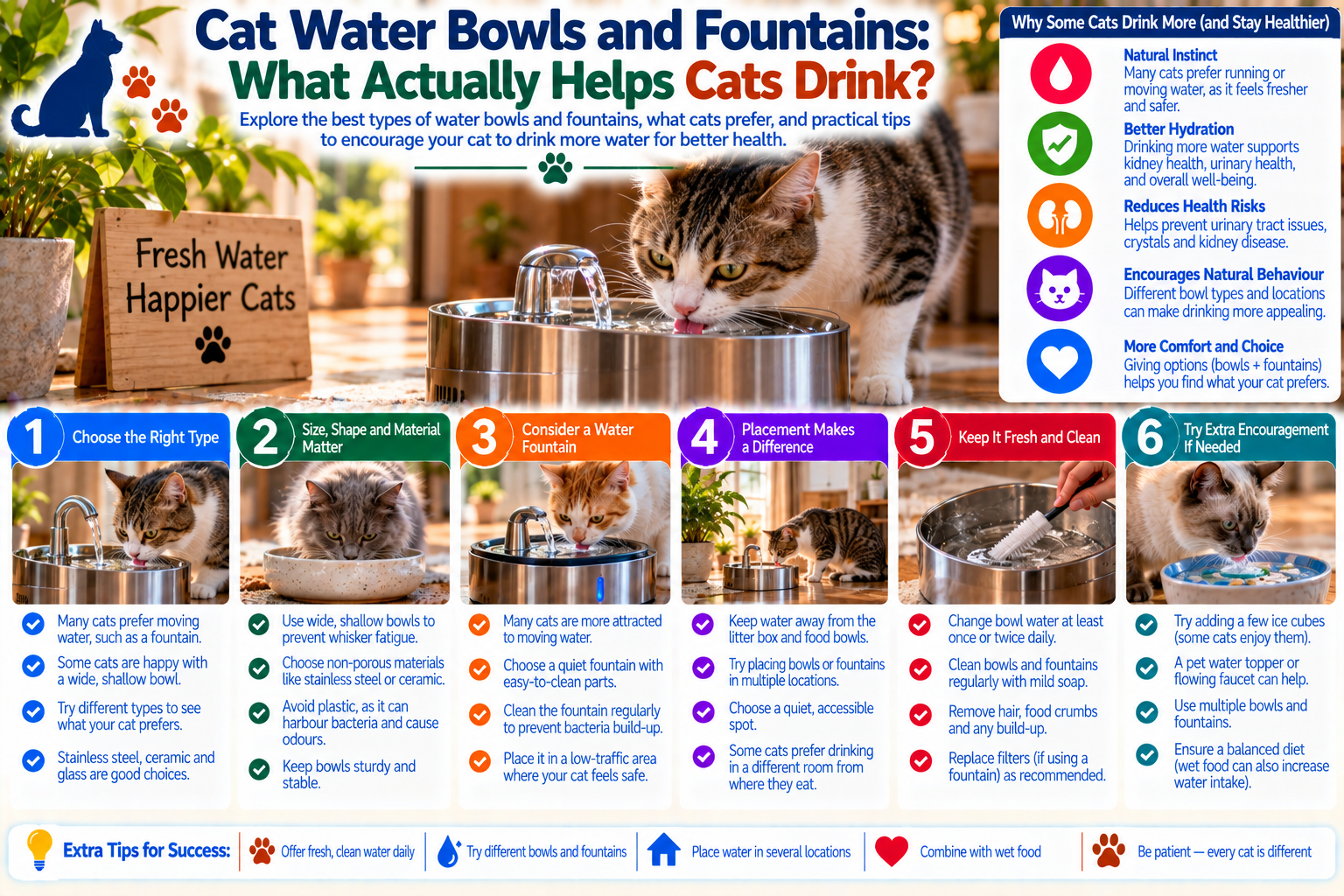
Put fresh water in more than one location, especially in a multi-cat home. Choose quiet spots where a cat can see its surroundings and leave easily. Keep water away from the litter tray, and try some separation from food. A second bowl in a favorite resting area can reveal a useful preference.
Compare water preferences
Try a second bowl before buying equipment. Placement may matter more than the shape of the water source.
| What you notice | Try this | Check next |
|---|---|---|
| Cat uses a distant bowl more often | Keep that location and offer another option | Daily drinking pattern |
| Cat suddenly drinks far more or less | Arrange veterinary advice | Urination, appetite and energy |
Consider bowl shape and material
A wide, shallow bowl may suit a cat that dislikes whiskers touching narrow sides. Try a stable ceramic, glass or stainless-steel bowl and wash it regularly. Some cats prefer a tall glass or a different water level. Avoid assuming a fashionable design is better without watching the cat drink.
Where a fountain may help
Some cats are interested in moving water. A fountain can be one more option, but it needs regular cleaning and filter maintenance. Introduce it alongside existing bowls, not as their sudden replacement. Check the pump, cable and noise level; a wary cat may avoid an unfamiliar sound.
Use food and routine sensibly
Wet food can contribute to overall water intake, but any diet change should suit your cat’s health and be introduced thoughtfully. Keep bowls clean and water fresh. Track any sudden change in drinking or urination rather than trying to solve it only by changing equipment.
Know when to call a vet
A cat that suddenly drinks much more or less, strains to urinate, seems unwell or stops eating needs veterinary advice. Difficulty passing urine is an emergency. Equipment changes cannot diagnose or treat the reason for altered thirst.
Try two different bowls in two quiet locations before deciding whether a fountain adds value. Source: International Cat Care, “Encouraging Your Cat to Drink” (International Cat Care guide).
Try placement before buying a fountain
Offer a second wide bowl away from food and litter for several days, then note which spot your cat uses. Wash bowls often and refresh the water. A fountain can help some cats, but sudden changes in thirst or urination deserve a veterinary check. Read our guide to cats drinking less water.
Frequently asked questions
Do cats need a fountain?
No. Some prefer moving water, while others drink happily from a clean bowl in a suitable place.
Where should I put water?
Try several calm locations away from litter trays and busy walkways; let your cat’s behavior guide placement.