
Cats naturally drink less water than many other pets, especially when they eat wet food. So a cat that rarely visits its water bowl isn’t necessarily a worry. But a noticeable change in drinking habits can sometimes point to dehydration, illness or a problem with how the water is set up.
In short: cats get much of their water from food, so cats on wet food often drink very little. Make water more appealing with clean, wide bowls in several spots or a fountain. Contact your vet if your cat suddenly drinks much less or much more than usual, or shows signs of dehydration.
Why some cats drink very little
Domestic cats are descended from desert-dwelling wildcats, and they tend to have a naturally low thirst drive. In the wild, cats get most of their moisture from their prey.
Pet cats get a lot of their water from food too. Wet food is mostly water, so a cat eating mainly wet food may barely touch its bowl and still be well hydrated. A cat on a dry food diet needs to drink noticeably more to make up the difference.
| Food type | Typical moisture content |
|---|---|
| Wet food (cans, pouches, trays) | Roughly 70–80% water |
| Dry food (kibble) | Around 10% water |
Check the water setup
Many cats are fussy about where and how they drink. If your cat doesn’t seem to drink enough, small changes can help:
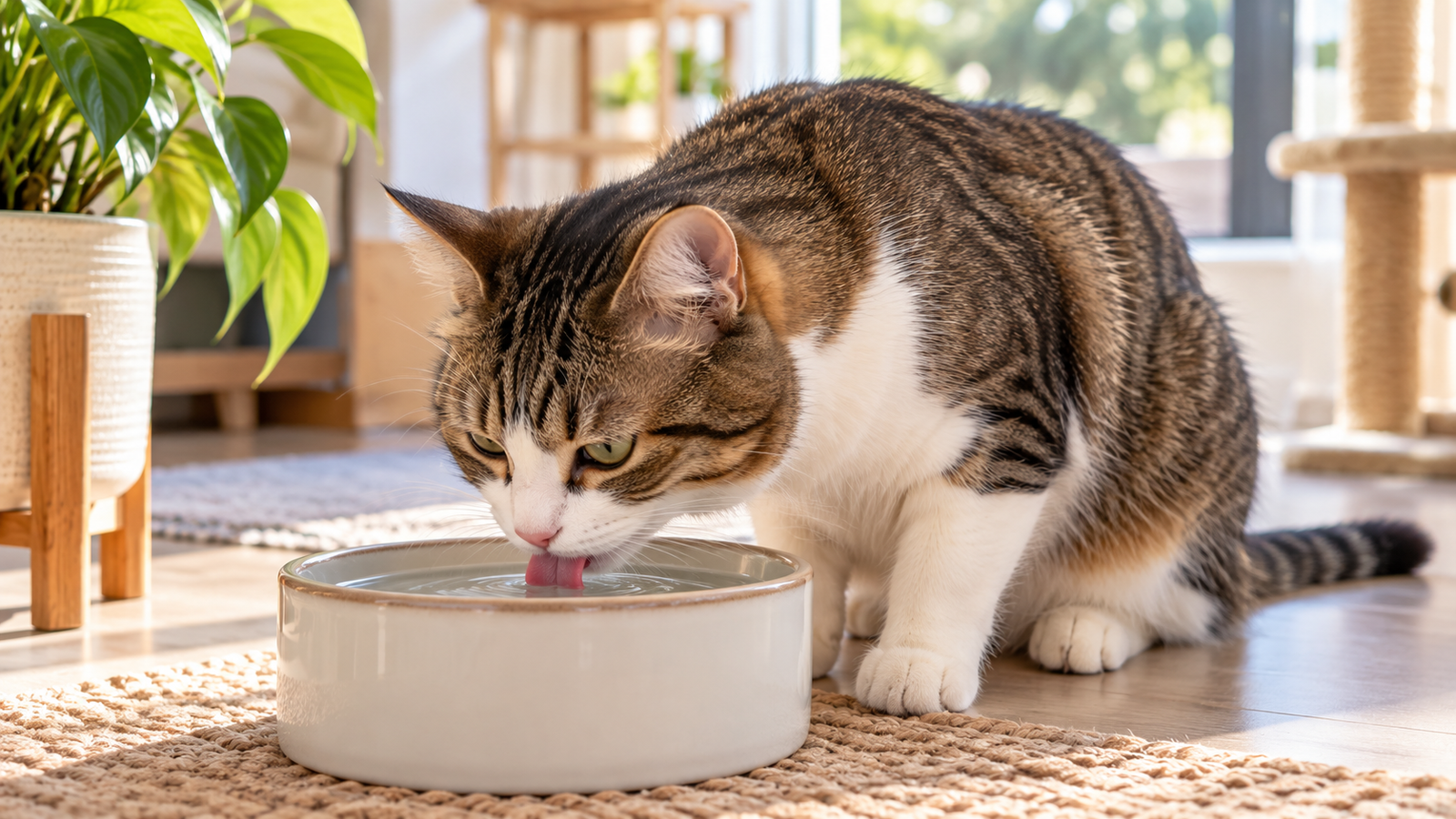
- Use a wide, shallow bowl so your cat’s whiskers don’t brush the sides.
- Choose ceramic, glass or stainless steel bowls. Some cats dislike the taste or smell of plastic.
- Keep water well away from the litter box.
- Place water a little away from the food bowl too, as many cats prefer to drink away from where they eat.
- Put several water bowls in different rooms.
- Wash bowls regularly and refresh the water every day.
- Try a cat water fountain if your cat likes moving water, and clean it and change the filter as the manufacturer recommends.
Wet food can boost water intake
Because wet food contains so much more moisture than dry food, feeding some or all wet food is one of the most effective ways to increase a cat’s total water intake. Some owners also add a little extra water to wet food.
If you change your cat’s diet, do it gradually over about a week, mixing the new food in with the old, to avoid an upset stomach.
Signs of possible dehydration
Watch for:
- Low energy or lethargy
- Dry or tacky gums
- Sunken-looking eyes
- Reduced appetite
- Less frequent urination, or smaller clumps in the litter box
- Weakness or unusual behavior
A quick check some owners use is to gently lift the skin between the shoulder blades. In a well-hydrated cat it springs back quickly. If it stays tented or goes back slowly, your cat may be dehydrated. This test is less reliable in older or thin cats, so contact your vet if you’re unsure.
When to contact your vet
Contact your vet if your cat suddenly drinks much less than usual, stops eating, vomits, has diarrhea, seems weak or shows changes in urination.
Urgent: if your cat, especially a male cat, is straining in the litter box and passing little or no urine, contact a vet immediately. A urinary blockage is a medical emergency.
It’s also worth knowing that drinking much more than usual can be a warning sign too. Increased thirst can be linked to conditions such as kidney disease, diabetes and an overactive thyroid, particularly in middle-aged and older cats. Any sudden change in thirst, in either direction, is worth a vet check.
Get to know your cat’s normal habits
Pay attention to your cat’s usual drinking, eating and litter box routine. Changes from that normal pattern tell you far more than comparing your cat with another pet or an exact daily target.
Keeping an eye on the litter box helps you spot changes early. Our guide on how many litter boxes cats need covers setup and the warning signs to watch for.
Frequently asked questions
Is it normal for my cat not to drink much water?
Often, yes. Cats have a naturally low thirst drive, and cats eating wet food get much of their water from their meals. What matters more is a sudden change from your cat’s normal drinking habits or signs of dehydration.
How can I get my cat to drink more water?
Offer wet food, place several wide, clean bowls around the home away from food and litter, refresh water daily and try a cat water fountain. Some cats also drink more when a little extra water is added to their wet food.
How can I tell if my cat is dehydrated?
Common signs include lethargy, dry or tacky gums, sunken eyes, reduced appetite and less urine in the litter box. If you notice these, contact your vet.
Should I worry if my cat is suddenly drinking a lot more?
Yes, it’s worth a vet check. A sudden increase in thirst can be linked to conditions such as kidney disease, diabetes and an overactive thyroid, especially in older cats.