
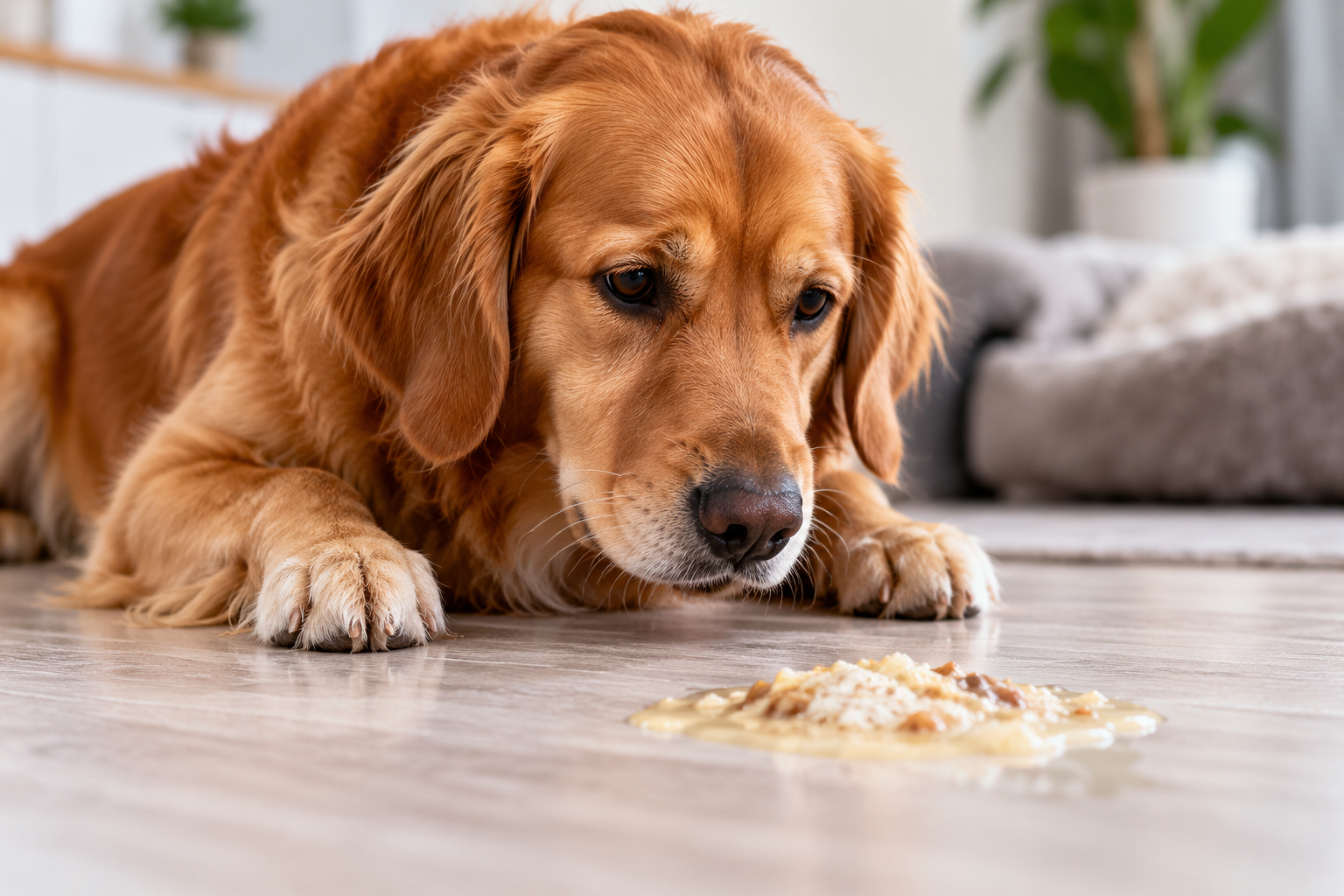

Dog vomiting can happen for something as simple as eating too quickly or getting into the garbage. However, it can also be a sign of poisoning, pancreatitis, an intestinal blockage, infection or another medical problem.
One isolated episode in an otherwise bright, comfortable dog may settle without becoming serious. In contrast, repeated vomiting, blood, weakness, abdominal pain or unsuccessful attempts to vomit can signal an emergency.
What Does Vomiting Look Like in Dogs?
True vomiting is an active process. A dog often shows nausea first, then uses the abdominal muscles to force stomach contents back up.
Before vomiting, you may notice:
- Lip licking
- Drooling
- Repeated swallowing
- Restlessness
- Nausea
- Retching
- Visible abdominal contractions
The vomit may contain food, clear fluid, mucus, foam, bile or, in more concerning cases, blood or foreign material.
Vomiting vs Regurgitation: What Is the Difference?
Vomiting and regurgitation are not the same problem. This distinction can help your veterinarian decide which part of the digestive system may be involved.
| Feature | Vomiting | Regurgitation |
|---|---|---|
| Effort | Usually involves nausea, retching and abdominal contractions. | Usually happens passively with little or no abdominal effort. |
| Timing | Can happen at different times after eating. | Often occurs soon after eating or drinking. |
| Material | May contain partly digested food, fluid, bile or foam. | Often contains undigested food or water. |
| Common area involved | Often relates to the stomach, intestines or wider illness. | Often points toward the esophagus. |
Common Causes of Dog Vomiting
There are many possible causes. Some are mild and temporary, while others need urgent treatment.
Common possibilities include:
- Eating garbage or spoiled food
- Eating too much or too quickly
- A sudden diet change
- Food intolerance or allergy
- Intestinal parasites
- Viral or bacterial infections
- Pancreatitis
- Swallowing a foreign object
- Toxin exposure
- Inflammatory gastrointestinal disease
- Kidney disease
- Liver disease
- Some hormonal or metabolic disorders
- Certain medications
- Cancer or other serious disease
Because the list is broad, the pattern of vomiting and your dog’s other symptoms matter greatly.
Dietary Indiscretion: When Dogs Eat Something They Shouldn’t
Dogs often explore with their mouths. As a result, they may eat leftovers, garbage, spoiled food, plants or unfamiliar objects.
A mild stomach upset may follow. However, the same history can also lead to poisoning or an intestinal obstruction.
Tell your veterinarian if your dog may have eaten:
- Garbage
- Spoiled food
- Human medication
- Cleaning products
- Chocolate
- Xylitol-containing products
- Grapes or raisins
- Plants or mushrooms
- Toys, socks or fabric
- Bones or corn cobs
- Other non-food objects
Can Changing Dog Food Cause Vomiting?
Yes. A sudden change in diet can upset some dogs’ digestive systems.
For example, switching rapidly between foods can lead to vomiting, diarrhea or reduced appetite in sensitive dogs.
However, repeated vomiting should not automatically be blamed on a recent food change. Parasites, pancreatitis, obstruction, infection and other illnesses can occur at the same time.
If vomiting started after a diet change and continues, contact your veterinarian rather than repeatedly switching foods.
Can Food Allergies Cause Vomiting in Dogs?
Food-related allergic disease can cause digestive symptoms in some dogs. However, vomiting alone does not prove that food allergy is responsible.
Dogs with suspected food allergy may also have chronic itching, recurring ear disease or other skin problems.
For more information, read: Dog Skin Allergies: Common Signs and Causes .
Can Worms Make a Dog Vomit?
Yes. Intestinal parasites can cause vomiting in some dogs, particularly when the parasite burden is high.
Roundworms are one example. Puppies with significant infections may also have diarrhea, poor growth or a pot-bellied appearance.
However, many dogs with intestinal parasites show few obvious signs.
For a full guide, read: Worms in Dogs: Common Types, Symptoms, and Prevention .
Dog Vomiting From a Foreign-Body Obstruction
Dogs sometimes swallow objects that cannot move normally through the stomach or intestines.
Examples include:
- Socks
- Toys
- Pieces of fabric
- Rocks
- Corn cobs
- Some bones
- String or similar material
A gastrointestinal obstruction can become life-threatening because it can cause severe dehydration, damage the intestine or lead to infection inside the abdomen.
Possible warning signs include:
- Repeated vomiting
- Loss of appetite
- Abdominal pain
- Lethargy
- Diarrhea in some cases
- Dehydration
- Little or no normal stool in some dogs
Pancreatitis and Vomiting in Dogs
Pancreatitis means inflammation of the pancreas. Vomiting is one possible sign, although the symptoms vary between dogs.
Other signs can include:
- Reduced appetite
- Abdominal discomfort
- Lethargy
- Diarrhea
- Dehydration
A dog with significant pancreatitis needs veterinary assessment. Therefore, do not assume repeated vomiting after eating rich or fatty food is simply indigestion.
Dog Vomiting and Gastrointestinal Infection
Bacterial and viral infections can also cause vomiting.
Puppies and incompletely vaccinated dogs deserve particular attention because some infectious diseases can become severe quickly.
Vomiting together with diarrhea, weakness, loss of appetite or fever should prompt veterinary advice, especially in a young dog.
Can Kidney or Liver Disease Cause Vomiting?
Yes. Vomiting does not always start with a stomach problem.
Kidney disease, liver disease and several other illnesses elsewhere in the body can cause nausea and vomiting.
This becomes more important when vomiting keeps returning or occurs with signs such as:
- Weight loss
- Changes in thirst
- Changes in urination
- Weakness
- Poor appetite
- Yellowing of the eyes, gums or skin
Blood and urine testing can help your veterinarian investigate these wider causes.
What Does Yellow Vomit Mean in Dogs?
Yellow or yellow-green fluid often contains bile.
A dog may vomit bile when the stomach is relatively empty. However, bile does not identify the underlying cause by itself.
Repeated yellow vomiting can occur with many digestive and medical conditions. Therefore, seek veterinary advice if it becomes frequent, persists or occurs with other signs of illness.
Why Is My Dog Vomiting White Foam?
White or clear foam can consist of stomach fluid, mucus and saliva mixed with air.
Sometimes it occurs with a mild stomach upset. However, the surrounding symptoms matter much more than the color alone.
For example, a dog repeatedly trying to vomit but producing little more than foam may have a much more serious problem, including gastric dilatation-volvulus.
Blood in Dog Vomit: What Does It Mean?
Blood in vomit deserves veterinary attention.
Fresh blood may look bright red. In contrast, partly digested blood can appear dark brown or resemble coffee grounds.
Possible causes include irritation, ulceration, swallowed blood, toxin exposure, foreign material and several other conditions.
Repeated Retching Without Vomit: A Possible Bloat Emergency
Repeated attempts to vomit without bringing up normal stomach contents are especially important.
When this happens together with a swollen or tight abdomen, restlessness, drooling, pain, pale gums, weakness or collapse, gastric dilatation-volvulus (GDV) is a major concern.
GDV occurs when the stomach becomes severely distended and may twist. The condition can rapidly interfere with blood circulation and become fatal without emergency treatment.
When Is Dog Vomiting an Emergency?
The number of vomiting episodes matters, but the dog’s overall condition matters even more.
Seek prompt or emergency veterinary care when vomiting occurs with:
- Repeated vomiting over a short period
- Blood or coffee-ground-like material in vomit
- A swollen or painful abdomen
- Repeated attempts to vomit without producing much
- Collapse
- Marked weakness
- Severe lethargy
- Pale, blue, grey or unusually discolored gums
- Difficulty breathing
- Severe abdominal pain
- Known or suspected toxin exposure
- Known or suspected foreign-object ingestion
- Seizures or major neurological changes
- Signs of severe dehydration
When Should You Call Your Vet for Dog Vomiting?
Even when the situation does not look like an immediate emergency, veterinary advice is appropriate if:
- Vomiting keeps happening
- Your dog cannot keep water down
- Your dog refuses food
- Vomiting continues into the next day
- Your dog also has diarrhea
- Your dog appears painful
- Your dog becomes less active than normal
- Vomiting returns repeatedly over days or weeks
- Your dog is losing weight
- You are unsure whether the dog is vomiting or regurgitating
Recurring vomiting, even when each episode appears mild, can signal an underlying medical problem.
Vomiting in Puppies
Puppies can become dehydrated and weak more quickly than healthy adult dogs.
In addition, vomiting in a puppy can occur with parasites, infections, dietary problems, foreign-body ingestion and other conditions.
Therefore, use a lower threshold for contacting your veterinarian when a puppy is vomiting.
Vomiting in Senior Dogs
Older dogs can develop the same mild stomach upsets as younger dogs. However, chronic medical conditions become more common with age.
Kidney disease, liver disease, cancer and medication-related problems can all contribute to vomiting.
For that reason, new or recurring vomiting in a senior dog deserves veterinary discussion rather than being dismissed as a sensitive stomach.
How Can You Tell if a Vomiting Dog Is Dehydrated?
Repeated vomiting can cause dehydration and electrolyte problems.
Possible signs include:
- Dry or tacky gums
- Weakness
- Reduced energy
- Sunken-looking eyes in significant dehydration
- Reduced urination
- Poor interest in drinking
However, home checks cannot accurately measure the degree of dehydration.
If your dog keeps vomiting or cannot hold down water, veterinary assessment is safer than trying to judge hydration at home.
What Information Should You Give Your Veterinarian?
A clear history can make diagnosis easier.
Try to note:
- When vomiting started
- How many times it has happened
- Whether it occurs before or after meals
- What the vomit looks like
- Whether blood is present
- Any recent food changes
- Possible access to garbage or toxins
- Possible swallowed objects
- Current medications or supplements
- Whether diarrhea is also present
- Changes in drinking or urination
- Any weight loss
- Changes in energy or behavior
How Do Veterinarians Diagnose the Cause of Vomiting?
The diagnostic plan depends on your dog’s history, age, examination and other symptoms.
First, the veterinarian will usually perform a physical examination. They may check hydration, temperature, gum color and abdominal comfort.
Depending on the situation, further tests may include:
- Blood tests
- Urine tests
- Fecal or parasite testing
- Abdominal X-rays
- Ultrasound
- Specific tests for pancreatitis or other diseases
- Endoscopy in selected cases
- Exploratory surgery when a serious obstruction remains suspected
For example, abdominal imaging is particularly important when a foreign-body obstruction is possible.
How Is Vomiting in Dogs Treated?
Treatment depends on the cause rather than the symptom alone.
For a mild digestive upset, a veterinarian may recommend temporary dietary changes and an easily digested diet. In contrast, a dog with significant dehydration may need fluid therapy.
Veterinary treatment can also include:
- Prescription anti-nausea medication
- Fluid and electrolyte support
- Treatment for parasites
- Treatment for an underlying infection or disease
- Specific care for pancreatitis
- Toxin treatment when appropriate
- Endoscopic or surgical removal of a foreign object
- Emergency surgery for GDV
Therefore, the correct treatment can range from simple supportive care to emergency surgery.
Should You Give a Vomiting Dog Human Medicine?
No medication should be given simply because it is commonly used for nausea or stomach upset in people.
Some human medications are unsafe for dogs. Others can hide symptoms, interact with existing medication or make diagnosis more difficult.
Even medications that veterinarians sometimes prescribe for dogs need an appropriate dose and medical reason.
Should You Feed a Dog That Has Vomited?
The answer depends on the dog’s age, health and how severe the vomiting is.
If a healthy adult dog has vomited once and otherwise acts normally, your veterinarian may suggest a short period of digestive rest followed by small portions of an easily digested diet.
However, do not use a fasting plan automatically for every dog.
Puppies, very small dogs, diabetic dogs, senior dogs and dogs with other medical conditions may need a different approach.
If vomiting is repeated, your dog appears unwell or food immediately triggers more vomiting, contact your veterinarian.
Should a Vomiting Dog Drink Water?
Preventing dehydration matters. However, a nauseated dog may vomit again after drinking a large amount quickly.
Do not force water into your dog’s mouth.
For a mild isolated episode in an otherwise healthy dog, small amounts of water may be easier to tolerate than gulping a large bowl at once.
If your dog repeatedly vomits after drinking or cannot keep water down, contact a veterinarian promptly.
What Should You Avoid Doing at Home?
Avoid these common mistakes:
- Giving human medicines without veterinary advice
- Trying to induce vomiting without professional guidance
- Forcing food or water into a nauseated dog
- Assuming blood in vomit is harmless
- Ignoring repeated unproductive retching
- Waiting at home after known toxin exposure
- Waiting after a known foreign object was swallowed
- Repeatedly changing foods without identifying the cause
- Using leftover medication from an earlier illness
Why Does My Dog Keep Vomiting?
Recurring vomiting is different from one isolated stomach upset.
If your dog vomits regularly over days, weeks or months, possible causes include:
- Chronic gastrointestinal inflammation
- Food-related disease
- Parasites
- Pancreatic disease
- Liver or kidney disease
- Medication effects
- Partial obstruction
- Some hormonal disorders
- Cancer
- Other chronic disease
Therefore, recurring vomiting deserves a veterinary workup even if your dog appears normal between episodes.
Frequently Asked Questions
Why is my dog vomiting but acting normal?
A single episode can occur after a mild stomach upset, dietary indiscretion or eating too quickly. However, a dog can also appear fairly normal during the early stages of some illnesses. Monitor closely and contact your veterinarian if vomiting repeats or other symptoms appear.
When should I worry about my dog vomiting?
Seek veterinary care when vomiting is repeated, contains blood, occurs with weakness, lethargy, abdominal pain, dehydration or diarrhea, or follows possible toxin or foreign-object ingestion. Repeated unsuccessful attempts to vomit with a swollen abdomen are an emergency.
Why is my dog throwing up yellow liquid?
Yellow liquid often contains bile. It may appear when the stomach is relatively empty, but color alone does not reveal the cause. Repeated yellow vomiting should be discussed with a veterinarian.
Why is my dog vomiting white foam?
White foam can contain saliva, mucus and stomach fluid. A mild stomach upset is one possibility. However, repeated retching with only foam, especially with abdominal swelling or restlessness, can be an emergency.
What does blood in dog vomit look like?
Fresh blood may appear bright red. Digested blood can look dark brown or similar to coffee grounds. Either finding deserves veterinary attention.
Can worms cause vomiting in dogs?
Yes. Some intestinal parasites can cause vomiting, especially with heavier infections. However, many infected dogs show no obvious signs, so fecal testing may be needed.
Can stress make a dog vomit?
Stress can contribute to gastrointestinal upset in some dogs. However, do not assume stress is the cause of repeated vomiting until medical problems have been considered.
Can eating grass make a dog vomit?
Some dogs eat grass and later vomit. However, dogs may also eat grass because they already feel nauseated. Frequent vomiting after grass eating deserves further investigation.
Should I feed my dog after vomiting?
It depends on the dog and the severity of the episode. A veterinarian may recommend small portions of an easily digested diet after mild vomiting settles. Puppies and dogs with medical conditions should not be fasted without veterinary advice.
Can I give my dog medicine for vomiting?
Only give medication that a veterinarian has recommended for your dog and the current problem. Do not use human medications or leftover prescriptions on your own.
How long is too long for a dog to keep vomiting?
Do not rely only on a time limit. Repeated vomiting over a short period can already require veterinary care, especially when other warning signs are present. If vomiting continues into the next day even though your dog otherwise seems well, contact your veterinarian.
Can a blockage cause vomiting even if my dog still poops?
Yes. Some partial obstructions can still allow stool or diarrhea to pass. Therefore, normal or reduced stool does not completely rule out a foreign-body obstruction when other signs fit.
The Bottom Line
Dog vomiting ranges from a short-lived stomach upset to a sign of a serious emergency.
One isolated episode in a dog that quickly returns to normal may not require emergency treatment. However, repeated vomiting, blood, pain, weakness, dehydration, toxin exposure or possible foreign-body ingestion needs veterinary attention.
Most importantly, never ignore repeated attempts to vomit when little or nothing comes up, especially if the abdomen looks swollen. That pattern can occur with GDV and requires immediate emergency care.
When vomiting keeps returning, focus on finding the underlying cause rather than repeatedly treating the symptom at home.
References and Further Reading
Cornell University College of Veterinary Medicine
Canine Health Center guidance on vomiting and gastrointestinal foreign-body obstruction in dogs.
VCA Animal Hospitals
Veterinary guidance on recognizing vomiting, distinguishing it from regurgitation, possible causes, diagnostic testing and treatment.
American Animal Hospital Association (AAHA)
Guidance on pet emergency warning signs, persistent vomiting and canine gastric dilatation-volvulus (GDV).


