
How often a leopard gecko needs to eat depends mostly on its age, size, health and activity level. Young geckos are growing fast and need food much more often than adults. A healthy adult does well on fewer, well-planned meals.
In short: feed babies daily, juveniles every day or two and healthy adults every two to three days. Offer live, gut-loaded insects no bigger than the space between your gecko’s eyes, dust them with calcium, and watch the tail and body weight rather than feeding as often as possible.
Leopard gecko feeding schedule by age
| Age | How often | Typical amount |
|---|---|---|
| Babies (up to about 4 months) | Every day | As many small insects as they’ll eat in around 10–15 minutes |
| Juveniles (about 4–12 months) | Every 1–2 days | Gradually fewer, larger insects as they grow |
| Adults (12 months and older) | Every 2–3 days, or 2–3 times a week | Often around 2 appropriately sized insects per inch (2.5 cm) of body length |
These are widely used guidelines, not strict rules. Adjust based on your gecko’s body condition, and ask a reptile vet if you’re unsure.
Young leopard geckos
Babies and juveniles grow quickly and need regular meals to support that growth. Offer small, appropriately sized insects daily for babies, then gradually space meals out as your gecko gets bigger. Young geckos should always be supplemented with calcium to support healthy bone development.
Adult leopard geckos
Healthy adults need fewer feeding sessions than juveniles. Portion size and body condition matter far more than feeding as often as possible. Adult leopard geckos that are fed too much, or too many fatty insects, easily become overweight.
Choose suitable feeder insects
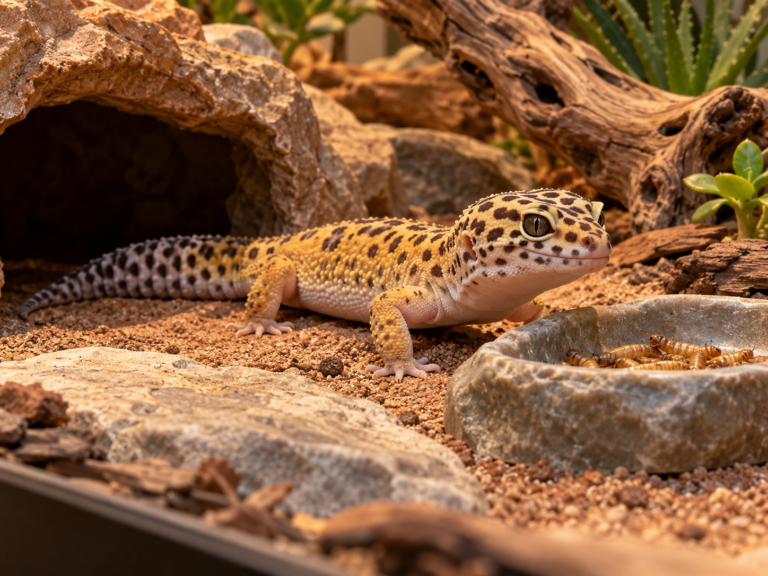
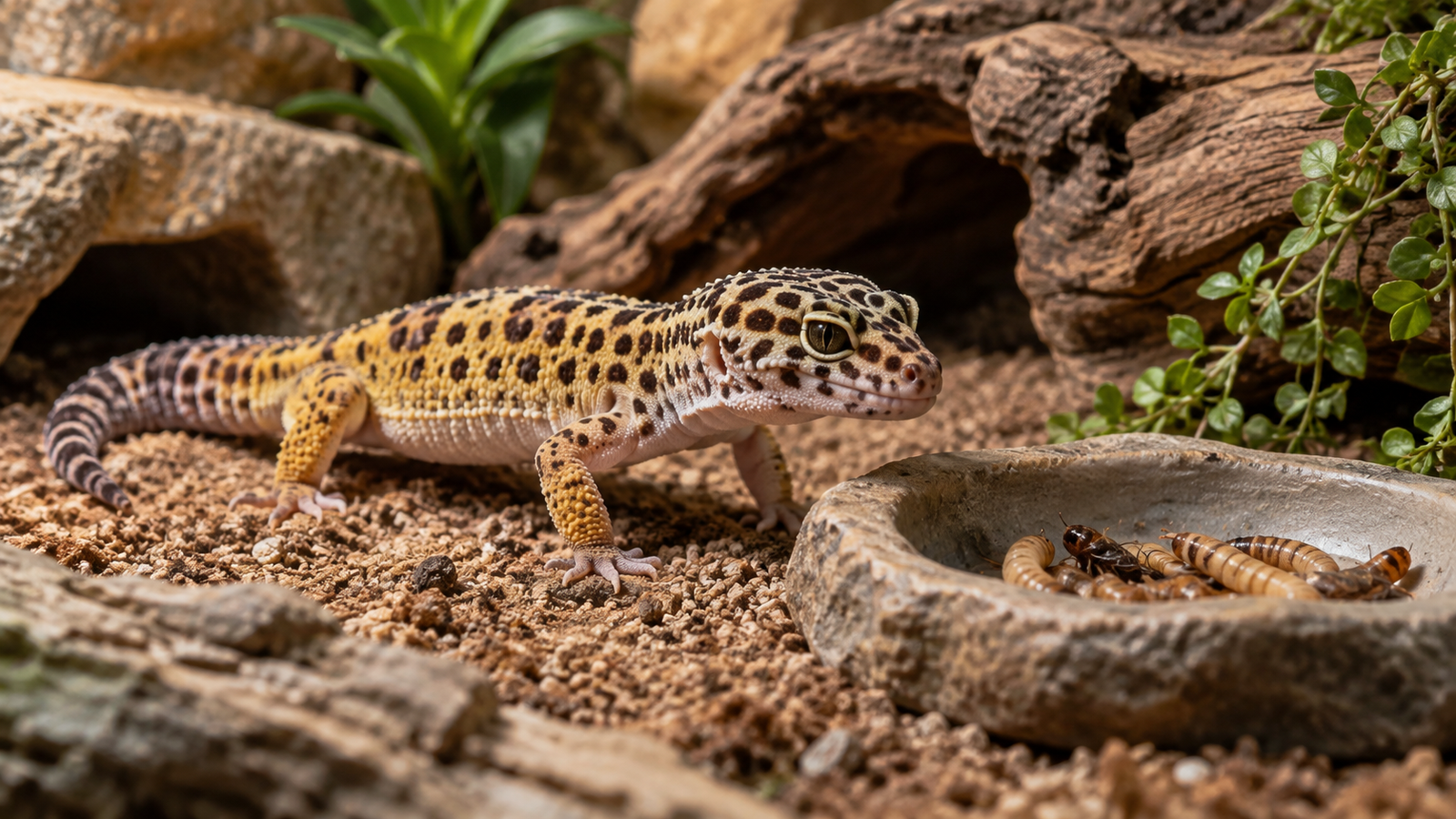
Leopard geckos are insectivores. They don’t eat fruit, vegetables or plant matter, so their diet should be made up entirely of live insects. Good staple choices include:
- Dubia roaches
- Crickets
- Black soldier fly larvae
- Silkworms
- Mealworms, in moderation
Waxworms and superworms are high in fat, so keep them as occasional treats. Never feed wild-caught insects, which can carry pesticides or parasites. Fireflies are toxic to reptiles and can be fatal.
A simple rule for size: never offer an insect bigger than the space between your gecko’s eyes. “Gut-load” feeder insects by giving them nutritious food for a day or two before feeding them to your gecko, and remove any live crickets that aren’t eaten, as they can nibble on a resting gecko.
Calcium and supplements
Leopard geckos need calcium and vitamins to stay healthy. Without enough, they can develop metabolic bone disease, which causes weak, rubbery bones, a soft jaw and difficulty walking.
- Most keepers lightly dust insects with a calcium powder at most feedings.
- A reptile multivitamin is usually added on some feedings, often once a week or so.
- Many keepers also leave a small dish of plain calcium (without vitamin D3) in the enclosure.
Whether your calcium should contain vitamin D3 depends on whether you use UVB lighting, which is increasingly recommended for leopard geckos. Too much D3 or vitamin A can also be harmful, so follow a reptile vet’s guidance or the product instructions rather than guessing.
Watch body condition
Leopard geckos store fat in their tails, which makes the tail one of the best guides to health.
| Tail | What it may mean |
|---|---|
| Plump, roughly as wide as the neck | A healthy weight |
| Thin, narrower than the neck | Underweight, or a possible health problem such as parasites |
| Very thick, with fat bulges under the arms | Overweight, often from overfeeding or too many fatty insects |
Weighing your gecko every few weeks on a kitchen scale that measures in grams is an easy way to spot changes early.
When appetite changes
It’s normal for a leopard gecko to eat less for short periods, for example:
- Just before and during a shed
- In cooler months, when some adults naturally slow down
- During breeding season, especially in males
- For a few days after moving to a new home
A common cause of poor appetite is an enclosure that’s too cool, because leopard geckos need warmth to digest food. Check that the warm side has a basking surface of around 90–95°F (32–35°C).
Contact a reptile vet if your gecko refuses food for more than a couple of weeks, loses weight, has a rapidly thinning tail, regurgitates food, has runny droppings or seems weak or lethargic.
Keep feeding consistent
A balanced insect diet, correct supplements and the right enclosure temperatures all work together. Feeding more often can’t make up for a setup that’s too cold or lacks proper supplementation.
If your gecko refuses food, our guide on why a leopard gecko stops eating explains what to check. For temperatures and hides, see how to set up a leopard gecko tank.
Frequently asked questions
How often should I feed an adult leopard gecko?
Most healthy adult leopard geckos do well being fed every two to three days, or two to three times a week. Adjust the amount based on body condition, and avoid too many fatty insects.
How often should I feed a baby leopard gecko?
Babies are usually fed every day, and juveniles every one to two days. Offer small, appropriately sized insects dusted with calcium to support healthy growth.
Can leopard geckos eat fruit or vegetables?
No. Leopard geckos are insectivores and should be fed only live insects, such as dubia roaches, crickets, black soldier fly larvae and silkworms.
Why is my leopard gecko not eating?
Common reasons include shedding, cooler seasonal temperatures, breeding season, stress after a move or an enclosure that’s too cold. If your gecko refuses food for more than a couple of weeks or is losing weight, contact a reptile vet.