
Rabbits are prey animals, and prey animals that look weak get singled out. So rabbits have evolved to carry on as normal for as long as they possibly can, even when they are sick or in pain. By the time a rabbit looks obviously ill, the problem has often been building for a while.
That makes spotting the signs your rabbit is unwell a matter of noticing small changes early: a bowl of pellets left untouched, fewer droppings in the tray, a rabbit sitting in a corner instead of coming to greet you. Some of these changes can wait for a routine appointment. Others cannot wait even a few hours.
Quick answer: a rabbit that stops eating or stops passing droppings needs a vet urgently, day or night, as does one with flystrike, open-mouth breathing, collapse or a sudden severe head tilt. Other warning signs include drooling, dropping food, weepy eyes, loud tooth grinding, hunching and changes in behavior. A short daily health check is the best way to catch problems early.
The two signs you should never wait on
Start with the most important rule: a rabbit that stops eating, or stops pooping, is an emergency. A rabbit’s gut is designed to keep moving all the time on a steady supply of fiber. When food stops going in, the gut slows down, gas-producing bacteria take over and the rabbit feels worse, which makes it even less likely to eat. That spiral can become life-threatening within hours.
Signs to act on straight away:
- Ignoring hay, greens or a favorite treat
- Few or no droppings, or droppings that are much smaller, drier or misshapen
- Sitting hunched and still, not wanting to move
- A tight, swollen or bloated-feeling belly
Urgent: contact a vet immediately, day or night, if your rabbit has stopped eating or passing droppings, is breathing through its mouth, has maggots or eggs on its body, has collapsed, is having a seizure, or is straining to pass urine. Do not wait until the morning to see if things improve.
Gut stasis: what it looks like
Gastrointestinal (GI) stasis is the name vets use for that dangerous slowdown of the gut. It is not really a disease in itself. It is usually a response to something else: a diet too low in hay, stress, dental pain, another illness or anything else that puts a rabbit off its food.
Early on, you might see a rabbit that nibbles a little but less than normal, or droppings that are getting smaller. Later, the rabbit may stop eating completely, sit hunched with a tense belly, grind its teeth loudly and seem uninterested in its surroundings. Treatment needs a vet, both to support the gut and to find out what triggered the problem in the first place. Please do not try to manage it at home.
Dental problems
Rabbit teeth grow continuously throughout life. They are meant to be worn down by hours of chewing hay and grass every day. When the diet does not provide enough of that grinding, or the teeth do not line up properly, the teeth can overgrow, develop sharp spurs that cut the tongue and cheeks, or develop root problems and abscesses.
Dental disease often starts quietly. Look out for:
- Drooling or a wet, matted chin
- Picking up food and dropping it, or choosing soft foods over hay
- Weight loss or a rougher coat from less grooming
- Weepy eyes or a runny nose, since the tooth roots sit close to the tear ducts and nasal passages
- Lumps along the jaw or face
A rabbit with any of these needs a vet appointment soon, and any rabbit that has stopped eating needs one urgently. Plenty of good-quality hay every day is the best protection.
Flystrike in warm weather
Flystrike happens when flies lay eggs on a rabbit, usually in soiled fur around the tail and bottom. The eggs hatch into maggots that start to eat into the skin, and a rabbit can go from healthy to critically ill very quickly.
It is most common in warmer months, but indoor rabbits are not immune if flies can get in. Rabbits that struggle to groom themselves are at the highest risk, including overweight, older and arthritic rabbits and those with dental disease, as are rabbits with diarrhea or a dirty rear end for any reason.
Check your rabbit’s bottom every day, and twice a day in warm weather or for high-risk rabbits. If you find eggs or maggots, call a vet at once. There is no safe home treatment for flystrike.
Head tilt and balance problems
A rabbit whose head is twisted to one side, who rolls, circles or struggles to stay upright, may have an inner ear infection or an infection with a parasite called E. cuniculi, among other causes. Any head tilt needs a vet check. Treat it as urgent if your rabbit is falling over, rolling, seems distressed or has stopped eating.
While you arrange care, keep the rabbit in a quiet, dim space with soft, flat flooring and food and water within easy reach.
Breathing changes
Rabbits breathe through their noses and cannot easily switch to breathing through their mouths the way we can. A healthy rabbit at rest breathes quietly with little visible effort. A rabbit breathing with its mouth open, stretching its neck up to breathe or making noisy, labored breaths is in serious trouble and needs a vet immediately.
Less dramatic signs, such as sneezing, a snotty nose, stained or matted fur on the front legs from wiping the face, or noisy breathing, still need a prompt appointment. Keep stress to a minimum when you transport a rabbit with breathing problems.
Other changes worth taking seriously
Book a vet visit if you notice:
- A rabbit that is quieter, sleepier or less curious than usual
- Changes in how much your rabbit drinks or urinates
- Diarrhea (runny droppings, not the soft cecotropes rabbits normally eat)
- Hiding, reluctance to be touched or new aggression
- Limping, wounds, lumps or bald patches
- Sore, red patches on the hocks or feet
A two-minute daily health check
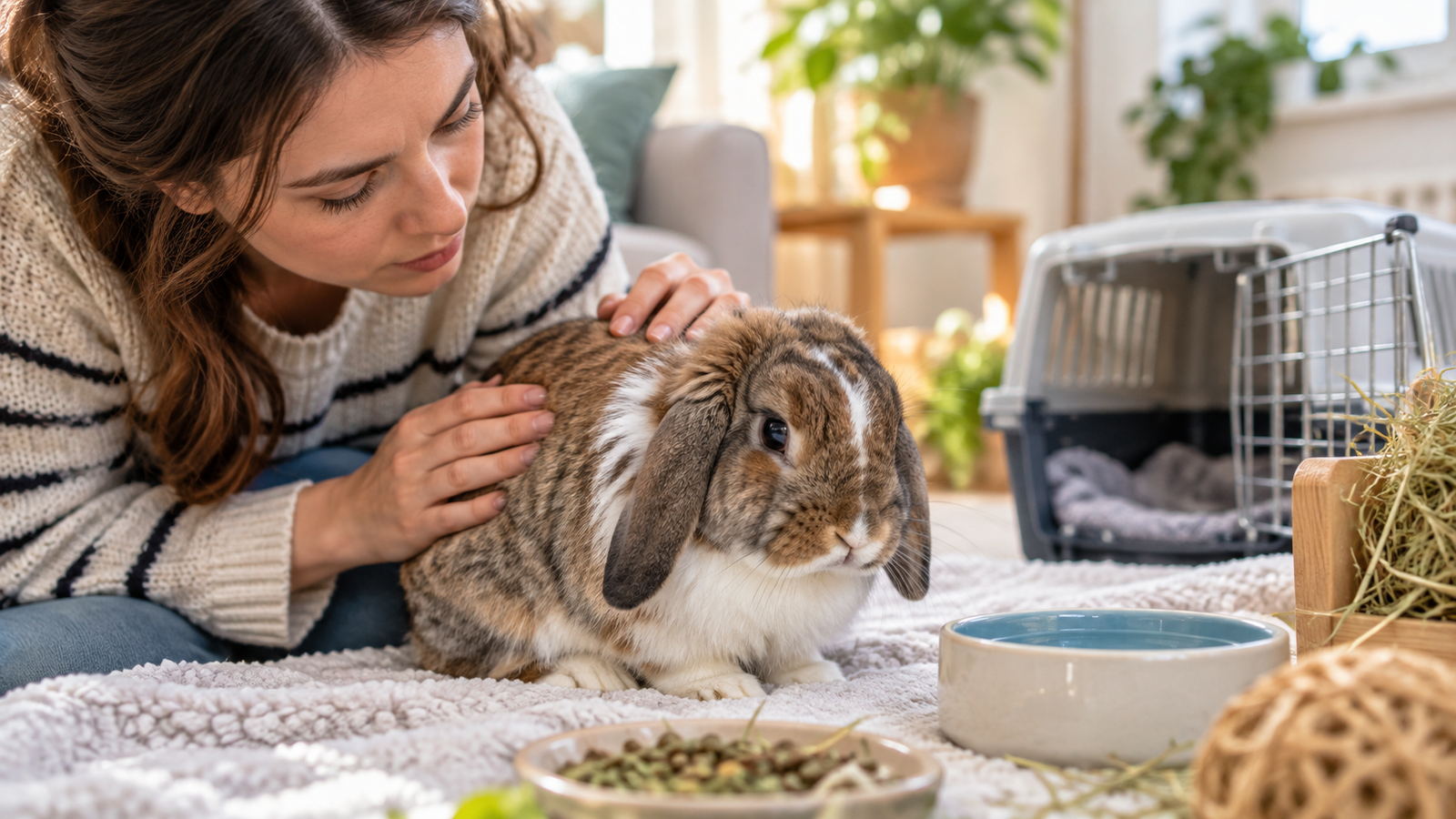
Learning what is normal for your rabbit is the most useful tool you have. These checks fit easily into feeding time:
- Watch them eat. Put down fresh greens or a small handful of pellets and see that your rabbit comes over with its usual enthusiasm.
- Look at the litter tray. You want plenty of round, dry, fairly uniform droppings. A sudden drop in number or size is an early warning.
- Check the bottom. The fur around the tail should be clean and dry.
- Glance at the face. Eyes should be bright and clear, the nose dry, and the chin free of wet fur.
- Notice how they move and sit. A relaxed rabbit flops, stretches out and hops normally. A rabbit in pain often sits tucked and hunched, with its eyes half closed.
Once a week, add a closer look at the front teeth, nails and weight.
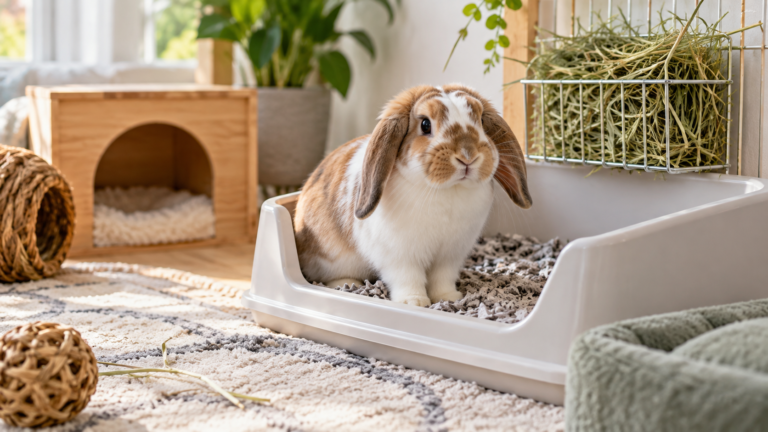
Many of the problems above, dental disease and gut stasis especially, trace back to diet or living conditions. It’s worth checking your routine against what rabbits should eat every day and how to set up a comfortable rabbit home.
Frequently asked questions
How long can a rabbit go without eating?
Not long at all. A rabbit that has stopped eating can become seriously ill within hours, so do not wait to see if the appetite returns. Contact a vet straight away, even if that means an out-of-hours clinic.
Is teeth grinding in rabbits a sign of pain?
It depends on the sound. Soft, gentle tooth clicking in a relaxed rabbit is often a sign of contentment. Loud grinding, especially with a hunched posture or half-closed eyes, is a common sign of pain and needs a vet check.
Why is my rabbit not pooping?
Fewer or no droppings usually means the gut has slowed down, often because of stress, pain, dental problems or a diet too low in hay. It is an emergency, so contact a vet straight away.
Can indoor rabbits get flystrike?
Yes. The risk is highest outdoors in warm weather, but flies can reach indoor rabbits too. Check your rabbit’s bottom daily, and twice daily in warm weather or if your rabbit struggles to groom.