
An upper respiratory infection, often called “cat flu” or a cat cold, affects the nose, throat, sinuses and eyes. It’s one of the most common illnesses in cats, especially kittens, shelter cats and homes with several cats. Most adult cats recover within a week or two with good home care, but some cats, particularly kittens and older or unwell cats, can become seriously ill and need a vet.
Quick answer: Sneezing, a runny nose, watery or sticky eyes and a reduced appetite are the classic signs, usually caused by feline herpesvirus or calicivirus. A cat that is still eating and acting normally can often be cared for at home and usually improves in 7–14 days. See a vet if your cat stops eating, has thick yellow or green discharge, mouth ulcers, a fever, is lethargic, or has any trouble breathing, and always for kittens.
What causes cat flu?
According to VCA, about 90% of feline upper respiratory infections are caused by two viruses: feline herpesvirus type 1 and feline calicivirus. Bacteria such as Bordetella bronchiseptica and Chlamydia felis can also be involved, sometimes on their own and sometimes as secondary infections on top of a virus.
The infection spreads through direct contact with an infected cat and through its eye and nose discharge or saliva. It can also travel on shared bowls, litter boxes, bedding, toys and people’s hands. Shelters, boarding catteries and multi-cat homes are higher-risk settings.
Symptoms to look for
- Sneezing and a blocked or runny nose
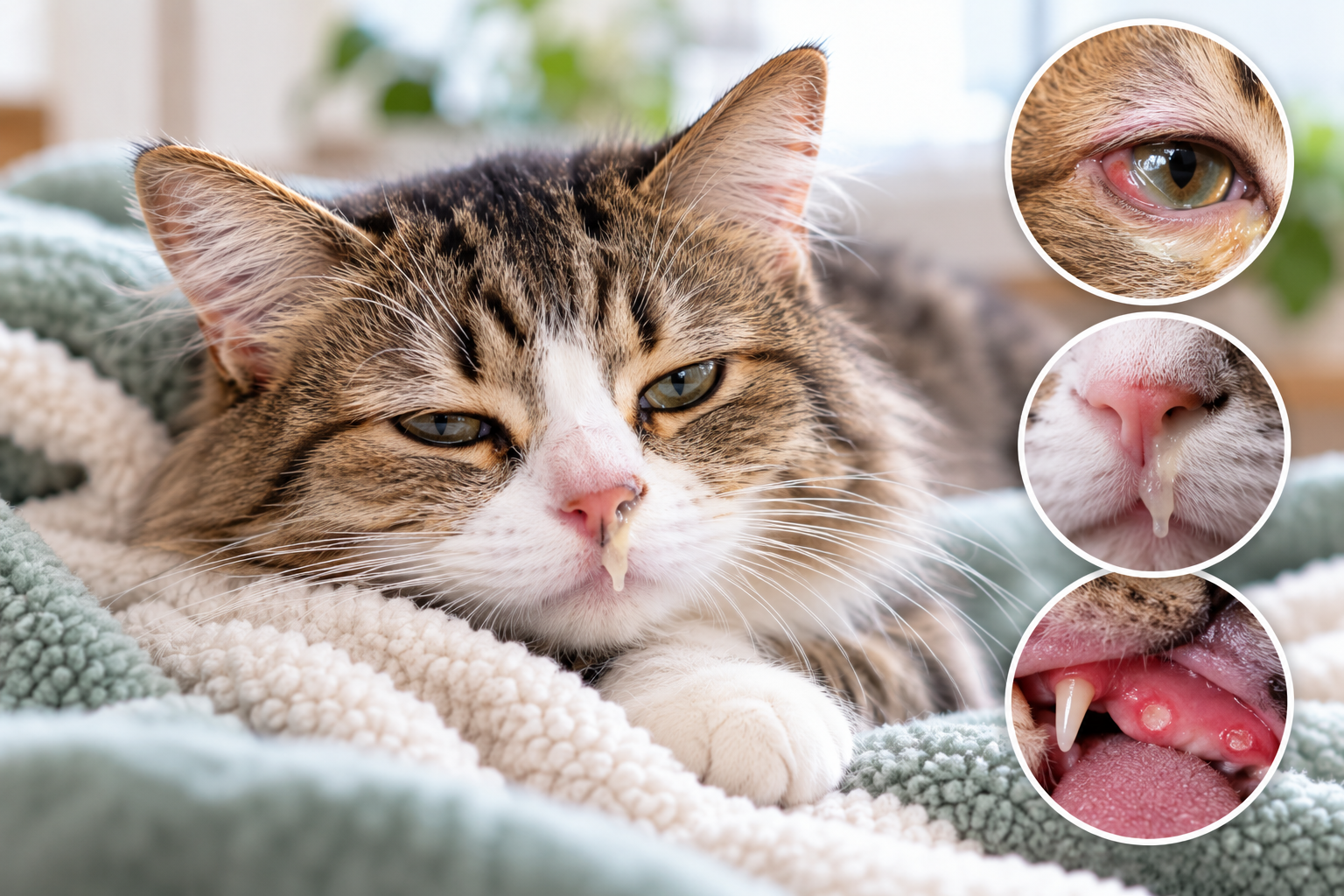
- Clear, then cloudy, yellow or green nose or eye discharge
- Red, swollen, squinting or watery eyes; see cat eye problems
- Mouth or tongue ulcers, drooling, or reluctance to eat (more common with calicivirus)
- Reduced appetite, because a blocked nose means the cat can’t smell its food
- Fever, tiredness and hiding
- Breathing through the mouth or noisy breathing in more severe cases
Signs usually appear 2–10 days after exposure. VCA notes that uncomplicated cases typically last 7–14 days, though some signs can linger for up to three weeks.
When to see a vet
Dr. Erin Henry of Cornell’s shelter medicine program, quoted in Catwatch, says a cat that is sneezing but still eating and acting normally can often be watched at home. See a vet if:
- Your cat stops eating or eats much less; cats shouldn’t go without food for long
- The discharge becomes thick, yellow or green
- Your cat is lethargic, hiding or seems unwell
- There are mouth ulcers, drooling or obvious pain when eating
- The eyes are very swollen, cloudy or your cat keeps one eye shut
- Signs get worse or last longer than about 10 days
- The cat is a kitten, a senior, unvaccinated, or has another health condition
Urgent: go to a vet straight away if your cat is breathing with its mouth open, struggling to breathe, has blue or pale gums, hasn’t eaten for a day, or is very weak. Kittens with cat flu can become dehydrated and seriously ill quickly.
Caring for your cat at home
- Keep the nose and eyes clean. Gently wipe away discharge with cotton pads or a soft cloth dampened with warm water, using a fresh piece for each eye.
- Use steam. Sitting with your cat in a closed bathroom while a hot shower runs for 10–15 minutes can loosen congestion. Never put your cat in the shower.
- Make food smell appealing. Offer strong-smelling wet food. Warming it slightly (then stirring and checking it’s only lukewarm) can help a congested cat smell it.
- Keep your cat drinking. Fresh water should always be available, and wet food adds extra moisture.
- Reduce stress. Give a warm, quiet resting spot. Stress makes symptoms worse and can trigger herpesvirus flare-ups.
- Don’t give human cold medicines. Many are toxic to cats. Only use medicines or nose drops your vet recommends.
How vets treat it
Antibiotics don’t kill viruses, but vets may prescribe them if there are signs of a bacterial infection, such as thick discharge. Other treatments can include eye drops or ointment, antiviral medicines for herpesvirus in some cases, pain relief for mouth ulcers, and appetite support. Cats that are dehydrated or very unwell may need fluids and hospital care.
Why cat flu can come back
Many cats never fully clear the viruses. VCA notes that around 80% of cats infected with herpesvirus become lifelong carriers. The virus can lie dormant and flare up again during stressful times such as moving house, boarding, illness or a new pet arriving. Carriers may look healthy but can still spread infection to other cats. Keeping stress low, especially during changes such as moving house with a cat, helps reduce flare-ups.
Preventing cat flu
- Vaccinate. Core vaccines protect against herpesvirus and calicivirus. They don’t always stop infection, but they make it much milder and shorter. See our cat vaccination schedule.
- Quarantine new cats. Keep a new cat separate for at least one to two weeks and get it checked by a vet before introductions; see how to introduce a new cat to your cat.
- Keep sick cats apart and use separate bowls, litter boxes and bedding.
- Wash your hands after handling a sick cat and clean shared items.
Kittens are especially vulnerable; see common health problems in kittens. For other warning signs, see signs your cat is sick, and for emergencies, cat first aid basics.
Frequently asked questions
How long does a cat cold last?
Most uncomplicated cases last about 7–14 days, though some signs can linger for up to three weeks. If your cat isn’t improving after about 10 days, or gets worse, see your vet.
Can my cat give me a cold?
The common cat flu viruses, herpesvirus and calicivirus, don’t infect people. However, you can carry them on your hands or clothes to other cats, so wash your hands after handling a sick cat.
Why won’t my cat eat when it has a cold?
A blocked nose stops cats from smelling their food, and mouth ulcers can make eating painful. Offer strong-smelling, slightly warmed wet food, and contact your vet if your cat hasn’t eaten for a day.
Do vaccinated cats still get cat flu?
They can, but vaccines usually make the illness much milder and shorter. Vaccination reduces the severity of herpesvirus and calicivirus infections rather than preventing every case.