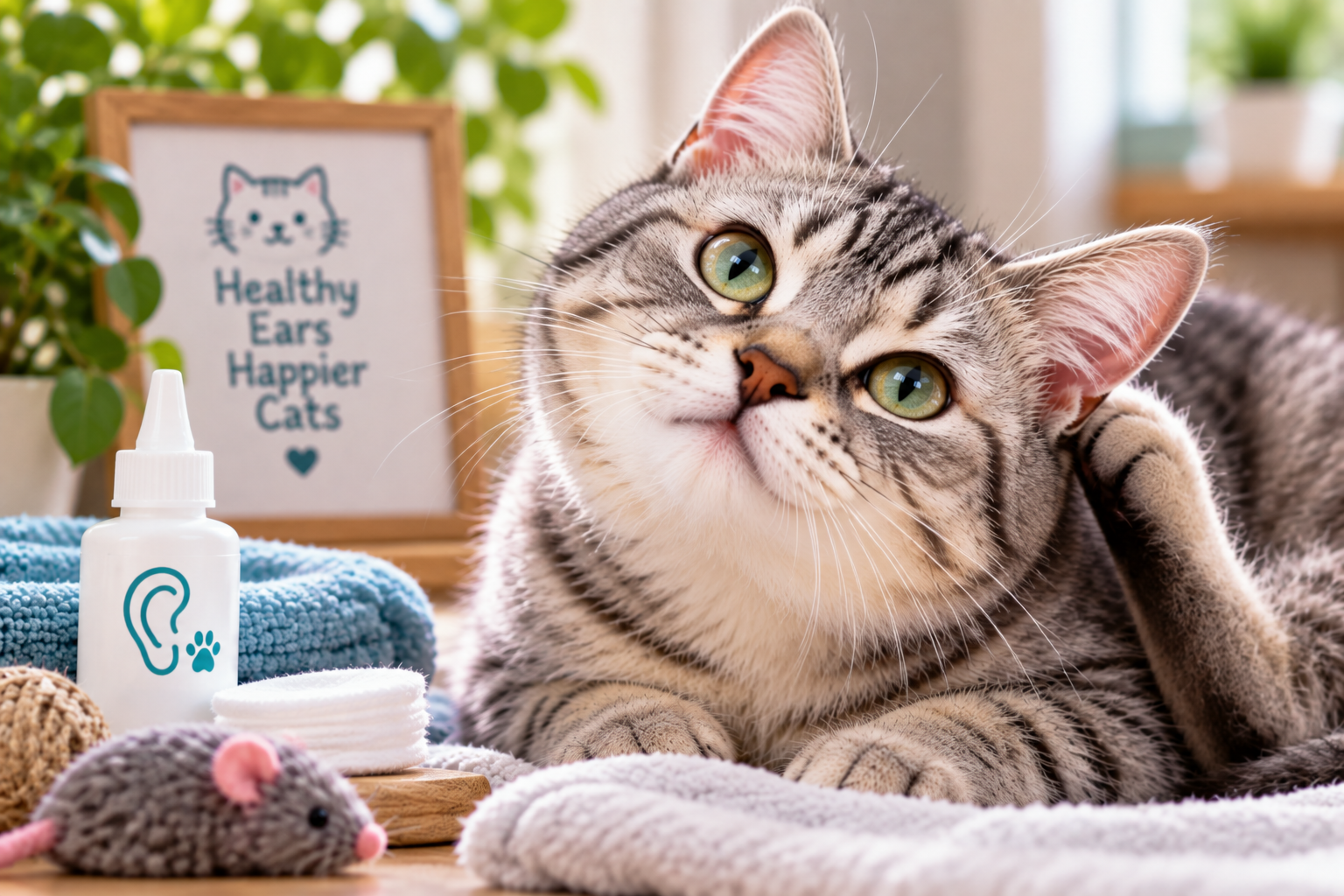

Healthy cat ears are clean, pale pink inside and don’t smell. Most cats keep their own ears in good shape, so when a cat starts scratching its ears, shaking its head, or you notice dark wax or a bad smell, something is usually wrong. Ear mites are the classic cause, especially in kittens and outdoor cats, but allergies, infections, growths and injuries are common too. Ear problems are uncomfortable and can damage hearing and balance if left, so they’re worth checking early.
Quick answer: Head shaking, ear scratching, dark or smelly discharge, redness, a swollen ear flap or a tilted head are signs of an ear problem. Common causes are ear mites, allergies, infections, polyps and injuries. See a vet rather than treating at home, because the right treatment depends on the cause. Go promptly if your cat has a head tilt, loss of balance, or seems in pain. Never push cotton swabs into the ear canal.
Signs of ear problems in cats
- Scratching or rubbing the ears or face
- Shaking the head, or holding the ears flat or at an odd angle
- Dark brown, black, yellow or bloody discharge
- A bad smell from the ears
- Redness, swelling or scabs on or around the ear
- A soft, puffy swelling of the ear flap
- Pain when the ears or head are touched
- A head tilt, walking in circles, wobbliness or flickering eyes
- Hearing loss
Common causes
| Cause | Typical clues |
|---|---|
| Ear mites | Intense itching; dark, crumbly, smelly debris; common in kittens and outdoor cats; spreads between pets |
| Allergies | Itchy, red ears, often with itching elsewhere on the face or body |
| Bacterial or yeast infection | Discharge, smell, redness; often a result of allergies or mites |
| Polyps | Non-cancerous growths, often in young cats; discharge, head tilt, sometimes noisy breathing |
| Aural hematoma | Soft, fluid-filled swelling of the ear flap after scratching or shaking |
| Foreign body | Sudden head shaking in one ear, for example from a grass seed |
| Sun damage | Crusty, sore edges on white or pale ears that get worse over time |
Ear mites
Ear mites are tiny parasites that live in the ear canal. Cornell’s Feline Health Center says they spread by close contact between animals and are most common in outdoor cats. Typical signs are near-constant scratching, frequent head shaking and a dark, smelly build-up of wax and debris in the ear. Your vet can confirm mites by looking in the ear or checking a sample under a microscope.
Treatment usually involves cleaning the ears and using a vet-prescribed mite treatment. Because mites spread easily, all cats and dogs in the home often need treating at the same time. Some monthly parasite products also cover ear mites, so ask your vet; see fleas and ticks on cats.
Allergies and infections
Allergic skin disease is a common hidden cause of ear trouble. Inflamed, itchy ears are easily invaded by bacteria and yeast, leading to infection. Treating the infection helps, but it may come back unless the allergy is managed too. See cat skin allergies.
Polyps and growths
Polyps are fleshy, usually non-cancerous growths that can start in the middle ear or throat. They’re seen most often in young cats and can cause discharge, a head tilt or noisy breathing. They usually need removing by a vet. Any lump in or on an older cat’s ear should be checked.
Swollen ear flap
If a cat scratches or shakes its head hard, a blood vessel in the ear flap can burst and fill the flap with blood, making it puffy like a pillow. This is called an aural hematoma. It needs vet treatment, and the itch that caused it needs sorting out too.
When to see a vet
See your vet whenever your cat has signs of an ear problem. Ear problems rarely clear up on their own, and medicines that are safe for one condition can be harmful if the eardrum is damaged. FirstVet advises making an appointment right away if your cat has a head tilt or is off-balance.
Urgent: go to a vet promptly if your cat suddenly has a head tilt, loss of balance, walks in circles, has flickering eyes, seems in a lot of pain, has bleeding from the ear, or a hugely swollen ear flap. These can mean the middle or inner ear is involved.
Should you clean your cat’s ears?
Most healthy cats don’t need routine ear cleaning. If your vet recommends it, use a vet-approved ear cleaner and follow their instructions. Gently wipe only the parts of the ear you can see with cotton wool or a soft pad.
- Never push cotton swabs into the ear canal. They can pack wax deeper or damage the eardrum.
- Don’t use alcohol, hydrogen peroxide or household products, which can sting and irritate.
- Don’t use leftover ear drops from another pet or a past problem without checking with your vet.
A quick look inside your cat’s ears during regular grooming helps you spot changes early.
Preventing ear problems
- Use regular parasite control that your vet recommends
- Have new cats checked before they mix with your other pets
- Manage allergies with your vet’s help
- Protect white or pale-eared cats from strong sun, especially in the middle of the day
- Check ears regularly and act early on any scratching or smell
Ear problems can be painful; see signs your cat is in pain. For other warning signs, see signs your cat is sick, and for emergencies, cat first aid basics.
Frequently asked questions
What does ear mite dirt look like in cats?
Ear mites usually cause a dark brown or black, crumbly, smelly build-up in the ear canal, along with lots of scratching and head shaking. Other problems can look similar, so a vet should confirm it before treatment.
Can I treat my cat’s ear infection at home?
It’s best not to without a vet check. The right treatment depends on whether the cause is mites, bacteria, yeast, allergies or a growth, and some ear drops can be harmful if the eardrum is damaged.
Why does my cat’s head tilt to one side?
A head tilt can mean the middle or inner ear is affected, for example by infection or a polyp, and it can also have other causes. See your vet promptly, especially if your cat is also wobbly or circling.
Can ear mites spread to other pets?
Yes. Ear mites spread easily between cats and can also affect dogs. Your vet will often recommend treating every pet in the home at the same time.