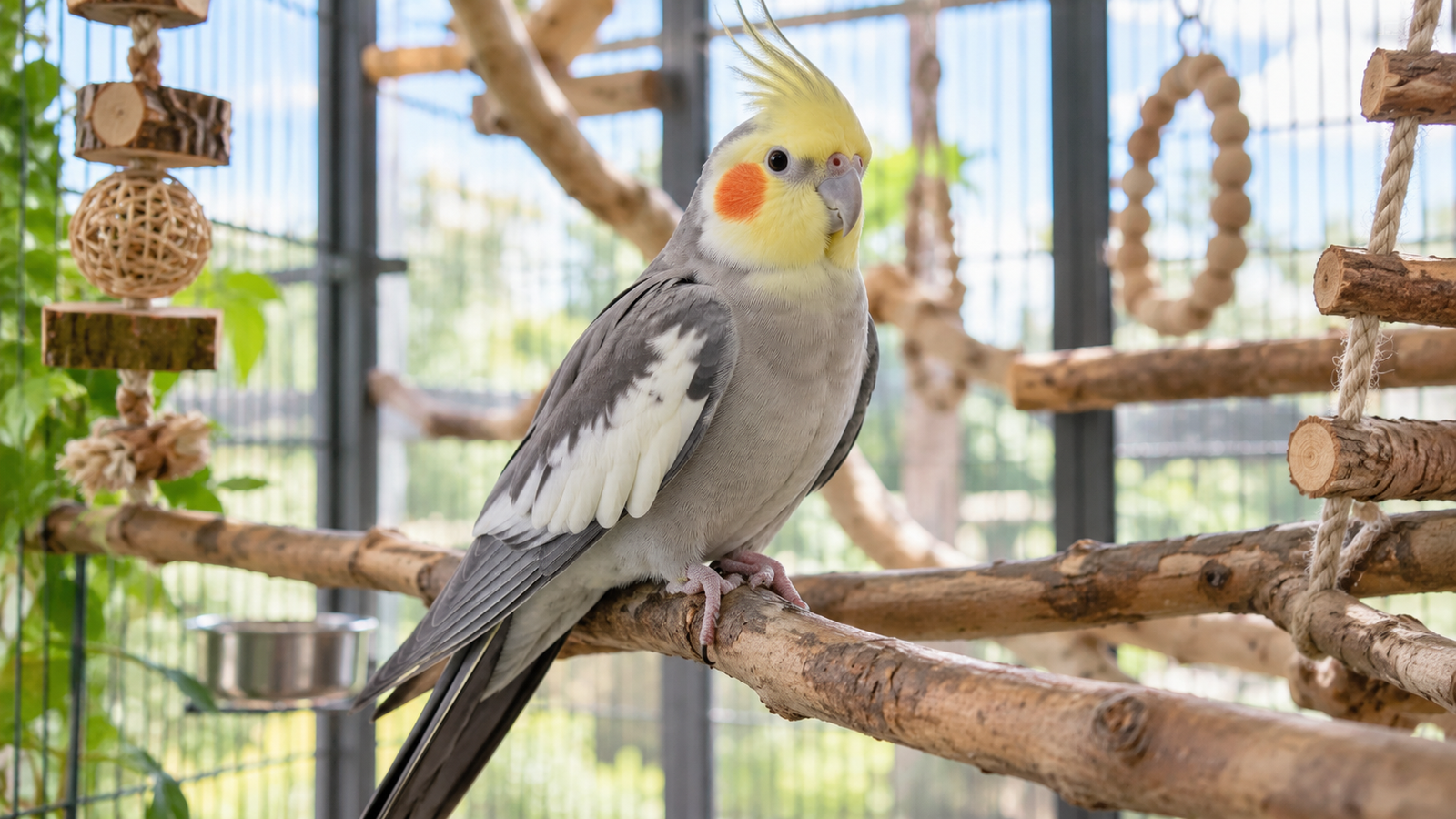

Cockatiels are naturally chatty birds, so some noise is part of the package. But frequent or unusually loud screaming usually means something is going on, whether it’s boredom, a bid for attention, fear, loneliness or a change in routine. Working out when and why your cockatiel screams is the first step to making things quieter for everyone.
In short: morning and evening calls are normal. Excessive screaming usually comes from attention-seeking, boredom, fear, routine changes or poor sleep. Give plenty of enrichment and company, reward quiet rather than noise, and see an avian vet if screaming comes with any signs of illness.
Why do cockatiels scream?
Some calling is completely normal. In the wild, cockatiels live in flocks and use calls to keep in touch with each other. In your home, you are part of that flock. Many cockatiels are especially noisy around sunrise and sunset, which is natural flock behavior rather than a problem.
Screaming becomes a problem when it’s frequent, constant or much louder than usual. These are the most common reasons.
| Cause | What it often looks like |
|---|---|
| Seeking attention | Calls loudly when you leave the room, and stops when you come back |
| Boredom | Repetitive screaming when nothing is going on around it |
| Fear | Sharp alarm calls, often with a raised crest and flapping |
| Change in routine | Noisier than usual after a move, a new schedule or a new pet |
| Tiredness | Crankier and louder, especially in the evening |
It wants attention
Your cockatiel may call loudly when you walk out of the room or when it wants to interact. This is a natural contact call, the bird’s way of checking where its flock has gone. The trouble is that cockatiels learn fast. If screaming reliably brings you back, it quickly becomes a habit.
It’s bored
Cockatiels are intelligent and need things to do. Without enough toys, activities or chances to explore, a bored bird can become frustrated and increasingly noisy.
It’s frightened
Sudden noises, unfamiliar people, other pets, shadows at the window or changes near the cage can all set off alarm calls. A frightened cockatiel may also raise its crest high, flap or try to move away.
Its routine has changed
Cockatiels like predictability. Changes to feeding times, bedtime, cage location or household activity can make your bird noisier for a while until it adjusts.
Provide daily enrichment
A busy bird is usually a quieter bird. Try to:
- Rotate safe toys every week or two so there’s always something new.
- Offer foraging toys so your bird has to work for some of its food.
- Provide perches of different sizes and textures, plus places to climb.
- Give daily, supervised time out of the cage in a bird-safe room.
- Spend regular, consistent time talking to, training and playing with your bird.
Don’t reward constant screaming
If screaming always gets an immediate reaction, even an angry one, the behavior tends to get stronger. Try not to rush over, shout back or make eye contact while your bird is screaming.
Instead, wait for a moment of quiet or a softer sound, then go over and give attention or a treat. With time, your cockatiel learns that calm sounds bring you back and screaming doesn’t.
It also helps to give your bird an acceptable way to keep in touch. When you leave the room, answer its contact call with a short whistle or a word from wherever you are. Many cockatiels settle once they know where you’ve gone.
Never punish a screaming bird by shouting, spraying water or covering the cage as a punishment. These increase fear and stress and usually make the problem worse. Make sure everyone in the household responds the same way.
Make sure your bird gets enough sleep
Cockatiels generally need around 10 to 12 hours of sleep a night in a quiet, dark place. A tired bird is often crankier and noisier. Keep a regular bedtime, and consider a separate sleeping cage in a quiet room if the main living area stays busy late into the evening.
Cockatiels are also prone to “night frights,” where a sudden noise or movement in the dark causes them to thrash around the cage. A dim night light near the cage can help your bird orient itself and settle down if this happens.
When screaming may signal a problem
Birds are good at hiding illness, so pay attention if a sudden change in noise comes with any of the following:
- Eating less than usual
- Sitting fluffed up for long periods
- Tail bobbing or labored breathing
- Weakness, or sitting on the cage floor
- Changes in droppings
- Plucking or damaging its own feathers
Contact an avian vet promptly if you notice any of these, or if you’re worried about your bird’s health.
Look for the pattern
Keep a simple note of when your cockatiel screams and what happened just before: you leaving the room, a noise outside, the time of day. Once you can see the trigger, it’s much easier to deal with the cause instead of just reacting to the noise.
Sleep and diet both affect behavior, so our guides on how much sleep pet birds need and what cockatiels should eat are worth reading too.
Frequently asked questions
Why does my cockatiel scream when I leave the room?
It’s usually a contact call. Cockatiels are flock birds and call out to find where their flock has gone. Answering with a short whistle or word from the other room, and rewarding quiet behavior instead of screaming, can help reduce it.
Is it normal for cockatiels to scream in the morning and evening?
Yes. Many cockatiels are naturally noisier around sunrise and sunset, which is normal flock behavior. It’s only a concern if the screaming is constant or comes with other changes in behavior or health.
How do I stop my cockatiel from screaming?
Find the trigger first. Then give plenty of enrichment and social time, make sure your bird gets 10 to 12 hours of sleep, avoid rewarding screaming with attention, and reward quiet or softer sounds instead. Never punish your bird, as that usually makes screaming worse.
How much sleep does a cockatiel need?
Cockatiels generally need about 10 to 12 hours of sleep each night in a quiet, dark place. Too little sleep can make them crankier and noisier.