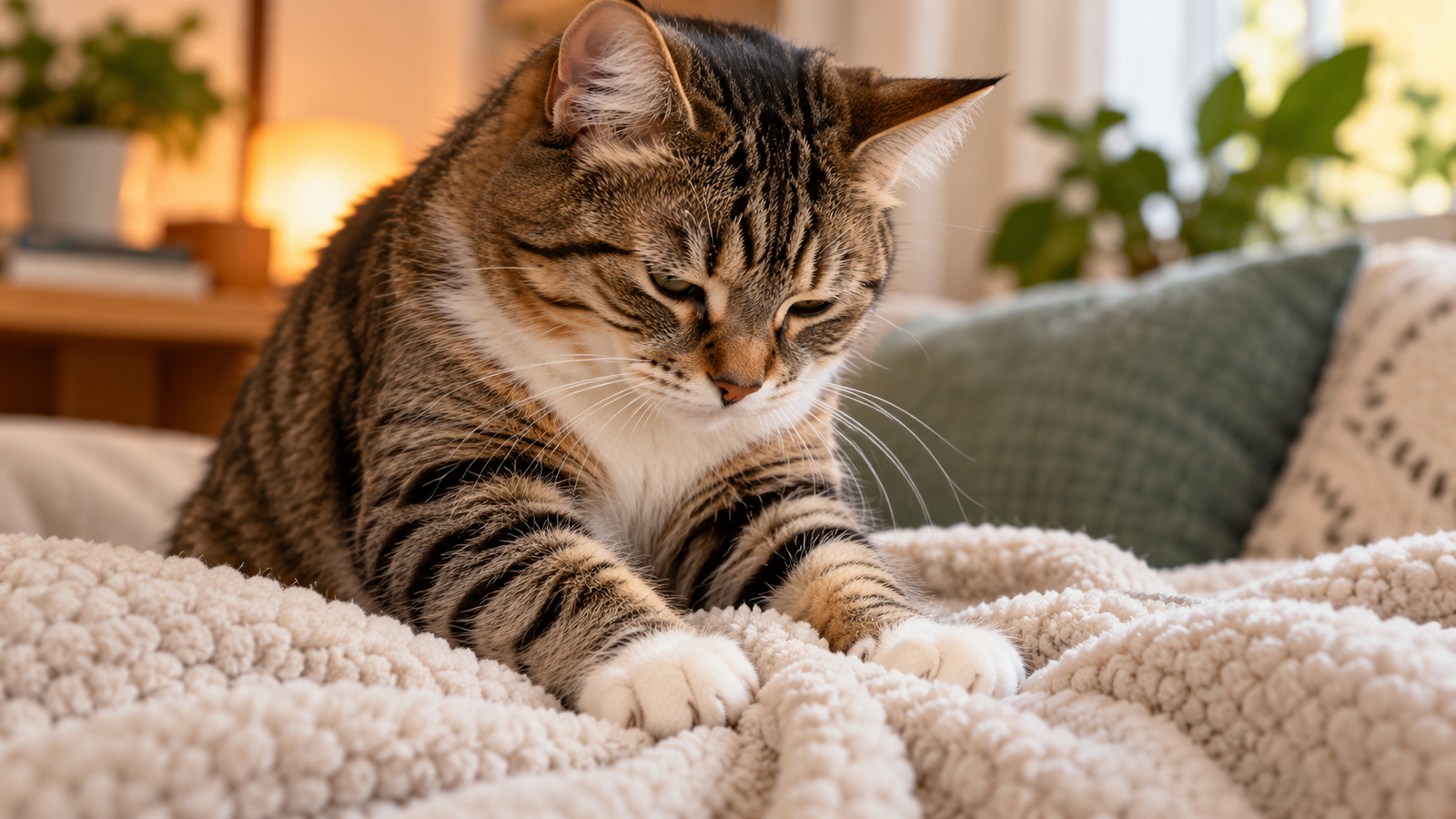

Kneading is when a cat pushes its front paws in and out against something soft, one paw after the other, often purring with half-closed eyes. People call it “making biscuits.” Nobody can ask a cat why it does this, so no one knows for certain. But behavior experts generally agree on where it starts and what it usually means, and for most cats it is a sign of feeling relaxed and safe.
At a glance: Kneading most likely starts in kittenhood, when kittens knead their mother to help the milk flow. Adult cats seem to keep doing it when they feel content and comfortable. It may also help them soften a resting spot and leave scent from glands in their paws. It is normal and harmless, though claws can hurt. A thick blanket and trimmed nails usually solve that.
Why cats knead
It starts with nursing
Newborn kittens knead their mother’s belly while they feed, which helps stimulate milk flow. This is the explanation most experts consider likeliest for adult kneading. The motion seems to stay linked with the warmth, food and safety of those early weeks, and grown cats often knead in moments that feel similar: curled on a soft blanket, settling on a lap, or drifting off to sleep.
It’s a sign of comfort and contentment
Most kneading happens when a cat is relaxed. Purring, slow blinking, drooling a little and a loose, soft body often come with it. When a cat kneads on you, it is usually a good sign that it feels safe with you. VCA notes that cats tend to knead only people and animals they like.
Making a comfortable bed
Some cats knead and circle before lying down, as if fluffing a pillow. One idea is that this is left over from wild ancestors pressing down grass or leaves to make a soft, safe place to rest.
Leaving their scent
Cats have scent glands in their paw pads, so kneading may leave a little of their scent on blankets, beds or people. This is a possibility rather than a proven reason. Scratching is more clearly tied to scent marking than kneading is.
When your cat kneads on you
Being chosen for kneading is generally a compliment. The only problem is the claws. Many cats push their claws out as they knead, and on bare legs that can sting.
Never punish or push away a kneading cat roughly. It is a natural, happy behavior, and scolding can make your cat nervous about sitting with you. Instead, try these:
- Keep a thick blanket or towel on your lap and slip it under your cat when it settles. Many cats soon learn that the blanket is part of lap time.
- Trim the tips of the claws regularly. Our guide on how to trim cat nails walks you through it.
- Gently move your cat into a slightly different position if one spot is uncomfortable, or stand up slowly. Your cat will usually find another soft place.
- Give scratching outlets. Cats that scratch on a good post tend to keep their claws in better shape. See how to get a cat to use a scratching post.
Is kneading ever a problem?
Usually not. Some cats knead a lot, others hardly ever, and both are normal. Cats that were weaned early are sometimes said to knead more, but every cat is different.
It’s worth paying closer attention if the pattern changes suddenly. VCA suggests checking with your vet if a cat starts kneading much more than usual, or in odd places such as hidden under a bed, especially with other changes like hiding, eating less or seeming unsettled. Those can be signs of stress or discomfort. Our guide to signs your cat is in pain covers what else to look for.
Some cats suck or nibble on blankets while kneading. Gentle sucking on its own is common. But if your cat chews holes in fabric or swallows pieces of it, talk to your vet, as eaten fabric can cause a dangerous blockage in the gut.
Other ways cats show they feel safe
Kneading is one of several signs that a cat is relaxed around you. Others include slow blinking, rubbing its head and cheeks against you, showing its belly while lounging, and following you from room to room (more on that in why your cat follows you everywhere). A home with soft resting spots, hiding places and daily play, like the ideas in our indoor cat enrichment guide, helps your cat feel secure.
Frequently asked questions
Why does my cat knead me and not other people?
Cats usually knead people they feel safe and relaxed with. If your cat picks you, it most likely sees you as a source of comfort. Your lap may also just be the warmest, softest spot available.
Why does my cat drool when kneading?
Some very relaxed cats drool a little while kneading and purring. It is thought to be linked to the same nursing feelings that kneading comes from. Occasional drooling in a happy cat is normal, but drooling at other times, or with bad breath or eating problems, should be checked by a vet.
Do all cats knead?
No. Many cats knead, but some rarely or never do. A cat that doesn’t knead isn’t unhappy; it may simply show contentment in other ways, such as purring, slow blinking or rubbing against you.
Should I stop my cat from kneading?
There is no need to stop it, as it is a normal, comforting behavior. If the claws hurt, put a thick blanket on your lap and keep the claw tips trimmed rather than pushing your cat away.