
A good rabbit home gives your rabbit room to move, rest, eat, hide and explore. Rabbits are active, curious animals, and a small hutch or cage can’t meet their needs on its own. The right setup supports both comfort and natural rabbit behavior like running, digging, chewing and jumping.
In short: give your rabbits a large, permanent living space rather than a small cage, with hides, unlimited hay next to the litter box, non-slip flooring and things to chew and dig. Rabbit-proof the area, keep it clean and dry, and remember that rabbits are happiest living with another rabbit.
Provide plenty of space
Rabbits need enough room to hop several times in a row, stretch out fully when lying down and stand up on their back legs without their ears touching the roof. Most traditional hutches and pet store cages are far too small to allow that.
A large exercise pen, a rabbit-proofed room or a secure shed with an attached run usually works much better. The UK’s Rabbit Welfare Association & Fund recommends a minimum living area of 3 m × 2 m and 1 m high (about 10 × 6.5 × 3 feet) for a pair of rabbits, available all the time rather than just for a few hours a day.
| Need | What it looks like |
|---|---|
| Movement | Room for several hops in a row, and ideally a short run |
| Standing up | Enough height to stand fully upright on the back legs |
| Resting | Space to lie fully stretched out in any direction |
| Hiding | At least one hide per rabbit, ideally with two exits |
| Constant access | All of this available at all times, not only during exercise sessions |
Rabbits are most active at dawn and dusk, so they need freedom to move around at those times too, not only when you happen to be home.
Rabbits need company
Rabbits are social animals and are usually happiest living with at least one other rabbit. A neutered male and a neutered female often make a good pair. Plan your space with two rabbits in mind, and introduce new rabbits gradually on neutral ground.
Create a resting area
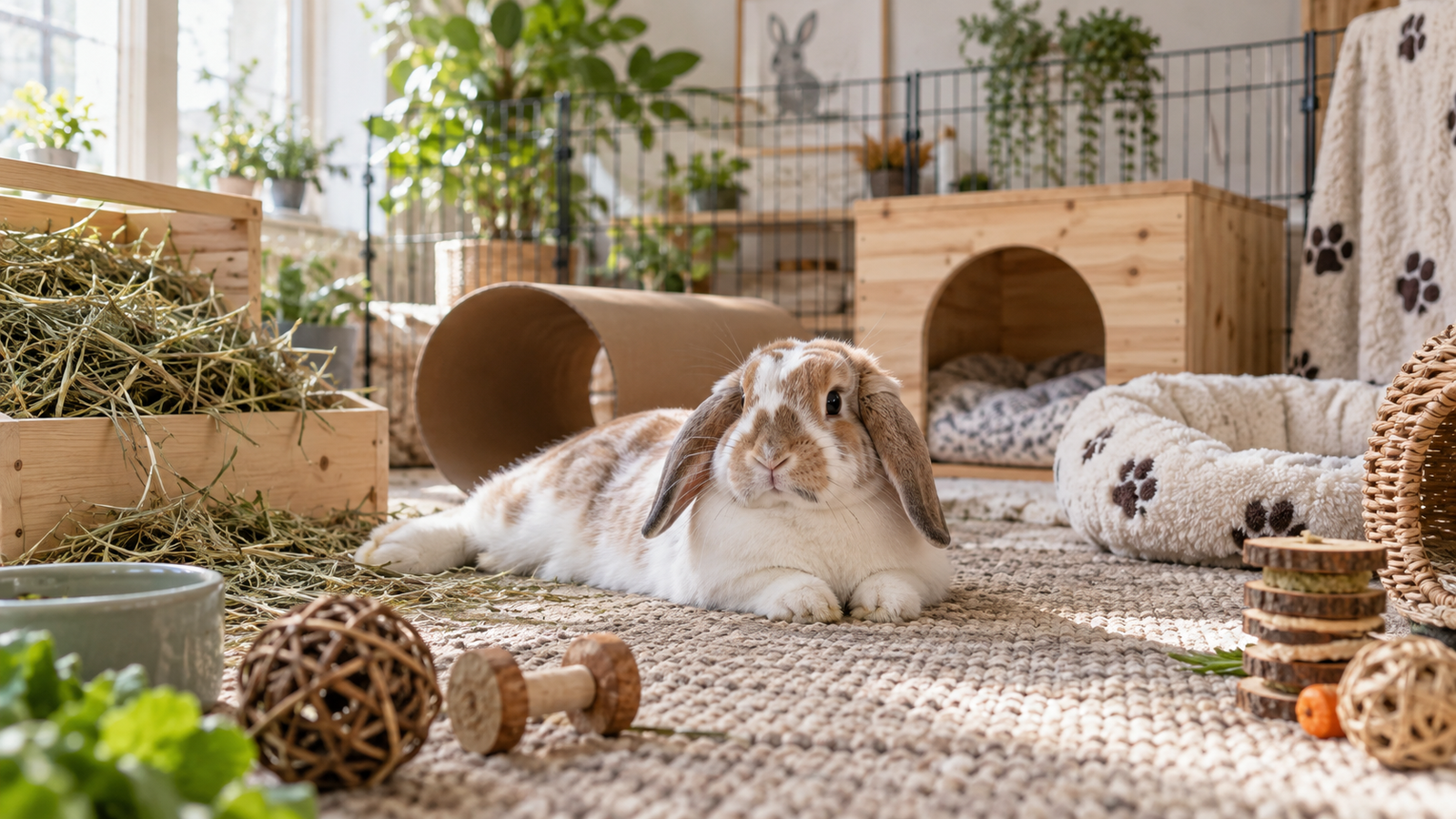
Include a quiet, dry spot where your rabbit can relax without being disturbed. A hide or covered area with soft bedding, such as hay, straw or paper-based bedding, helps it feel safe. Hides with two entrances are best, especially for pairs, so one rabbit can’t trap the other.
Keep hay and the litter box together
Fresh grass hay should always be available. Placing a hay rack or a pile of hay right next to or inside the litter box works well, because rabbits naturally eat and toilet at the same time. This also makes litter training much easier.
- Use a large, low-sided litter tray your rabbit can hop into easily.
- Fill it with a paper-based or wood pellet rabbit litter.
- Avoid clumping cat litter and scented or dusty litters.
- Avoid pine and cedar shavings, which can irritate the airways.
Add enrichment
Rabbits need things to do every day, or boredom can turn into chewed furniture and frustration. Good options include:
- Cardboard boxes and tunnels to run through and chew
- Safe chew toys, such as untreated willow or apple wood
- A digging box filled with soil, shredded paper or hay
- Low platforms or hideouts to jump onto and look out from
- Scatter feeding their greens or treats so they forage for them
Rotate toys and rearrange the space now and then to keep things interesting.
Use safe flooring
Smooth tiles, laminate and wooden floors are slippery for rabbits and can cause strains and injuries. Cover the main areas with non-slip rugs, foam mats or washable fleece. Avoid wire-bottomed cages, which are uncomfortable and can cause sore feet.
Keep them cool and sheltered
Rabbits cope with cold better than heat, and they’re prone to heatstroke in hot weather. Keep their living area out of direct sun, away from radiators, and well ventilated. In warm spells, provide shade and ceramic tiles for them to lie on, and keep a close eye on them.
If your rabbits live outdoors, their housing must be weatherproof and fully predator-proof, with secure latches and strong mesh. Covering the run and adding a wire skirt at ground level helps keep out digging and climbing predators.
Keep the area clean
Rabbits are naturally clean animals. Remove soiled bedding, droppings and leftover fresh food every day, and empty and refresh the litter tray regularly. Wash food and water bowls often, and keep the resting area dry.
Check around your rabbit’s rear end regularly, especially in warm weather. A dirty bottom can attract flies, which can lead to flystrike, a serious and fast-moving condition that needs urgent vet care.
Rabbit-proof the space
Rabbits chew almost anything they can reach. Before letting them loose, protect or remove:
- Electrical cables, using cable covers or by moving them out of reach
- Houseplants, many of which are toxic to rabbits
- Skirting boards, furniture legs and door frames you want to keep intact
- Small objects, rugs with loose threads and anything else unsafe to chew
Keep the setup simple
Space, company, hay, clean water, safe flooring, shelter and enrichment matter far more than decorative accessories. A well-planned home helps rabbits stay active, confident and comfortable.
Once the space is ready, our guide on what rabbits should eat every day covers the other half of good rabbit care.
Frequently asked questions
How much space does a rabbit need?
Rabbits need room to hop several times in a row, stand fully upright and stretch out completely. The UK’s Rabbit Welfare Association & Fund recommends a minimum living area of 3 m × 2 m and 1 m high for a pair of rabbits, available at all times.
Can a rabbit live in a cage?
Most traditional cages and hutches are too small to be a rabbit’s full-time home. A large exercise pen, a rabbit-proofed room or a secure shed with a run gives rabbits the space they need.
What litter is safe for rabbits?
Paper-based or wood pellet rabbit litters are good choices. Avoid clumping cat litter, scented or dusty litters, and pine or cedar shavings.
Should rabbits live in pairs?
Yes, in most cases. Rabbits are social and usually happiest with another rabbit for company. A neutered male and neutered female often pair well. Introduce new rabbits gradually on neutral ground.