
It’s normal for a leopard gecko to skip a meal now and then. A longer loss of appetite, though, can point to a problem with temperature, stress, shedding, illness or another part of its care. The good news is that most causes are easy to check at home.
In short: check the warm side temperature first, as a cool enclosure is one of the most common reasons leopard geckos stop eating. Then consider shedding, stress, the season and the food on offer. A healthy adult with a plump tail can safely skip meals for a while, but weight loss, a shrinking tail or other symptoms mean it’s time to see a reptile vet.
| Possible cause | What to check |
|---|---|
| Enclosure too cool | Warm side basking surface temperature |
| Shedding | Pale, dull skin; a humid hide available |
| Stress | Recent move, handling, changes or too few hides |
| Season or breeding | Cooler months, or males during breeding season |
| Food problems | Insect size, variety and when you’re feeding |
| Illness | Weight loss, thin tail, abnormal droppings, weakness |
Check the enclosure temperature
Leopard geckos rely on outside heat to digest their food. If the warm side is too cool, they can’t digest properly and often stop eating. This is one of the most common causes of appetite loss.
Measure the basking surface on the warm side with a digital probe thermometer or an infrared temperature gun. A surface temperature of around 90–95°F (32–35°C) is widely recommended, with a cooler side in the mid-70s °F (around 21–25°C). Stick-on dial thermometers are often inaccurate, so don’t rely on them.
Shedding can affect appetite
Many leopard geckos eat less, or stop eating altogether, for a few days before and during a shed. Their skin often looks pale or dull beforehand. This is usually temporary.
Make sure the enclosure has a humid hide lined with damp moss or paper towel, so your gecko can shed cleanly. Check the toes and tail tip afterward for stuck shed, which can restrict blood flow if left.
Stress can reduce eating
A gecko that doesn’t feel safe often won’t eat. Common causes include:
- A recent move to a new home or enclosure
- Frequent handling, especially soon after arriving
- Changes to the enclosure layout
- Too few hides, or hides only on one side
- Other pets or loud activity near the enclosure
A newly bought gecko may not eat properly for a week or two while it settles in. Keep handling to a minimum during that time.
Seasonal and breeding changes
Some adult leopard geckos naturally slow down and eat less during the cooler months, even in a well-heated enclosure. Males may also lose interest in food during breeding season, and females can eat less when producing eggs. If your gecko is otherwise healthy and keeping its weight, this is often nothing to worry about.
Review the food
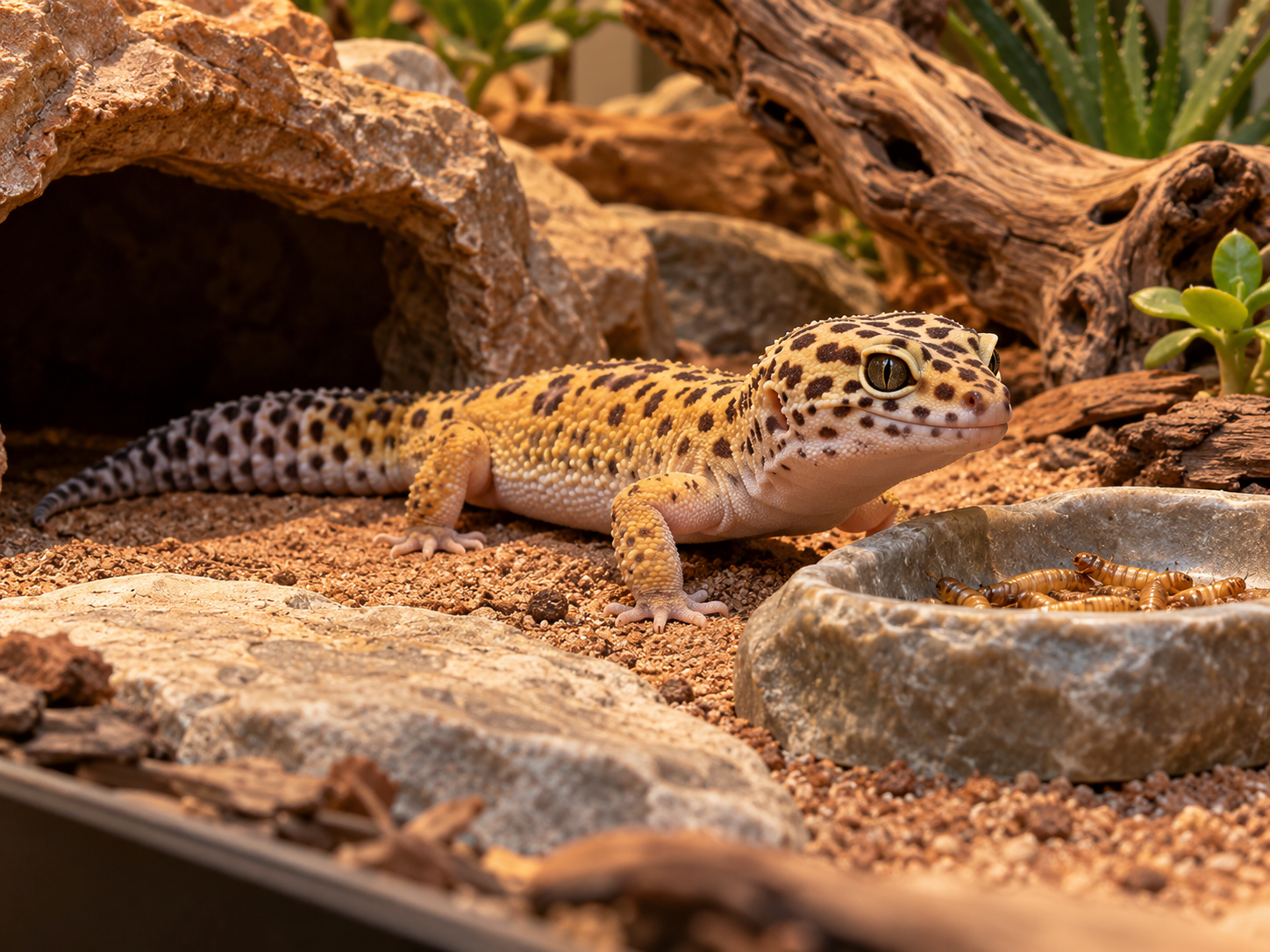
Offer live, appropriately sized feeder insects, no bigger than the space between your gecko’s eyes, and vary them where you can:
- Crickets
- Dubia roaches
- Black soldier fly larvae
- Silkworms
- Mealworms, in moderation
Leopard geckos are most active at dusk and during the night, so try offering food in the evening. Some geckos get bored of the same insect every time and will eat again once something new is offered. Avoid relying on waxworms as a way to tempt a gecko to eat, as they’re high in fat and some geckos then refuse anything else.
Watch for weight loss
Leopard geckos store fat in their tails, so a healthy adult with a plump tail can safely go without food for a while. Young geckos don’t have those reserves and shouldn’t go long without eating.
Weigh your gecko once a week in grams on a kitchen scale while it isn’t eating. A steady drop in weight, or a tail that’s getting noticeably thinner, needs closer attention.
When to contact a vet
Contact a reptile-experienced vet if:
- Your gecko refuses food for more than a couple of weeks
- It’s losing weight, or its tail is getting thinner
- A young gecko stops eating for more than a few days
- You notice runny, smelly or bloody droppings, or no droppings at all
- It seems weak or lethargic, or is regurgitating food
- You see swelling, mouth problems or other unusual symptoms
Don’t try to force-feed your gecko unless a vet has shown you how. Problems like parasites, infections and impaction need proper diagnosis and treatment.
Start with the basics
When a leopard gecko stops eating, check the basics first: correct temperatures, secure hides on both sides, a humid hide and suitable food offered at the right time. If all of those are right and your gecko still isn’t eating or is losing weight, it’s time for a vet check.
For a regular routine once your gecko is eating again, see how often you should feed a leopard gecko. Our guide on setting up a leopard gecko tank covers temperatures and hides in more detail.
Frequently asked questions
How long can a leopard gecko go without eating?
A healthy adult with a plump tail can often go a couple of weeks without eating, and sometimes longer during cooler months, because it stores fat in its tail. Young geckos have far smaller reserves and shouldn’t go more than a few days. Weigh your gecko regularly, and see a vet if it loses weight.
Why is my new leopard gecko not eating?
It’s common for a new gecko to eat very little for a week or two while it settles in. Keep handling to a minimum, make sure there are hides on both sides and check the warm side temperature. If it still isn’t eating after a couple of weeks, or is losing weight, contact a reptile vet.
Do leopard geckos stop eating when shedding?
Yes, many leopard geckos eat less or stop eating for a few days before and during a shed. Provide a humid hide and check for stuck shed on the toes and tail afterward.
What temperature should the warm side be for a leopard gecko?
A basking surface of around 90–95°F (32–35°C) on the warm side is widely recommended, with a cooler side in the mid-70s °F (about 21–25°C). Measure it with a digital probe or an infrared temperature gun.