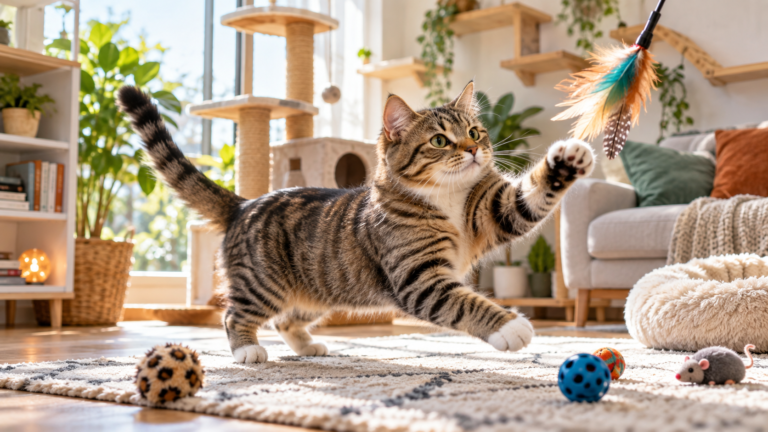
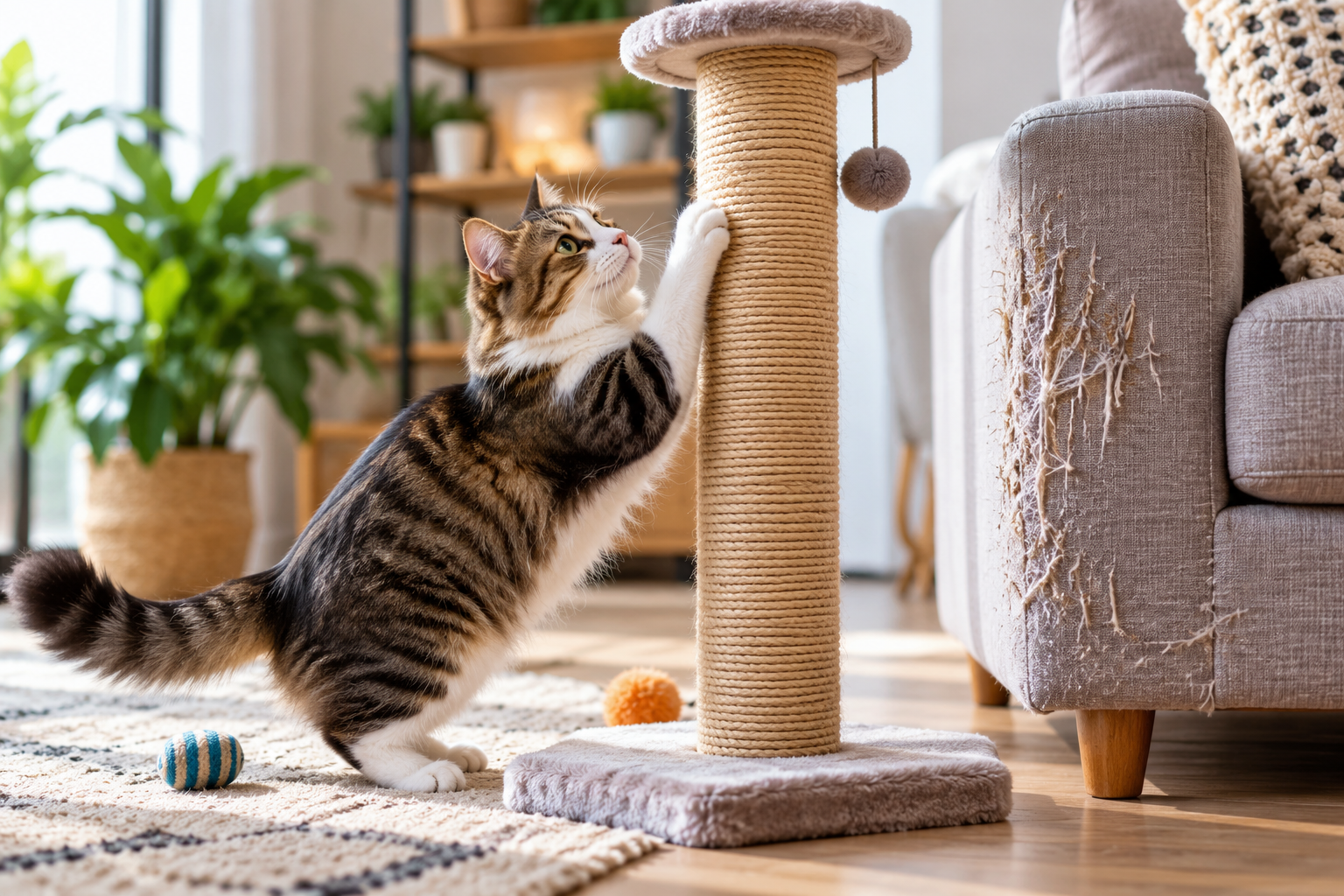

A cat shredding the arm of the sofa isn’t being spiteful. Scratching is a built-in need, and your cat has simply found a surface that works better than anything else on offer. Most cats will happily switch once they get something that’s tall enough, sturdy enough and in the right place.
So the question of how to get a cat to use a scratching post usually comes down to working out what your cat likes about the furniture, then offering a better version of it.
In short: give your cat a heavy, stable scratching post tall enough for a full stretch, covered in a rough material like sisal. Put it right next to the furniture they scratch and near where they sleep. Reward them for using it, make the furniture temporarily unappealing and keep claws trimmed. Never punish scratching, and avoid declawing, which is an amputation.
Why cats need to scratch
Scratching does several jobs at once, which is why you can’t train it away:
- Claw care. It pulls off the worn outer layers of the claws and keeps them in working order.
- Stretching. A long pull down a vertical surface works the muscles of the shoulders, legs and back.
- Marking territory. Glands between the toes leave scent, and the shredded marks are a visual signal too. That’s why cats often scratch near doorways and in the rooms where the family spends time.
- Letting off steam. Many cats scratch when they wake up, when they’re excited or when you come home.
Once you see scratching as communication and maintenance, the goal changes from stopping it to moving it somewhere acceptable.
Why cats ignore the post you bought
If your cat walks past a new post to get to the sofa, the post is usually losing on one of four counts. Check these before buying anything else.
| Problem | What your cat experiences | Fix |
|---|---|---|
| Too short | Can’t stretch out fully, so the sofa arm feels better | Choose a post at least as tall as your cat stretched up on its hind legs |
| Wobbly or light | The post moves or tips, which can startle them | Pick a wide, heavy base, or fix the post to a wall |
| Wrong texture | Soft carpet or smooth wood gives nothing to grip | Try rough woven sisal, cardboard or bark, matched to what they already scratch |
| Wrong place | It’s tucked in a spare room where nobody goes | Move it to where the scratching already happens |
Direction matters as well. A cat that attacks chair legs and sofa corners wants a vertical post. A cat that rakes the carpet or a doormat may prefer a horizontal or angled scratcher on the floor. Some cats like both, so it’s worth offering one of each.
Where to put a scratching post
Placement makes or breaks it. Start by putting the new post directly in front of or beside the damaged furniture, so your cat meets it on the way to their usual spot. Other good locations include:
- Next to where your cat sleeps, since many cats stretch and scratch on waking
- Near the main entrances to rooms your cat uses a lot
- Along routes to food, water and the litter box
One post rarely covers a whole home. In a house with several cats, aim for at least one scratching spot per cat, spread out so no one has to share with a rival. Once your cat is reliably using a post by the sofa, you can shift it a little at a time to a spot you prefer.
Make the post the best option in the room
Cats learn quickly when using the post pays off. Try these:
- Drag a wand toy up and around the post so your cat’s claws sink into it during play.
- Rub a little dried catnip or silvervine on it, if your cat reacts to either. Not all cats do.
- Give a treat or calm praise the moment your cat scratches the post.
Avoid picking your cat up and dragging its paws down the post. Most cats dislike being handled that way and may avoid the post afterward.
Make the furniture less tempting (humanely)
While your cat is learning, make the old target less satisfying for a few weeks. Double-sided sticky tape, a fitted throw or blanket, or a plastic cover over the scratched area all work because cats dislike the feel and the surface no longer gives a good grip. Once the post habit is solid, you can usually remove them.
Some things are worth leaving out. Shouting, spraying water or smacking don’t teach a cat where to scratch. They tend to make a cat anxious, which can increase scratching as a stress signal, and they damage your relationship. Strongly scented sprays are also best avoided, as many products use essential oils that aren’t safe for cats.
Keep claws trimmed
Regular nail trims won’t stop scratching, but blunter claws do less damage to fabric and are less likely to snag. Clip just the sharp, clear tip and stay well away from the pink quick, which contains blood vessels and nerves. How often you’ll need to trim varies from cat to cat, from about once a week to every few weeks. Go slowly with nervous cats: a paw touch and a treat, then one nail, then more. Your vet or a groomer can show you how, or do it for you. Soft nail caps glued over the claws are another option some owners use, but they need replacing as the claws grow.
Nail trims go more smoothly with a cat who is already used to regular handling, and short brushing sessions are an easy way to build that habit. If you’re setting up for a new cat, put a sturdy scratcher near the top of your list of new cat supplies.
Why declawing isn’t the answer
Declawing is not a nail trim. It removes the last bone of each toe, the one the claw grows from, so it amounts to a series of amputations. It’s painful, and cats can be left with long-term pain, lameness and behavior changes such as avoiding the litter box or biting more. The AVMA strongly discourages elective declawing, and it’s banned in the UK and many other countries, as well as in several US states. With the right post and a little patience, it’s also unnecessary.
If your cat suddenly starts scratching much more than usual, or scratching in new places, consider whether something has changed, such as a new pet, a move or tension between cats. Talk to your vet if the change comes with other signs of stress or illness.
Frequently asked questions
How tall should a cat scratching post be?
Tall enough that your cat can stretch out fully on its hind legs against it without running out of post. If you are unsure, watch your cat stretch against a door frame and note how high its paws reach. A heavy, wide base matters just as much.
What material do cats like best for scratching?
Many cats prefer rough woven sisal because it shreds satisfyingly and gives good grip. Some prefer cardboard or bark. Look at what your cat already scratches and pick something similar.
Is it OK to spray my cat with water when it scratches furniture?
No. Punishment doesn’t show your cat where to scratch instead and can make them anxious. Cover the furniture temporarily and reward your cat for using the post.
How long does it take a cat to start using a scratching post?
It varies. Some cats switch within days when the post is in the right place, while others take a few weeks. Consistent rewards and temporarily covering the furniture help speed things up.