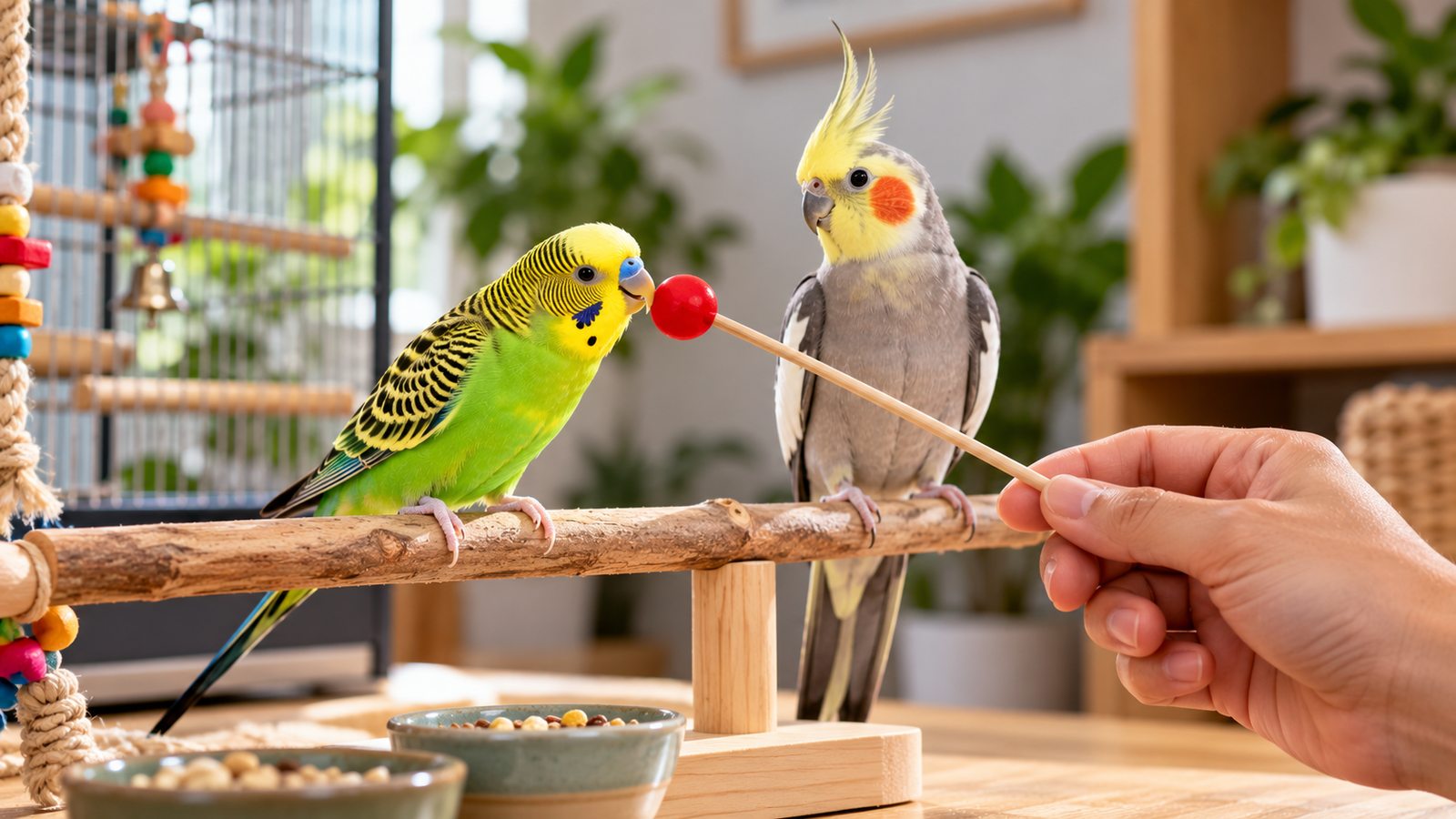

Target training teaches a bird to touch a chosen object, usually with the beak, in return for a reward. For budgies and cockatiels, it can begin with a tiny voluntary movement towards a target while they remain on a familiar perch. Your bird does not need to step onto your hand to take part.
The useful result is communication: you can invite the bird to move towards a location without pushing, chasing or grabbing. Keep the first goal modest. A relaxed bird choosing to touch the target is a successful lesson, even if they have not taken a single step.
Prepare a target, a reward and a safe place
Use a smooth, blunt target suitable for the bird’s size, without sharp ends, splinters or detachable pieces. Keep it under supervision and put it away after training. It is a training tool, not something to leave in the cage for chewing.
Choose a tiny food reward your bird already likes and can eat quickly. Count treats within the overall diet, and do not withhold normal food or water to force participation. Diet conversion and training are separate projects; our cockatiel feeding guide explains why reliable food intake matters.
Start at a familiar, stable perch. If your bird feels safest inside the cage, work from outside without crowding them or inserting the target towards their face. For out-of-cage practice, close doors and windows, turn off fans and exclude other pets. Review our household bird safety guide before choosing the room.
Let the bird get comfortable with the object
Before asking for contact, show the target at a distance where the bird remains comfortable. A bird who leans away, retreats, lunges or tries to escape is telling you that the introduction is too much. Increase the distance or end the attempt.
You can reward calm interest without demanding a touch. For a wary bird, the first session may consist of seeing the target briefly and accepting a reward. There is no benefit in moving it closer simply because a certain number of minutes has passed.
Teach a touch in small stages
- Choose a marker. A soft, consistent “yes” can mark the moment you want to reward. Follow it promptly with the reward so it becomes meaningful.
- Offer the target within comfortable reach. Hold it still and let the bird investigate. Do not tap the beak with it.
- Mark voluntary contact. When the bird touches the target, say the marker and offer the small reward. Lower the target between attempts.
- Repeat while the bird is willing. Keep the setup easy enough for calm success and stop before attention fades.
- Add a little movement. Once touching is familiar, place the target where the bird can reach it by taking one comfortable step. Build distance gradually.
The World Parrot Trust describes targeting as a foundation for moving to new places and learning other behaviours. The RSPCA emphasises immediate rewards, calm handling and progressing at the bird’s pace. Neither principle requires making a reluctant bird comply.
Troubleshooting the first lessons
The bird will not approach
Check the target’s distance, your posture and the environment. A large object held above the bird may be more intimidating than a small object presented from the side at a comfortable distance. Try a quieter time or an easier starting point rather than reaching further into their space.
The bird grabs or chews the target
Keep the next presentation brief and reward a light touch early. Avoid turning it into tug-of-war. If the tool is becoming damaged, stop and replace it with a safe option before another session.
The bird follows food but ignores the target
Separate the invitation from the reward. Present the target first, mark the response, then deliver the reward. If the bird cannot manage that yet, reduce the task to looking towards or gently approaching the target.
A confident bird suddenly stops participating
End the lesson and look at the wider picture. Tiredness, a changed environment or loss of interest can affect a session, but altered appetite, droppings, breathing or activity need veterinary attention. Do not treat illness as a motivation problem. See signs of illness in pet birds.
Use the skill for one useful next step
Choose a simple destination, such as another point on the same secure perch. Record what your bird can do comfortably: touching in place, taking a step, or moving to the new position. This helps you avoid accidentally making every session harder.
Later, targeting can support gradual carrier or scale training. Introduce the new equipment separately; following a target once does not mean the bird is ready to be enclosed or transported. Keep step-up training as another voluntary skill, not a reason to push the bird’s body.
Sources and further reading
- World Parrot Trust: Teaching to target
- RSPCA: How to train your pet bird
- Association of Avian Veterinarians: Target-training enrichment tips
General education for pet owners. Training does not replace veterinary assessment or necessary care. Read our Pet Health Disclaimer.