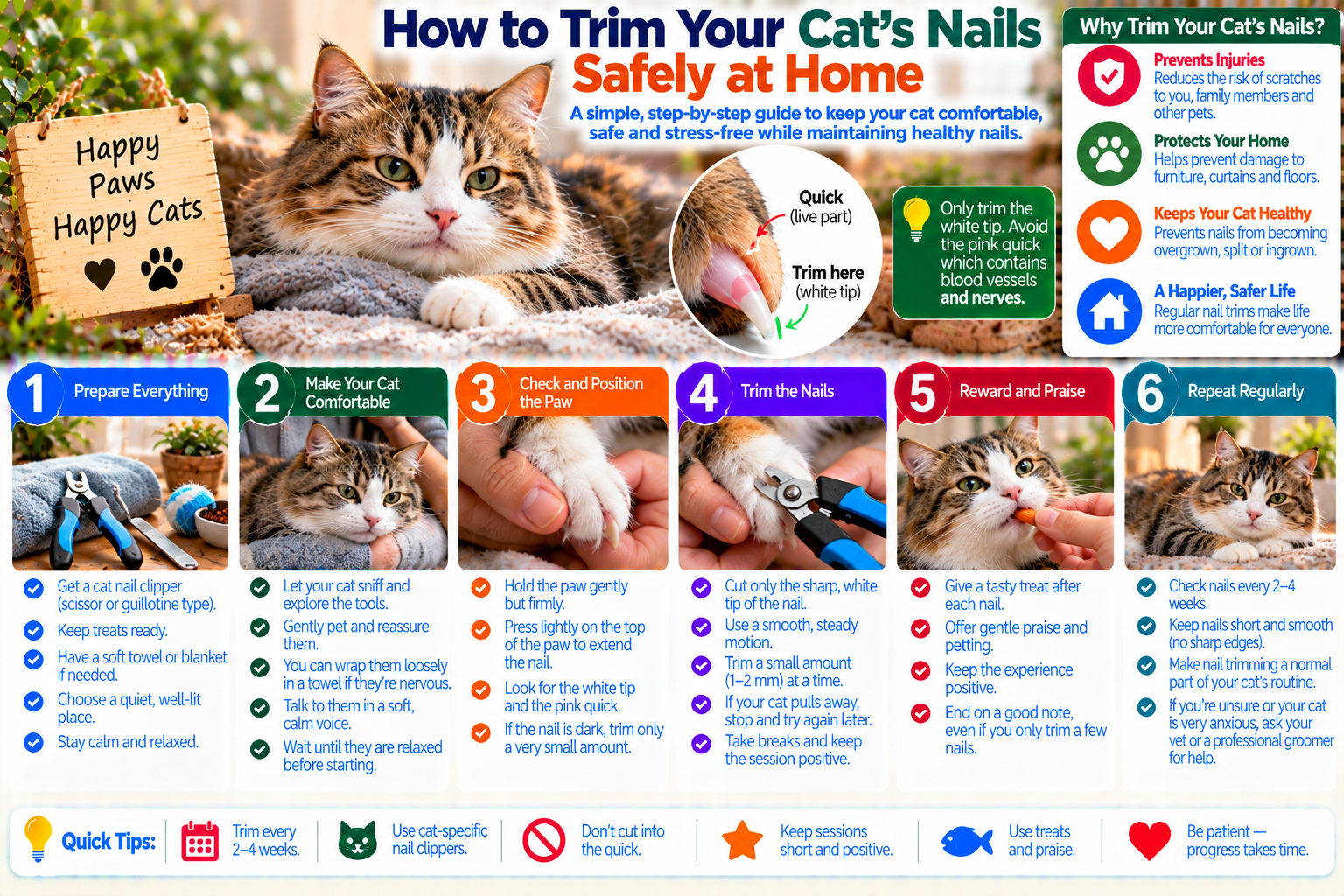

A cat’s nail trim can be one claw today and another tomorrow. There is no requirement to finish every paw in one sitting. The safest routine combines comfortable handling, a clear view of the claw, and the willingness to stop before your cat struggles.
Quick answer: Use sharp pet nail clippers, gently extend one claw, identify the pink quick where visible, and remove only the fine sharp tip well away from it. If you cannot judge the safe area, or the claw is painful or embedded, ask your veterinary team to help.
Decide whether a trim is needed
Inspect claws regularly, including the dewclaws higher on the front legs. Some cats maintain their claws through ordinary activity, while older or less active cats may need more help. Nails that catch repeatedly, become very curved, or approach the pad deserve attention.
Do not cut an embedded claw out at home. A claw growing into the pad, a split claw, swelling, limping, or pain needs veterinary assessment. A scratch post remains valuable even when nails are trimmed: scratching is normal behaviour and helps cats stretch and maintain their claws.
Prepare the handling and the equipment
Choose a quiet time and a position your cat accepts. A stable low surface with a nonslip towel may be easier than holding the cat upright. Have suitable clippers, good lighting, rewards, and a pet-safe styptic product recommended by your vet available before you start.
Practise touching a shoulder, then a leg, then briefly a paw. Reward relaxed participation. Later, gently press the pad to expose a claw. If the cat pulls away, release rather than tightening your grip. Handling practice should not always predict clipping.
Trim one visible tip
- Support the paw gently and extend one claw.
- Locate the quick, the sensitive tissue containing blood vessels and nerves. It may appear pink in a pale claw.
- Position the clippers to remove only the narrow sharp tip, leaving generous space before the quick.
- Make one clean cut, release the paw, and reward your cat.
- Decide whether another claw is sensible. Stopping after one successful trim is fine.
If the nail is dark or you cannot see the boundary confidently, take professional guidance. Do not estimate a large cut from a diagram or another cat’s claws. Ask your veterinary nurse or vet to demonstrate on your cat.
| What you notice | What to do |
|---|---|
| Relaxed paw handling and clear nail tip | Trim a small tip, then reassess |
| Pulling away or increasing tension | Stop and return to easier handling practice |
| Quick cannot be judged | Arrange a demonstration or professional trim |
| Claw touches or enters the pad | Seek veterinary care |
If you accidentally cut too far
Stop the trim. Apply gentle pressure with clean gauze and use the pet-safe styptic product according to its directions if your vet has recommended it. Contact the veterinary team if bleeding does not settle promptly, the injury is significant, or your cat is painful. Do not continue clipping while the cat is frightened.
Build a maintenance routine
Check paws on a regular schedule and trim according to actual growth rather than a universal deadline. A simple note—“front left checked, one tip trimmed”—helps when care is spread across sessions. Older cats may also need help with thicker claws and reduced mobility.
For an outdoor cat, discuss trimming needs with your vet because claws contribute to climbing and defence. Nail trimming is different from declawing, which is not a grooming procedure.
See choosing and using scratch posts and recognising pain in cats.
Frequently asked questions
Do all cats need regular nail trims?
No. Inspect claws and base the routine on growth, activity, age, and veterinary advice. Some cats need frequent help; others need only occasional attention.
Can I finish all paws at once?
Only if your cat remains comfortable. Short sessions with one or two claws are often more practical.
Should I trim a claw growing into the pad?
No. An embedded claw is painful and may involve infection. Arrange veterinary treatment rather than trying to pull or cut it free.