

For a lot of cats, the vet visit starts going wrong long before the clinic. The carrier comes out of the garage once a year, the cat vanishes under the bed, and by the time everyone is in the car, both of you are rattled.
Two things change that picture more than anything else: a cat carrier that is easy to load and unload, and a cat who already thinks of that carrier as an ordinary part of the house. The second takes time, so start well before the next appointment.
Quick answer: pick a solid carrier with a top opening in addition to the usual front door, and enough room for your cat to stand, turn and lie down. Leave it out at home with soft bedding and the odd treat inside so it stops meaning “vet.” On the day, cover it with a towel, carry it steadily, keep it secure in the car and ask your vet about cat-friendly scheduling or calming options if your cat is still very frightened.
What to look for when buying
Carriers vary more than they seem to on a store shelf. These are the features that make the biggest practical difference.
A top that opens or comes off
This is the feature most worth paying for. With a top door or a lid that unclips completely, you can lower your cat in gently rather than feeding them backward through a small front hatch. At the clinic, a nervous cat can often be examined while still sitting in the base of the carrier, on familiar bedding, instead of being tipped out onto a cold table.
Hard or soft sides
| Feature | Hard plastic carrier | Soft fabric carrier |
|---|---|---|
| Keeps its shape | Yes, even if something shifts in the car | Can sag or fold if pressed |
| Cleaning after an accident | Wipes or washes down easily | Harder to get fully clean |
| Removable top for exams | Common | Less common |
| Weight and storage | Bulkier | Lighter, often folds flat |
For routine vet trips, most cat welfare organizations lean toward a sturdy hard-sided carrier. A well-made soft carrier can suit a calm cat for short trips, but check that it has a rigid base and zips your cat can’t push open. Backpack styles tend to swing and jolt, which many cats find unsettling.
The right size
Your cat should be able to stand up, turn around and lie stretched out comfortably. Much bigger than that and they slide around every time you brake or climb a step. If you are buying for a kitten, size for the adult cat and pad the extra space with a folded towel.
Small details that matter
- Latches you can open and close quickly with one hand, but which a determined cat can’t pry apart.
- Ventilation on more than one side.
- One carrier per cat. Even cats who normally get along can turn on each other when frightened and shut in together.
Make the carrier part of the furniture
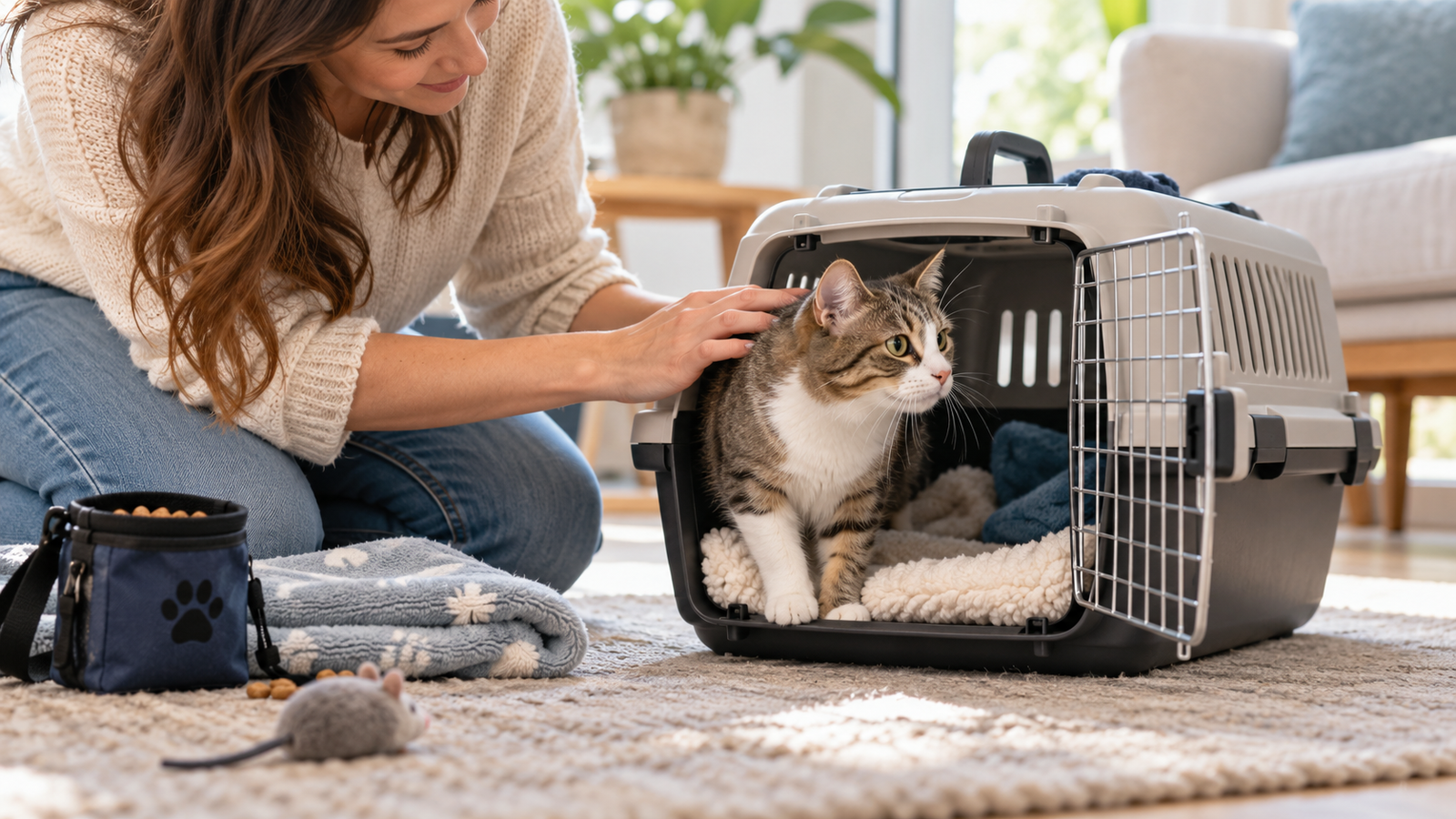
If the carrier only ever comes out on vet day, your cat soon learns what it means. The fix is to make it boring. Take the door or lid off, put it somewhere your cat already likes to rest, and line it with a blanket or bed that smells of home.
Then let your cat discover it on their own terms. Drop a treat or a sprinkle of catnip inside now and then. Put a meal near it, then just inside the entrance, then further in. When your cat is happily walking in and out, put the door or lid back on, close it for a second or two while they eat a treat, and open it again. Build up slowly from there to picking the carrier up and setting it down.
Some cats will nap in it within days. Others need a few weeks. It is worth the wait, because a cat who walks in willingly is far calmer by the time you reach the clinic.
Getting through appointment day
- Plan ahead. Close doors to rooms with good hiding places before your cat suspects anything. Chasing a cat around the house raises their fear before you have even left.
- Ask about food. Some vets suggest holding back a meal for a few hours so treats are more tempting and car sickness is less likely. Check first, because some tests and some health conditions have their own rules.
- Load gently. Lower your cat through the top if you can. A synthetic feline pheromone spray on the bedding a little while beforehand may help some cats; follow the label timing.
- Cover it. Drape a towel or light blanket over the carrier, leaving some airflow. Being unseen helps many cats feel safer, especially in a waiting room.
- Carry it level. Cradle it in both arms, close to your chest, so it doesn’t swing and bump from the handle.
In the car
Never let your cat ride loose. A carrier on the back seat can be secured with a seatbelt if it is designed for that; otherwise, wedge it on the floor behind one of the front seats, where it can’t slide or tip. Drive smoothly, keep the radio low and the temperature comfortable, and resist the urge to open the door for a cuddle on the way. Never leave a cat alone in a parked car, even for a few minutes on a mild day.
Choosing a cat-friendly clinic
Some practices hold Cat Friendly accreditation, awarded by the American Association of Feline Practitioners in the US and by the International Society of Feline Medicine (the veterinary arm of International Cat Care) in many other countries. These clinics commit to standards such as quieter handling and spaces set up with cats in mind. Even without that label, it is fair to ask:
- Is there a separate waiting area, or a shelf where carriers can sit above floor level, away from dogs?
- Can you book a quiet time of day, or wait in the car until the room is ready?
- Will they examine your cat in the base of the carrier if that is easier?
If your cat still panics despite all of this, talk to your vet. They may suggest a prescription medication to give at home before the visit. Ask whether to try it once on a quiet day first, so you know how your cat reacts. Do not give any human calming product or medicine unless your vet has told you to.
When you get home
After a clinic visit your cat smells strange to the others at home, and that alone can turn a close companion into a hissing, swatting stranger for a while. Let the returning cat settle in a quiet room for a few hours, then reunite them gradually. Afterward, put the carrier back in its usual spot rather than hiding it away, so the next trip starts from a better place.
Handling gets easier as trust grows, so if your cat only recently arrived, read up on helping a new cat settle in. For where the carrier fits among everything else you’ll need, there’s our list of supplies a new cat actually needs.
Frequently asked questions
Is a hard or soft cat carrier better for the vet?
For most cats a sturdy hard-sided carrier is the safer choice. It keeps its shape, cleans easily and often has a removable top so your cat can be examined in the base. A soft carrier can work for calm cats on short trips if it has a firm base and secure zips.
How big should a cat carrier be?
Big enough for your cat to stand, turn around and lie down comfortably, but not so large that they slide around while you move. For a kitten, buy for adult size and fill the extra space with a folded towel.
How long does it take to get a cat used to a carrier?
It varies. Some cats start resting in a carrier within a few days, while nervous cats may need several weeks of treats, meals and short practice sessions. Starting well before an appointment gives you the best chance.
Should I cover my cat’s carrier with a towel?
Yes, for most cats. A light towel or blanket over the carrier blocks out unsettling sights in the car and waiting room. Leave enough of it uncovered for good airflow, and keep it off in hot weather.