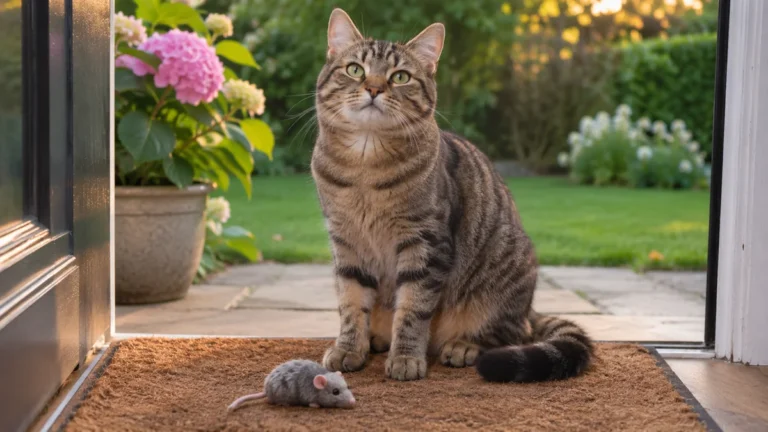
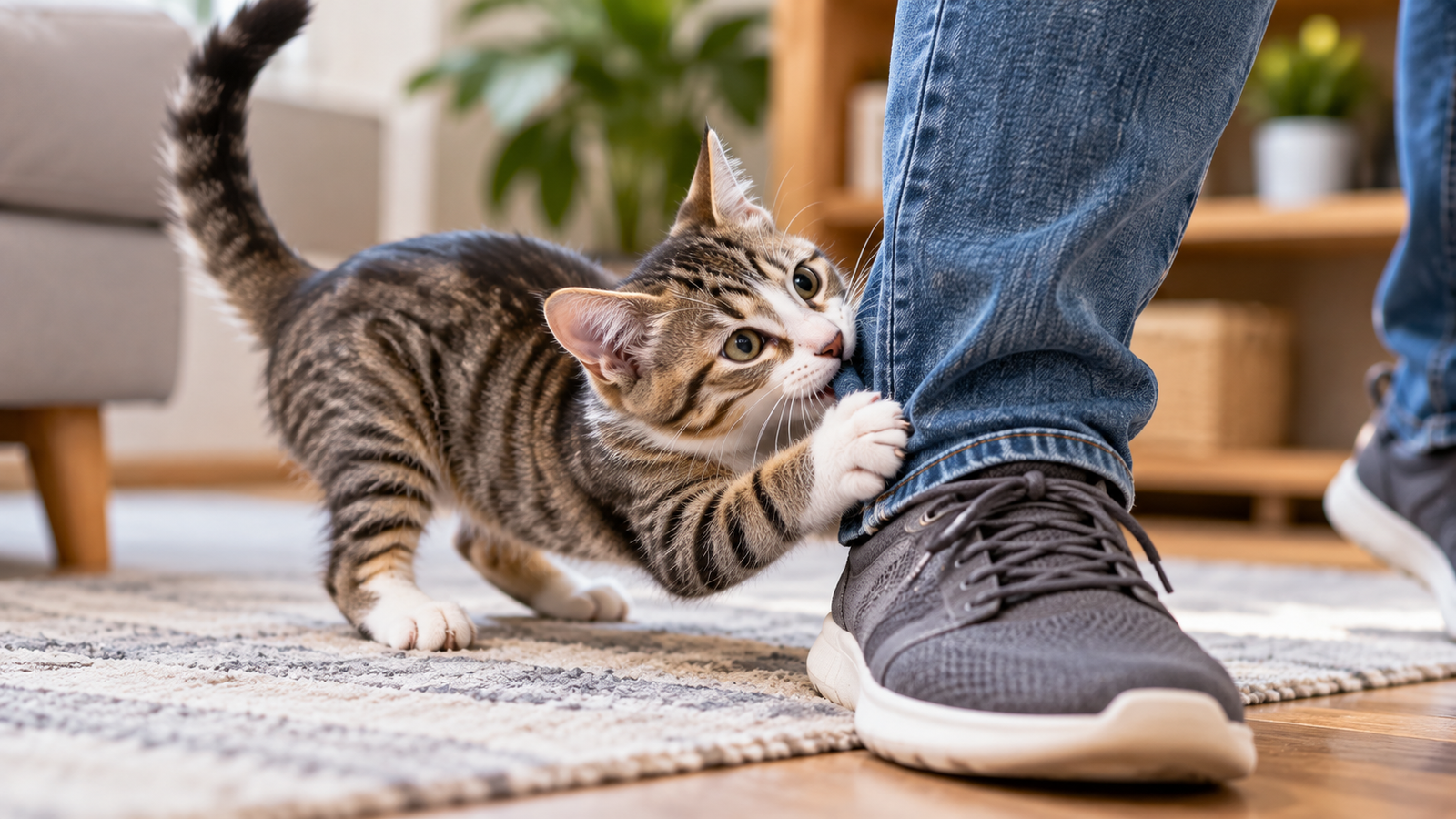

A cat that hides behind a doorway and pounces on moving ankles may be directing hunting-style play at you. This is especially common in young cats, but ankle-biting is not always play. Pain, fear and frustration can also change how a cat reacts, particularly when the behaviour starts suddenly.
The useful question is not whether your cat is “being naughty.” It is what happens before the pounce, what your cat does during it, and what makes it more or less likely the next time. A short record of those details gives you something concrete to change.
First, check the pattern
Play often involves watching, stalking, chasing and grabbing a moving target. Your feet may have become the most interesting thing passing through an otherwise quiet room. Fingers and toes used as toys during kittenhood can also become familiar targets as the cat grows.
However, a cat that bites when you brush past a sore area, reacts after seeing another cat outside, or seems frightened needs a different approach. Body language offers clues, not a diagnosis. Look at the whole situation rather than relying on pupil size or a flicking tail alone.
Arrange a veterinary check for new, worsening or persistent aggression. Mention changes in appetite, grooming, movement, sleep or litter-box use. Our guide to possible signs of pain in cats explains why behavioural changes deserve attention.
What to do when your cat goes for your feet
Keep your hands out of the encounter. Avoid running, kicking, shouting or turning the moment into a wrestling game. If you can safely become still, pause the movement that is attracting the cat, then create distance once they disengage.
Do not pick up an aroused cat or corner them. A door or other barrier can give you both space without handling. Children should leave the situation with an adult rather than try to practise the response themselves. If a bite breaks the skin, seek appropriate medical advice for the person bitten.
For repeated ambushes, change the route or temporarily manage access to the problem area while you arrange help. Footwear may reduce exposure, but it does not resolve the reason for the behaviour.
Move play earlier in the sequence
Planned play is more useful than repeatedly producing a toy only after teeth reach your ankle. If pouncing usually happens while you prepare dinner, offer a short play opportunity beforehand. If the hallway is the ambush point, begin the game in a room where the cat has space to chase a toy safely.
Use a toy that keeps claws and teeth away from skin, such as a fishing-rod toy. Let the cat stalk, chase and catch it; do not continually tease them with something they can never reach. Some cats also enjoy gripping a suitable larger kicker toy.
Match the activity to your cat. Short sessions may work better than one long workout, and an older or less mobile cat may prefer stalking a toy along the floor. Our wand-toy play guide covers the mechanics of moving the toy. Here, the priority is timing the activity before the usual ankle attack.
A practical observation sheet
For several days, record the following after an incident without deliberately provoking one:
- Time and place: for example, beside the sofa when you walk to the kitchen.
- What happened first: movement, petting, a loud noise, another animal or nothing you noticed.
- Your cat’s behaviour: stalking, hiding, vocalising, grabbing or retreating.
- What happened afterwards: you ran, stopped, offered food, played or left the room.
- Other changes: appetite, mobility, household routine or access to resting places.
An example plan might be: play before the evening kitchen trip, clear the narrow route, and provide an alternative resting spot away from passing feet. Keep the rest of the routine steady enough to see whether that change helps. Bring the notes to your vet if the problem continues.
Make the household response consistent
Ask everyone to stop using hands or feet as playthings, including under blankets. Rotate suitable toys and put string or rod toys away after supervised sessions. Provide opportunities to climb, hide, scratch and investigate, as described in our indoor cat enrichment guide.
Avoid spray bottles, startling noises and physical punishment. Fear can add another problem to an already difficult interaction. Do not bring home a second cat as a quick fix; another animal introduces its own social demands.
Measure progress by safer interactions and fewer or less intense incidents, not a deadline. If you cannot move around safely, children are at risk, or attacks continue despite changes, ask your vet for qualified behaviour support.
Sources and further reading
- Cats Protection: Cats and play
- Cats Protection: Aggressive cats
- Cornell Feline Health Center: Feline behaviour problems—aggression
This guide provides general education, not a diagnosis or individual behaviour treatment plan. See our Pet Health Disclaimer.