
Dental disease is one of the most common health problems in adult cats, and also one of the most hidden. Cats rarely stop eating until mouth pain is severe, so many owners don’t realize anything is wrong. Cornell’s Feline Health Center reports that studies find 50–90% of cats over four years old have some form of dental disease. The upside is that much of it can be prevented or treated, and cats often seem brighter once a painful mouth is fixed.
Quick answer: Bad breath, red or bleeding gums, tartar, drooling, dropping food, chewing on one side or pawing at the mouth are signs of dental disease. The main problems are gum disease (gingivitis and periodontitis), tooth resorption and stomatitis. A full dental check needs anesthesia and X-rays. Daily brushing with cat toothpaste is the best prevention, along with a yearly vet check of the mouth.
Signs of dental problems
- Bad breath
- Red, swollen or bleeding gums
- Yellow or brown tartar on the teeth
- Drooling, sometimes with blood in the saliva
- Dropping food, chewing on one side, or turning the head while eating
- Preferring soft food, or swallowing dry food whole
- Pawing at the mouth, jaw chattering or head shaking
- Eating less, or losing weight
- Loose, broken or missing teeth
- A scruffy coat, because grooming hurts
Many cats show no obvious signs at all, which is why regular mouth checks at the vet matter.
The main types of dental disease
Gingivitis
Gingivitis is inflammation of the gums, usually caused by plaque building up along the gumline. The gums look red and swollen and may bleed. Cornell notes that gingivitis is usually reversible with treatment and good home care.
Periodontitis
If gingivitis isn’t controlled, it can progress to periodontitis, which damages the tissues and bone holding the teeth in place. This can’t be reversed. It leads to receding gums, exposed roots, loose teeth and tooth loss, and treatment focuses on cleaning, managing the disease and removing badly affected teeth.
Tooth resorption
Tooth resorption is a painful condition where the tooth structure breaks down, often starting below the gumline. Cornell describes it as the most common cause of tooth loss in cats, affecting an estimated 30–70% of cats, and its cause is unknown. You may see a pinkish defect where the tooth meets the gum, or nothing at all. X-rays are needed to assess it, and affected teeth are often removed if they’re painful.
Stomatitis
Feline chronic gingivostomatitis is severe, painful inflammation of the gums and mouth lining. The cause isn’t fully understood. It may be an overreaction to bacteria and plaque in the mouth. Cats may drool, stop eating and stop grooming. Treatment usually combines dental work under anesthesia with medicines, and many cats need several or all of their teeth removed, which often brings big relief.
How vets check and treat teeth
Your vet can spot some problems during a normal exam, but much dental disease lies below the gumline. A full assessment means probing the gums and taking dental X-rays, which needs general anesthesia. Treatment can include scaling and polishing, removing diseased teeth, pain relief and sometimes antibiotics.
Some places offer “anesthesia-free” dental cleaning. This only removes visible tartar on the tooth surface. It can’t clean or check below the gums, take X-rays, or treat painful problems, so it can make a mouth look healthy while disease continues.
Preventing dental disease
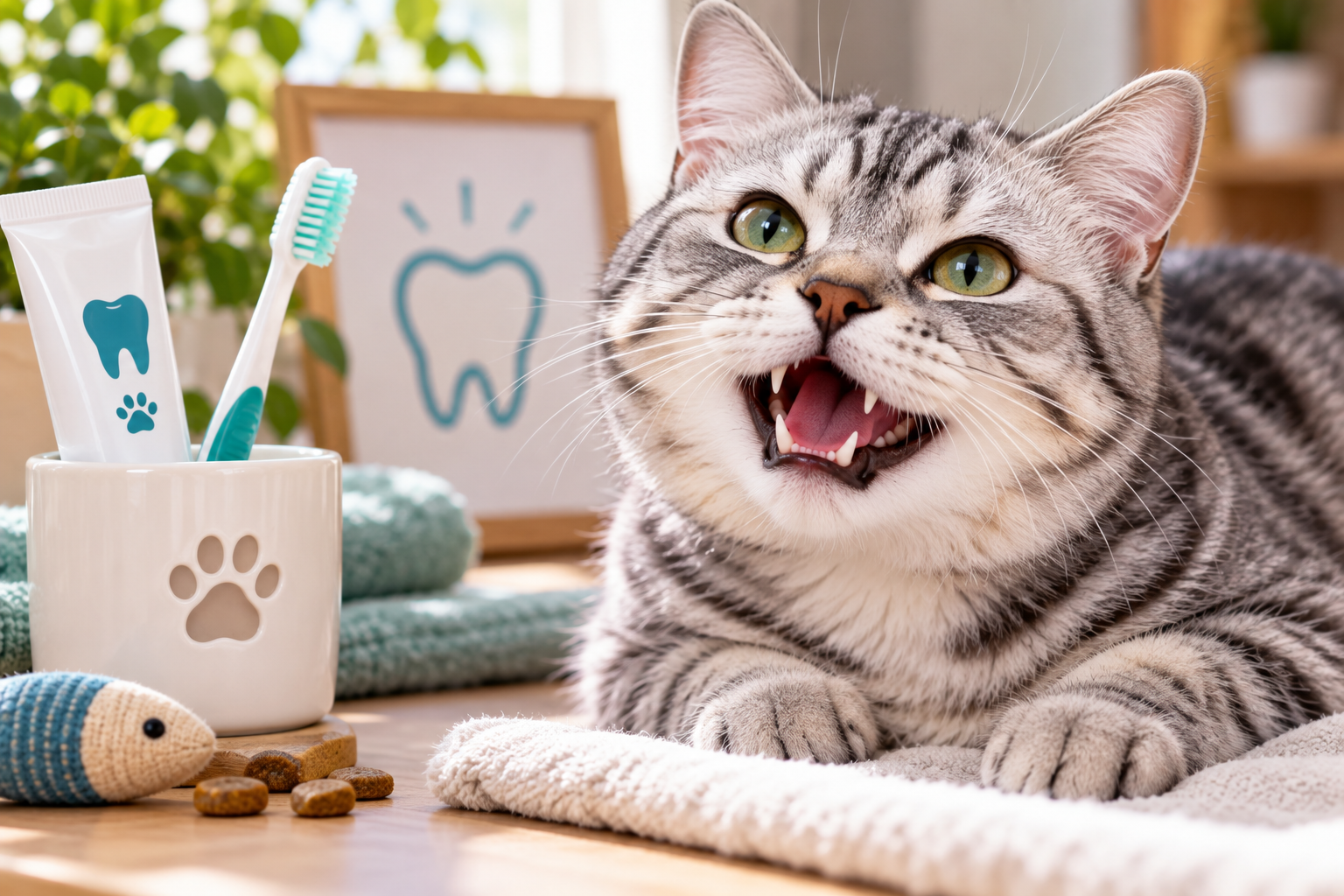
- Brush daily if you can. Cornell names regular tooth brushing as the best way to prevent gingivitis. Use a soft brush or finger brush and toothpaste made for cats. Introduce it slowly over a few weeks with lots of rewards. Our guide to how to brush cat teeth walks you through it.
- Never use human toothpaste. It’s not safe for cats.
- Ask about dental diets and treats. Some foods and treats are designed to reduce plaque. Your vet can recommend products with evidence behind them. They help, but don’t replace brushing.
- Book yearly checkups, or more often for older cats and cats with a history of dental problems.
When to see a vet
See your vet if you notice bad breath, red gums, tartar, drooling, changes in how your cat eats, or weight loss. Don’t wait for your cat to stop eating: by then the pain is often significant.
Urgent: contact a vet promptly if your cat stops eating, has a swollen face or jaw, is bleeding from the mouth, has a broken tooth with a pink or red center showing, or seems to be in obvious pain. A cat that doesn’t eat for a day needs veterinary care.
Mouth pain often shows as subtle behavior changes; see signs your cat is in pain. Dental disease is especially common in older cats; see common health problems in senior cats. For other warning signs, see signs your cat is sick, and for mouth injuries, cat first aid basics.
Frequently asked questions
How do I know if my cat has a toothache?
Cats rarely show obvious pain. Look for bad breath, drooling, dropping food, chewing on one side, pawing at the mouth, eating less, or preferring soft food. If you notice any of these, ask your vet to check your cat’s mouth.
Do cats really need their teeth brushed?
Brushing is the most effective way to prevent gum disease. Daily is ideal, but even a few times a week helps. Use cat toothpaste and introduce it gradually so your cat accepts it.
Why does my cat need anesthesia for a dental cleaning?
Much dental disease is below the gumline. Anesthesia lets the vet safely clean under the gums, take X-rays and treat painful teeth. Cleaning without anesthesia only removes visible tartar and can miss serious problems.
Can cats live without teeth?
Yes. Many cats eat well after having several or even all teeth removed, including dry food in some cases. Removing painful teeth often improves a cat’s comfort, appetite and behavior.