
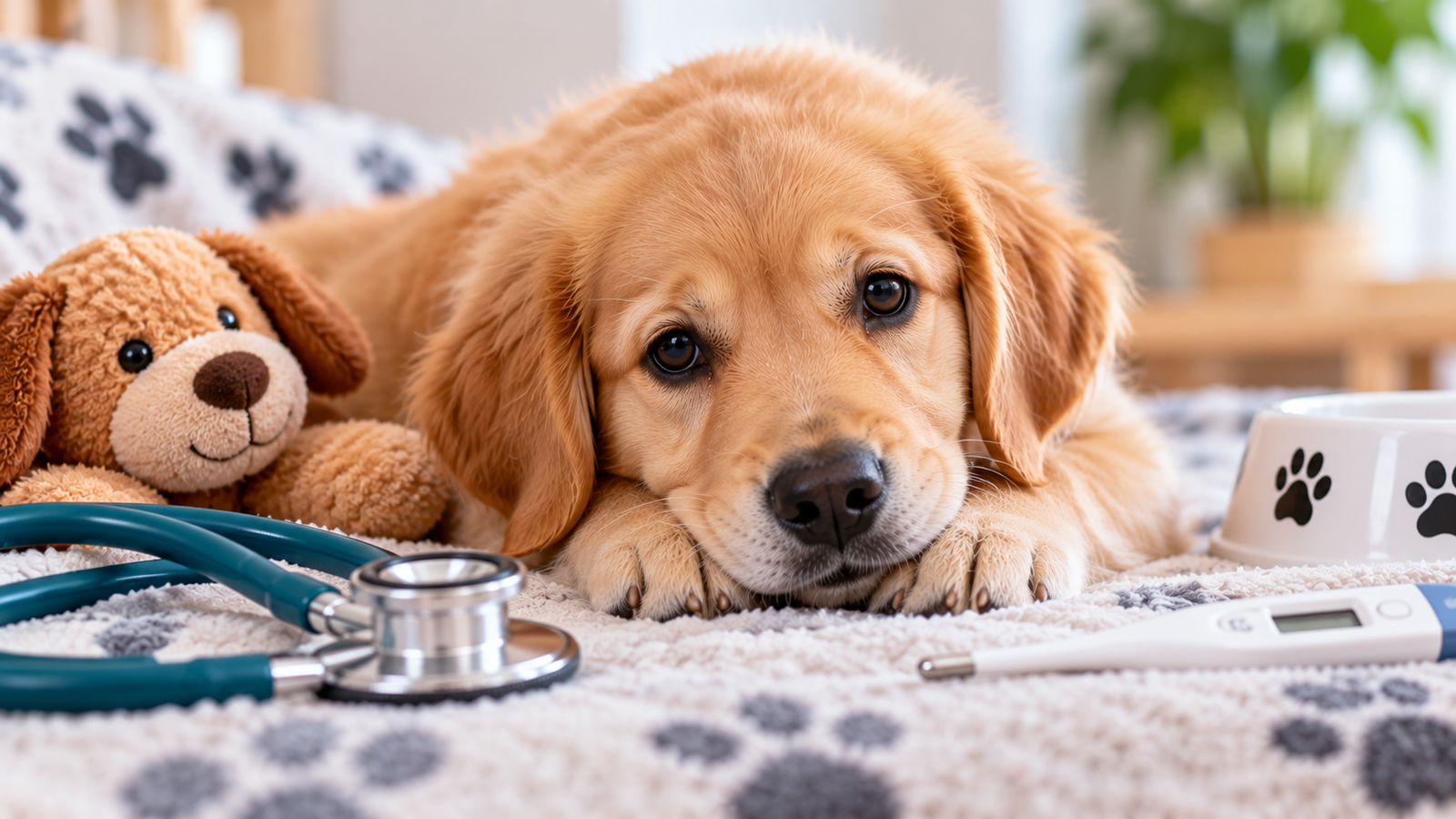

Digestive upsets, parasites, respiratory infections and problems with growth or teeth can all appear during puppyhood. Knowing what has changed—and how quickly—helps you get the right veterinary care.
This guide explains warning signs, not diagnoses. A puppy’s appetite, energy and breathing matter alongside an individual symptom: loose stool in a playful puppy is a different situation from diarrhea with weakness or repeated vomiting.
When your puppy needs urgent help
Seek emergency veterinary care now for breathing difficulty, collapse, seizures, severe bleeding, suspected poisoning, major injury or a swollen, painful abdomen. Pale, blue or grey gums with weakness or breathing trouble also need immediate attention.
Call your veterinarian promptly for same-day advice about repeated vomiting, significant diarrhea, refusal to eat, unusual lethargy or a persistent cough. A puppy that cannot keep water down, becomes markedly weak or deteriorates quickly needs urgent assessment rather than overnight monitoring.
Call ahead while arranging transport. Our dog first aid guide covers practical steps while veterinary help is being arranged.
Vomiting, diarrhea and parvovirus
Food changes, scavenging, parasites and infections can cause digestive symptoms. Appearance alone cannot tell you whether a puppy has a minor upset, an intestinal obstruction or a serious infection.
Parvovirus is particularly concerning in young, incompletely vaccinated dogs. Reduced appetite and lethargy may appear before vomiting and diarrhea. Do not wait for bloody stool before seeking help. Veterinary testing is needed to establish the cause.
If parvovirus is possible, keep your puppy away from other dogs and tell the clinic before arriving so staff can arrange appropriate isolation.
For an isolated soft stool in a puppy that remains bright, eats normally and is not vomiting, contact your veterinary team about monitoring and whether to bring a fresh stool sample. Seek care promptly if symptoms recur or other signs develop.
Do not give human diarrhea medicines or make prolonged fasting part of a home treatment plan. Ask your veterinarian what to feed and how to manage fluids for your puppy’s age and condition.
Intestinal parasites, fleas and ticks
Not seeing worms in the stool does not rule out infection. Puppies may need stool testing as well as scheduled parasite treatment; different products cover different parasites.
The Companion Animal Parasite Council recommends at least four fecal examinations during the first year. Your veterinarian should adapt testing and prevention to local risks, your puppy’s health and exposure to other animals.
Check the coat for fleas, ticks and irritated skin. Use only products suitable for your puppy’s current age and weight, following veterinary advice and the label. Never estimate a puppy dose by dividing an adult dog’s medication.
Keep treatment records, remove feces promptly and wash your hands after cleaning up.
Coughing and respiratory illness
“Kennel cough” describes a group of contagious respiratory infections, not one organism. A hacking cough can occur after contact with other dogs, but a cough alone does not establish the diagnosis.
Contact your veterinarian about a new or persistent cough, particularly if appetite or energy has declined. Avoid group activities and notify the clinic before your visit. Labored breathing or gasping belongs in the emergency category, even if the illness initially seemed mild.
Itching, sore skin and ear problems
Persistent scratching, hair loss, sores, head shaking or an unpleasant ear odor warrant an appointment. Painful ears or rapidly worsening skin problems need prompt advice.
Dark ear debris does not prove that a puppy has ear mites. Infection and other conditions can look similar. Have the ears examined before using drops, including medication left over from another pet: treatment depends on the cause and whether the eardrum is intact.
Weakness, trembling and low blood sugar
Hypoglycemia means low blood glucose. Inadequate food intake can contribute in toy-breed puppies, but infection, liver abnormalities and other illnesses can also cause it.
Sudden weakness, trembling, disorientation or collapse needs immediate veterinary advice. These signs do not confirm low blood sugar, and offering food is not a reliable diagnostic test.
During a seizure, keep your puppy away from nearby hazards without restraining them. Do not put fingers, food, liquid or other objects into the mouth. Contact an emergency clinic and follow its transport instructions.
Teeth, abdominal lumps and poor growth
Baby teeth that remain beside adult teeth
If an adult tooth emerges while its baby tooth remains, arrange a veterinary examination promptly. Crowding can damage the developing bite and surrounding tissues. Do not pull the tooth yourself or assume it can wait until a future neutering appointment.
A lump near the belly button
An umbilical hernia is one possible explanation, but any abdominal lump needs examination. The veterinarian will decide whether monitoring or surgery is appropriate. New pain, vomiting or a sudden change in the swelling requires urgent reassessment.
Failure to gain weight as expected
Growth varies considerably with breed and expected adult size. A stalled growth pattern deserves assessment rather than simply larger meals. Bring your puppy’s food packaging and feeding amounts to the appointment.
Choose a complete growth diet appropriate for expected adult size. Discuss supplements with your veterinarian before adding them; more vitamins or minerals do not automatically mean healthier growth.
Make routine visits count
Puppy appointments are opportunities to check development as well as provide vaccinations. Bring previous medical records and ask for a written plan covering vaccines, parasite prevention, feeding and safe socialization.
Between visits, note changes in appetite, stool, activity and weight. When calling about illness, explain when it began, whether your puppy is drinking and keeping water down, and any possible access to medicines, rubbish or swallowed objects. Clear observations help the veterinary team assess urgency.


