
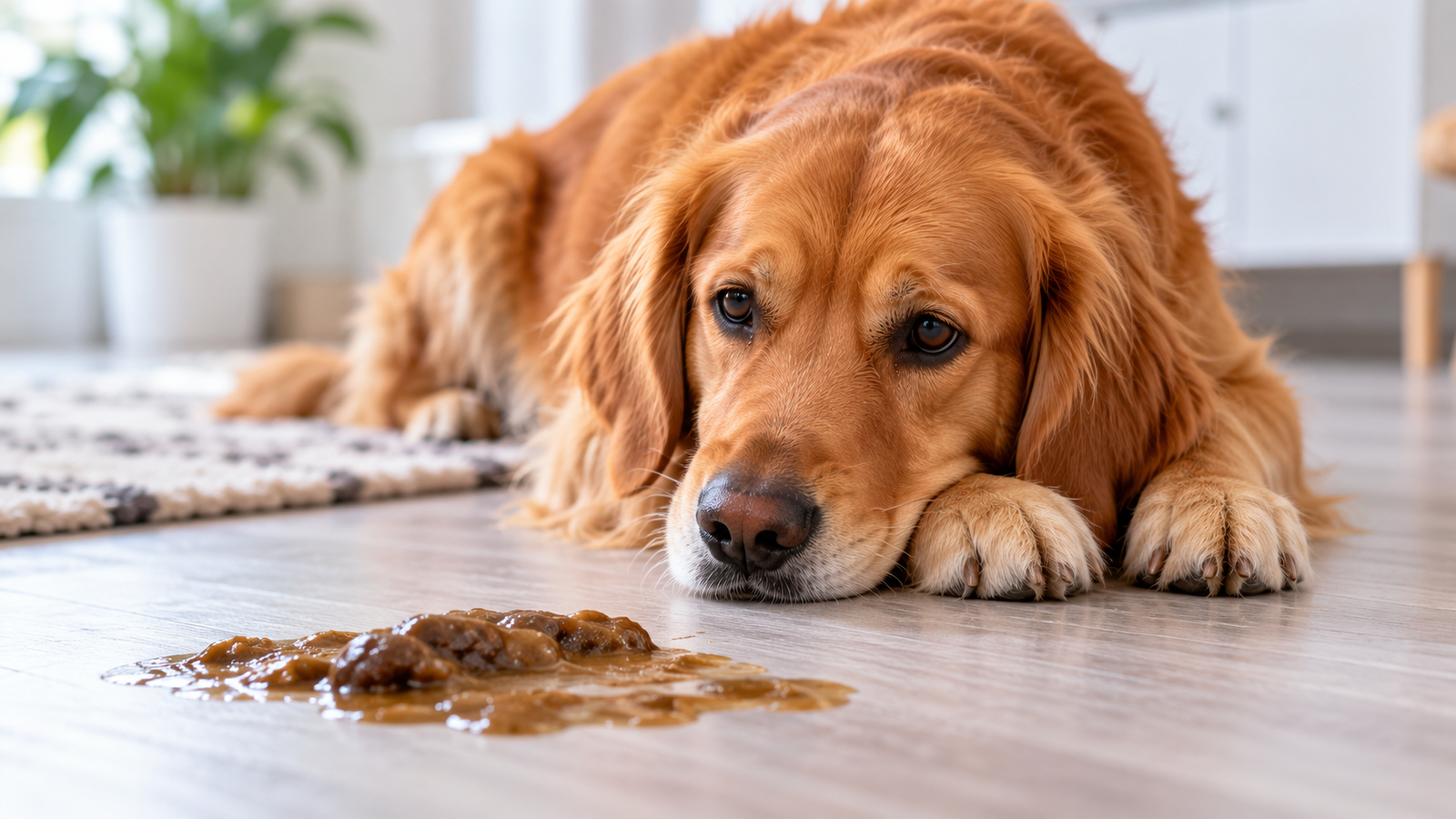

Diarrhea in dogs is common, and many mild cases improve quickly. A dog may develop loose stool after eating something unusual, changing food too fast, experiencing stress or picking up an intestinal parasite.
However, diarrhea can also occur with infections, toxins, pancreatitis, intestinal disease, a swallowed object or illness elsewhere in the body. Therefore, the stool itself is only part of the picture. Your dog’s energy, appetite, hydration and other symptoms matter just as much.
What Is Diarrhea in Dogs?
Diarrhea means stool contains more water than normal and may also pass more frequently or urgently.
The stool can range from slightly soft to completely liquid. In addition, some dogs strain, pass mucus or need to go outside much more often than usual.
Diarrhea happens when the intestines do not absorb water normally or when intestinal contents move through the digestive tract too quickly.
A single soft stool is not always a medical problem. In contrast, repeated watery diarrhea can quickly lead to fluid and electrolyte loss.
Common Causes of Diarrhea in Dogs
There is no single cause of dog diarrhea. Some triggers are temporary, while others need medical treatment.
Common causes include:
- Eating garbage, leftovers or spoiled food
- Eating rich or fatty foods
- Changing dog food too quickly
- Food intolerance or food-related disease
- Stress or anxiety
- Roundworms, hookworms, whipworms or other intestinal parasites
- Giardia or coccidia
- Bacterial or viral infections
- Canine parvovirus
- Pancreatitis
- Foreign-body obstruction
- Toxin exposure
- Inflammatory or chronic intestinal disease
- Some medications
- Liver, kidney or other systemic disease
- Addison’s disease and other hormonal disorders
- Cancer or other serious disease
Because these conditions can look similar at first, persistent diarrhea deserves investigation rather than repeated guesswork at home.
Acute vs Chronic Diarrhea in Dogs
Veterinarians often describe diarrhea according to how long it has been present.
Acute diarrhea
Acute diarrhea begins suddenly and is usually short-lived. Dietary indiscretion, stress, sudden food changes and some infections are common examples.
Many uncomplicated cases improve within a short period. However, severe symptoms can still make an acute case urgent.
Chronic diarrhea
Veterinary references generally use the term chronic when gastrointestinal signs continue for about three weeks or longer.
That does not mean you should wait three weeks before seeing a veterinarian. Diarrhea that persists beyond roughly two to three days, repeatedly returns or occurs with other signs of illness should be discussed much earlier.
Chronic diarrhea may require investigation for ongoing intestinal disease, diet-responsive disease, parasites, pancreatic problems, systemic illness or other conditions.
What Does Your Dog’s Diarrhea Look Like?
The appearance of the stool can give your veterinarian useful clues. However, stool color or texture alone cannot diagnose the cause.
| What You Notice | What It May Suggest |
|---|---|
| Soft or watery stool | Can occur with many mild or serious digestive problems. The dog’s overall condition is important. |
| Mucus | Often occurs when the large intestine or colon is irritated. |
| Small amounts passed frequently | Can occur with large-bowel irritation or colitis. |
| Bright red blood | Fresh blood may come from the lower intestinal tract, rectum or anus and deserves veterinary attention, especially if repeated or heavy. |
| Black, tarry stool | May contain digested blood from higher in the gastrointestinal tract and should be evaluated promptly. |
| Visible worms or rice-like segments | May indicate certain intestinal parasites, although many parasites cannot be seen with the naked eye. |
Fresh Blood in Dog Diarrhea
Bright red blood in stool is called hematochezia. It often comes from the lower gastrointestinal tract.
Small streaks can sometimes appear after repeated straining or colon irritation. However, fresh blood can also occur with parasites, infection, severe inflammation and other medical problems.
Therefore, contact your veterinarian if blood is more than a tiny isolated streak, keeps appearing or occurs with weakness, vomiting, poor appetite or abdominal pain.
Black or Tarry Diarrhea in Dogs
Black, sticky or tar-like stool is known as melena. It can occur when blood has been partially digested before leaving the body.
Possible sources include bleeding higher in the digestive tract, although blood swallowed from the mouth or respiratory tract can sometimes also contribute.
Mucus in Dog Diarrhea
Mucus often appears when the large intestine becomes irritated.
You may also notice frequent small bowel movements, urgency or straining.
Stress, dietary problems, parasites, infection and inflammation can all contribute. Therefore, mucus by itself does not identify the cause.
If it keeps returning, arrange a veterinary examination.
Dog Diarrhea After a Food Change
Changing a dog’s diet too quickly can cause digestive upset.
For example, a sensitive dog may develop loose stool when the old food is replaced suddenly with a new one.
A gradual transition is usually easier on the digestive system. Depending on the dog, this may take several days or longer.
However, do not automatically blame the food change if diarrhea is severe, persistent or accompanied by other symptoms.
Can Eating Garbage Cause Diarrhea?
Yes. Dogs often develop digestive upset after eating spoiled food, table scraps, trash or other things they should not eat.
Veterinarians sometimes call this dietary indiscretion.
Mild diarrhea may be the only result. However, garbage can also contain toxins, bones, packaging or foreign objects that create a much more serious problem.
Can Stress Cause Diarrhea in Dogs?
Yes. Stress can change intestinal movement and contribute to loose stool or colitis in some dogs.
Common triggers include:
- Boarding
- Travel
- A veterinary visit
- Moving home
- A new pet
- Changes in routine
- Other stressful events
Stress may explain a short-lived episode in an otherwise healthy dog. Still, repeated or severe diarrhea should not automatically be labeled as stress without considering medical causes.
Can Worms Cause Diarrhea in Dogs?
Yes. Several intestinal parasites can cause diarrhea.
These include:
- Roundworms
- Hookworms
- Whipworms
- Giardia
- Coccidia
Some infected dogs show no obvious signs, while others develop loose stool, blood, mucus, weight loss or poor growth.
Importantly, you may not see worms in the stool even when parasites are present.
For more information, read: Worms in Dogs: Common Types, Symptoms, and Prevention .
Giardia and Diarrhea in Dogs
Giardia is a microscopic intestinal parasite that can cause intermittent or persistent diarrhea.
Some infected dogs remain completely healthy. Others develop soft, poorly formed or watery stool.
Because Giardia can be difficult to detect with only one basic stool test, veterinarians may use a combination of fecal examination, antigen testing or other laboratory methods when they suspect infection.
Reinfection can also occur if contaminated feces remain in the environment.
Parvovirus and Diarrhea in Puppies
Canine parvovirus is an important concern in young or incompletely vaccinated dogs.
Affected puppies can develop:
- Severe lethargy
- Loss of appetite
- Vomiting
- Diarrhea
- Blood or mucus in the stool
- Abdominal pain
- Fever
- Rapid dehydration
Parvovirus can become life-threatening quickly. Therefore, a puppy with vomiting and diarrhea should receive prompt veterinary attention, especially when vaccination is incomplete.
For preventive vaccination guidance, see: Dog Vaccination Schedule: What Vaccines Does Your Dog Need? .
Diarrhea and Vomiting at the Same Time
Vomiting and diarrhea together can cause fluid loss much faster than diarrhea alone.
Possible causes include dietary indiscretion, infection, parasites, toxins, pancreatitis, foreign-body obstruction and other illnesses.
Contact your veterinarian sooner if your dog has both symptoms, particularly if food or water will not stay down.
For more information about vomiting, read: Why Is My Dog Vomiting? Common Causes and Warning Signs .
Can a Foreign Object Cause Diarrhea?
Yes. A swallowed object can sometimes cause diarrhea, even though vomiting and loss of appetite are often more obvious signs.
A partial intestinal blockage may still allow some stool or liquid to pass.
Possible warning signs include:
- Vomiting
- Abdominal pain
- Loss of appetite
- Lethargy
- Diarrhea
- Straining
- Dehydration
Can Pancreatitis Cause Diarrhea?
Yes. Pancreatitis can cause digestive signs that include diarrhea, vomiting, reduced appetite and abdominal discomfort.
Some dogs also become weak or dehydrated.
Because pancreatitis ranges from mild to severe, repeated digestive symptoms after eating rich or fatty food should not simply be assumed to be a temporary stomach upset.
Can Food Allergies Cause Diarrhea?
Food-related disease can cause diarrhea in some dogs. In addition, some affected dogs have chronic itching or recurring ear problems.
However, diarrhea alone cannot diagnose food allergy.
If food allergy is suspected, veterinarians use a structured elimination diet and food challenge rather than random food switching.
For more information, read: Dog Skin Allergies: Common Signs and Causes .
Diarrhea in Puppies
Puppies need closer attention than healthy adult dogs because they can become dehydrated and weak quickly.
Parasites, sudden diet changes, dietary indiscretion and infections are all possible causes.
Parvovirus is especially important in puppies that have not completed their vaccination series.
Diarrhea in Senior Dogs
Older dogs can develop simple digestive upset too. However, chronic disease becomes more common with age.
Possible causes include liver or kidney disease, pancreatic problems, intestinal disease, medication effects and cancer.
Therefore, new or recurring diarrhea in a senior dog deserves veterinary discussion, especially when it occurs with weight loss, appetite changes or reduced energy.
How to Tell if a Dog With Diarrhea Is Dehydrated
Watery diarrhea causes loss of fluid and electrolytes.
Possible signs of dehydration include:
- Dry or tacky gums
- Low energy
- Weakness
- Sunken-looking eyes in more significant cases
- Reduced urination
- Poor interest in drinking
However, home checks cannot accurately tell you how dehydrated a dog is.
If diarrhea is frequent or your dog is also vomiting, veterinary assessment is safer than waiting for obvious dehydration.
When Is Diarrhea in Dogs an Emergency?
Seek urgent veterinary care when diarrhea occurs with:
- Collapse
- Severe weakness
- Difficulty standing or walking
- Very pale, blue or grey gums
- Severe or repeated vomiting
- Marked abdominal pain
- A swollen or distended abdomen
- Large amounts of blood
- Black, tarry stool
- Known or suspected toxin exposure
- Known or suspected foreign-object ingestion
- Seizures or major neurological changes
- Rapidly worsening illness
When Should You Call the Vet?
Arrange veterinary advice if:
- Diarrhea lasts longer than about 48 to 72 hours
- Loose stool is very frequent
- Your dog stops eating
- Your dog becomes lethargic
- Vomiting also develops
- Fresh blood keeps appearing
- The stool becomes black or tarry
- Your dog is losing weight
- Diarrhea repeatedly returns
- Your puppy develops diarrhea
- Your senior dog develops new persistent diarrhea
- You suspect parasites
You do not need to wait two or three days when your dog already looks unwell. Warning signs should always lower the threshold for seeking veterinary care.
What Can You Do at Home for Mild Dog Diarrhea?
Home care is suitable only for a mild case in an otherwise healthy adult dog that remains bright, alert and comfortable.
Helpful steps include:
- Keep fresh water available.
- Take your dog outside more frequently.
- Avoid rich treats, table scraps and fatty foods.
- Follow your veterinarian’s advice about feeding an easily digested diet.
- Monitor the number of bowel movements.
- Watch for blood, vomiting, weakness or appetite changes.
If the diarrhea worsens or your dog’s general condition changes, stop relying on home care and contact your veterinarian.
Should You Feed a Bland Diet?
For some mild cases, veterinarians may recommend a short-term, easily digested diet.
A prescription gastrointestinal diet is designed for this purpose and provides more complete nutrition than homemade bland food.
In some situations, a veterinarian may also suggest short-term foods such as plain cooked lean meat with white rice or another simple option.
If your dog has a known food allergy or intolerance, do not feed an ingredient that has caused problems before.
Should You Fast a Dog With Diarrhea?
Do not automatically withhold food from every dog with diarrhea.
Feeding decisions depend on age, size, medical history and the severity of the digestive problem.
Puppies, very small dogs, diabetic dogs, senior dogs and dogs with other illnesses may not be appropriate candidates for fasting.
Therefore, ask your veterinarian if you are unsure whether your dog should continue eating.
Can Dogs With Diarrhea Drink Water?
Yes. Access to fresh water is important because diarrhea increases fluid loss.
Do not force water into your dog’s mouth.
If your dog refuses water, repeatedly vomits after drinking or seems unable to stay hydrated, contact a veterinarian promptly.
Do Probiotics Help Dogs With Diarrhea?
Veterinarians sometimes recommend specific veterinary probiotics for dogs with digestive upset.
However, products vary in bacterial strains, quality and evidence.
Therefore, it is better to use a product your veterinarian recommends rather than assuming every human or pet probiotic works the same way.
Can You Give Imodium to a Dog With Diarrhea?
Do not give loperamide, commonly sold as Imodium, unless your veterinarian specifically recommends it for your dog.
It can be unsuitable in some situations and can cause problems in certain dogs.
In addition, slowing intestinal movement may not be appropriate when diarrhea involves toxins, infection or other specific causes.
Can You Give Pepto-Bismol to a Dog?
Do not give bismuth subsalicylate products such as Pepto-Bismol without veterinary advice.
These products can interact with medications, create side effects and make stool look darker, which may complicate evaluation of gastrointestinal bleeding.
Instead, contact your veterinarian if you think medication is needed.
Should You Give Antibiotics for Dog Diarrhea?
Antibiotics are not automatically needed for every case of diarrhea.
Many mild acute cases do not have a bacterial cause that requires antibiotic treatment.
Unnecessary antibiotic use can also affect the normal intestinal microbiome.
Therefore, antibiotics should be used when a veterinarian has a specific reason to prescribe them.
What Stool Sample Should You Bring to the Vet?
A fresh stool sample can be very helpful.
If possible:
- Collect a recent sample.
- Place it in a clean, sealed container or bag.
- Avoid contaminating it with soil, gravel or litter.
- Ask the clinic how they want you to store it if there will be a delay.
You can also take a clear photo of unusual stool, especially if you see blood, mucus or possible worm segments.
How Veterinarians Diagnose the Cause of Diarrhea
The veterinarian will first consider your dog’s age, diet, vaccination history, parasite prevention, medications and recent exposures.
They will also perform a physical examination.
Depending on the case, testing may include:
- Fecal examination for parasites
- Fecal antigen or other parasite tests
- Parvovirus testing in at-risk dogs
- Blood tests
- Urine testing
- Abdominal X-rays
- Ultrasound
- Specific pancreatic or gastrointestinal tests
- Further testing for chronic intestinal disease
For example, imaging becomes particularly important if a swallowed foreign object or obstruction is possible.
How Is Diarrhea in Dogs Treated?
Treatment depends on the cause and the dog’s condition.
A mild case may need only dietary support and monitoring. In contrast, a dehydrated or systemically ill dog may need fluids and additional medical treatment.
Treatment may include:
- A veterinary gastrointestinal diet
- Fluid and electrolyte support
- Veterinary probiotics
- Deworming when parasites are present or suspected
- Specific treatment for Giardia or other infections
- Anti-nausea medication when vomiting is also present
- Treatment for pancreatitis or other underlying illness
- Surgery or other procedures for an obstruction
- Hospital care for severe disease
Therefore, the correct treatment can be very different from one dog to another.
How to Help Prevent Diarrhea in Dogs
Not every case can be prevented. However, several habits can reduce common risks.
- Change foods gradually.
- Avoid feeding spoiled or very rich food.
- Keep garbage secured.
- Prevent access to toxic foods and chemicals.
- Use veterinarian-recommended parasite prevention.
- Pick up feces promptly.
- Keep vaccinations current.
- Avoid allowing dogs to drink from obviously contaminated water sources.
- Supervise dogs that chew or swallow non-food objects.
- Discuss recurring digestive problems with your veterinarian.
Frequently Asked Questions
When should I worry about diarrhea in my dog?
Worry sooner if diarrhea is severe, very frequent, bloody or black and tarry, or if your dog also has vomiting, weakness, poor appetite, abdominal pain or dehydration. Mild diarrhea that does not improve within about 48 to 72 hours also deserves veterinary attention.
Why does my dog have diarrhea but act normal?
A mild diet-related upset, stress or a sudden food change can cause diarrhea in an otherwise normal-looking dog. However, early parasite or gastrointestinal disease can also begin mildly. Monitor your dog closely and contact your veterinarian if the diarrhea continues or other symptoms appear.
What can I feed a dog with diarrhea?
For some mild cases, a veterinarian may recommend a highly digestible gastrointestinal diet or a short-term bland diet. The best choice depends on your dog’s age, health and food sensitivities.
Should I withhold food when my dog has diarrhea?
Not automatically. Fasting is not appropriate for every dog, especially puppies, small dogs and dogs with certain medical conditions. Ask your veterinarian when you are unsure.
What does blood in dog diarrhea mean?
Bright red blood usually comes from the lower digestive tract, while black tarry stool can contain digested blood from higher in the gastrointestinal tract. Repeated or significant blood warrants veterinary assessment.
Why does my dog’s diarrhea have mucus?
Mucus often appears when the colon becomes irritated. Stress, diet changes, parasites, infections and inflammation can all contribute.
Can worms cause diarrhea in dogs?
Yes. Roundworms, hookworms, whipworms and other parasites can cause diarrhea. However, an infected dog may not have visible worms in the stool, so fecal testing can be important.
Can Giardia cause recurring diarrhea?
Yes. Giardia can cause intermittent or persistent diarrhea in some dogs. Because infected dogs can also have no symptoms, veterinarians interpret test results together with the dog’s clinical signs and history.
Can stress cause bloody diarrhea?
Stress can contribute to large-bowel inflammation and loose stool. However, blood should not automatically be blamed on stress because infections, parasites and other medical conditions can produce similar signs.
Is pumpkin good for dog diarrhea?
Some dogs tolerate small amounts of plain pumpkin as a fiber source. However, it is not a treatment for every cause of diarrhea and should not delay veterinary care. Avoid sweetened pumpkin pie filling, which contains added ingredients.
Can I give my dog Imodium?
Do not give loperamide unless your veterinarian specifically recommends it. It is not suitable for every dog or every cause of diarrhea.
How long is too long for dog diarrhea?
For a dog that otherwise feels well, diarrhea lasting beyond about 48 to 72 hours should be discussed with a veterinarian. Do not wait that long if your dog already has blood, vomiting, weakness, dehydration, pain or another warning sign.
The Bottom Line
Diarrhea in dogs is often mild, but it should never be judged only by how loose the stool looks.
A healthy adult dog with a short-lived episode may recover with simple supportive care. However, blood, black stool, vomiting, weakness, poor appetite, dehydration or ongoing diarrhea changes the situation.
Puppies deserve especially close attention because parasites and parvovirus can cause rapid illness and dehydration.
When diarrhea persists or keeps returning, the goal should be to identify the underlying cause rather than repeatedly covering up the symptom with food changes or over-the-counter medicines.
References and Further Reading
Cornell University College of Veterinary Medicine
Guidance on diarrhea in dogs, warning signs, dietary support and when veterinary care is needed.
Cornell — Diarrhea in Dogs
Cornell University College of Veterinary Medicine
Current guidance on canine parvovirus, including diarrhea, vomiting, dehydration, diagnosis and treatment.
Cornell — Parvovirus
VCA Animal Hospitals
Veterinary guidance on causes, severity, diagnosis and treatment of diarrhea in dogs.
VCA — Diarrhea in Dogs
Companion Animal Parasite Council (CAPC)
Veterinary guidance on Giardia and intestinal parasite testing in dogs.
CAPC — Giardia
Merck Veterinary Manual
Current veterinary guidance on chronic enteropathies and persistent gastrointestinal signs in dogs.


