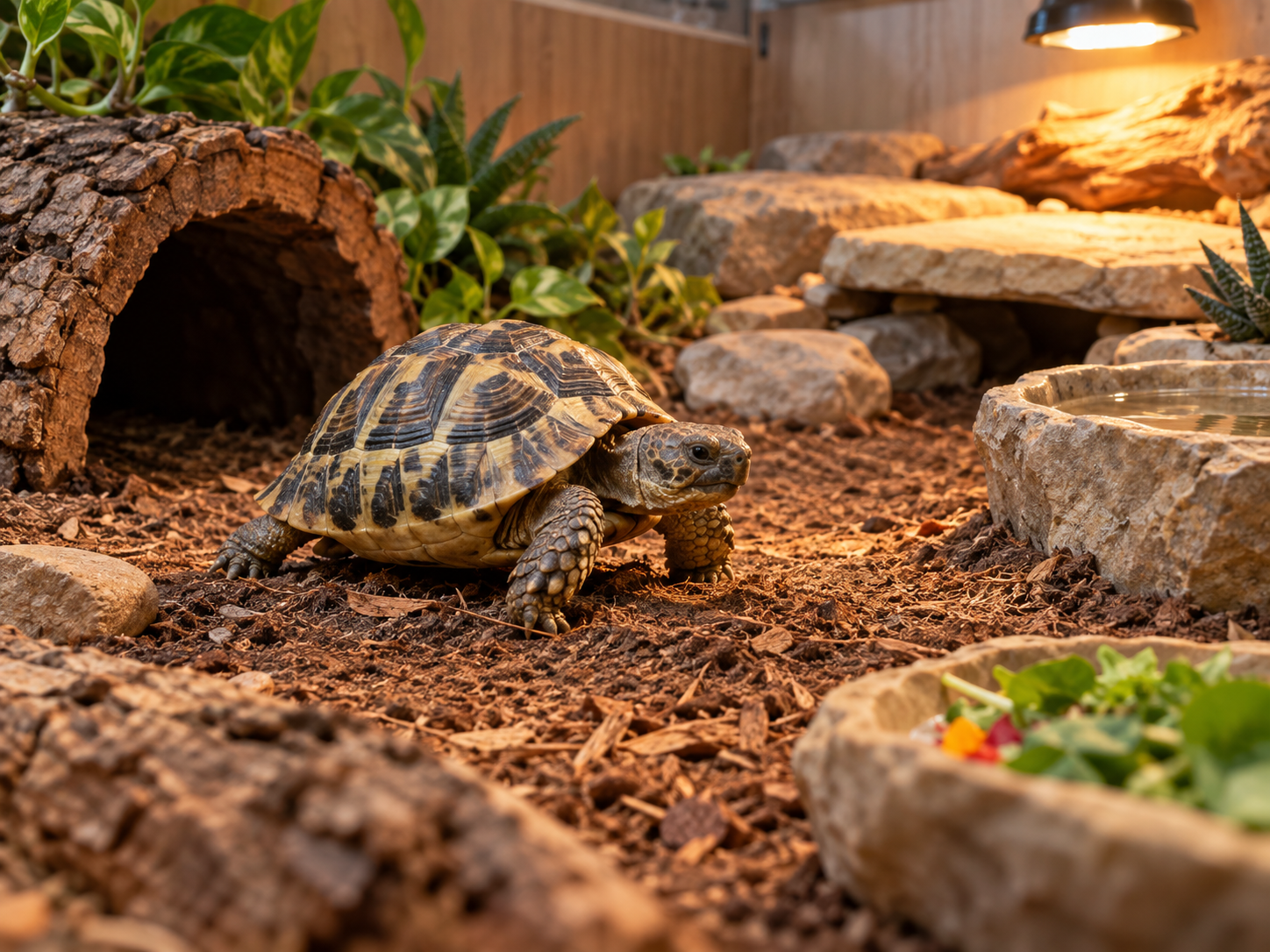

A pet tortoise needs a secure home suited to its species, with plenty of space, the right temperatures, proper lighting and a safe place to shelter. A good setup lets your tortoise walk, bask, graze and rest the way it would naturally. With the right care, many tortoises live for 50 years or more, so it’s worth getting the setup right from the start.
In short: find out your tortoise’s exact species first, as needs vary a lot. Most commonly kept tortoises need a large, open-topped enclosure, a warm basking spot with a cooler area, strong UVB lighting, a species-appropriate substrate, a hide and a shallow water dish. Set everything up and test it before your tortoise comes home.
Know your species first
Tortoise care varies a lot between species. Before you buy anything, confirm the adult size, diet, temperature, humidity and lighting needs of the exact species you keep. Here’s how some of the most common pet tortoises compare.
| Species | Typical adult size | Environment |
|---|---|---|
| Russian (Horsfield’s) tortoise | Around 5–8 inches (13–20 cm) | Dry, with a warm basking spot. Loves to dig. |
| Hermann’s and Greek (spur-thighed) tortoises | Around 5–8 inches (13–20 cm), varies by subspecies | Mediterranean: warm, fairly dry, with a basking spot |
| Red-footed tortoise | Around 10–14 inches (25–35 cm) | Tropical: warm and humid |
| Sulcata (African spurred) tortoise | Can exceed 24 inches (60 cm) and 100 lb (45 kg) | Hot and dry. Needs a large outdoor space as an adult. |
Sizes vary between individuals and subspecies. Sulcata tortoises are often sold as small hatchlings, but they grow into one of the largest tortoises in the world and quickly outgrow indoor housing.
Choose enough space
Tortoises are surprisingly active and need far more floor space than most people expect. The enclosure should let your tortoise walk, explore and move freely between warm and cooler areas.
For a small species such as a Russian or Hermann’s tortoise, many keepers treat an indoor enclosure of about 4 × 2 feet (120 × 60 cm) as a bare minimum for an adult, and recommend much more where possible. A secure outdoor enclosure in suitable weather is ideal for many species, as it gives them room, natural sunlight and grazing.
- Open-topped tortoise tables are often better than glass tanks. Glass tanks tend to have poor ventilation, and many tortoises get stressed trying to walk through the see-through walls.
- If you use a glass tank, cover the lower part of the sides so your tortoise can’t see through them.
- Outdoor pens need walls your tortoise can’t climb or dig under, and a covered top if predators are a risk.
Provide heat and UVB
Tortoises rely on outside heat to stay active and digest food, and most commonly kept species need both a basking spot and UVB lighting.
- Basking spot: set up a heat lamp at one end so there’s a warm basking area and a cooler area at the other. For many Mediterranean species, a basking spot of roughly 95–100°F (35–38°C) is commonly used, but check the right range for your species.
- UVB lighting: UVB lets your tortoise make vitamin D3 and use calcium. Without it, tortoises can develop metabolic bone disease and shell problems. A linear UVB tube, such as a T5 high-output tube, is a popular choice. Replace it as the manufacturer recommends, as UVB fades before the light looks dim.
- Day and night: run lights on a timer for around 12–14 hours a day, and turn them off at night. Most species can handle a moderate drop in temperature overnight.
Glass and plastic block UVB, so natural sunlight through a window doesn’t count. Time outdoors in real sunlight, with shade available, is very beneficial when the weather allows.
Measure temperatures with a digital thermometer and check the basking surface with an infrared temperature gun. Use a thermostat with any heat source that needs one.
Use a safe substrate
Choose a substrate that suits your species and lets your tortoise walk and dig naturally.
- For dry-climate species, a mix of topsoil and play sand, or a similar natural mix, works well and holds burrows.
- For humid species like red-foots, a moisture-holding substrate such as coconut coir or cypress mulch helps keep humidity up.
- Avoid calcium sand, crushed walnut shell, cedar and pine shavings, and very dusty substrates.
Feeding on a flat tile or slate helps stop your tortoise swallowing substrate with its food, and also helps keep its beak and nails worn down.
Add shelter and enrichment
- A secure hide on the cooler side where your tortoise can retreat and sleep
- Safe rocks, logs or low obstacles to climb over
- Suitable edible plants, where appropriate for your species
- Plenty of open space for walking and exploring
Keep climbing features low and stable. Tortoises can easily flip onto their backs on steep slopes and may struggle to turn over.
Provide fresh water
Use a shallow, heavy water dish that your tortoise can walk into and out of easily, with water no deeper than its lower shell. Tortoises often soak and drink at the same time, and also go to the toilet in their water, so check and refresh it daily. Many keepers also give young tortoises a regular shallow soak in lukewarm water to help keep them hydrated.
Keep the enclosure clean
Remove droppings and uneaten food every day, wash the water dish often and replace dirty or wet substrate as needed. Keep resting areas dry for dry-climate species. Tortoises can carry salmonella, so wash your hands after handling your tortoise or cleaning its enclosure.
Build the habitat before your tortoise arrives
Set up and run the enclosure for a few days before your tortoise comes home. Check that the heat, UVB and timers are working and that temperatures are steady in both the warm and cool areas.
It’s also worth checking the law where you live. Some tortoise species are protected, so buy captive-bred animals from a reputable source with any paperwork required. Find a vet experienced with reptiles before you need one, especially if your species hibernates, as hibernation needs careful preparation and a health check first.
Many of the same heat and UVB principles apply to lizards, as our guide on setting up a bearded dragon tank explains.
Frequently asked questions
How big should a tortoise enclosure be?
It depends on the species. For a small species such as a Russian or Hermann’s tortoise, many keepers treat about 4 × 2 feet (120 × 60 cm) as a bare minimum for an adult indoors, with more space strongly recommended. Large species like sulcatas need a large outdoor area.
Do tortoises need UVB light?
Yes. Most commonly kept tortoises need UVB to make vitamin D3 and use calcium. Without it, they can develop metabolic bone disease and shell problems. Natural sunlight outdoors is also very beneficial.
Can a tortoise live in a glass tank?
Open-topped tortoise tables are usually better. Glass tanks often have poor ventilation, and many tortoises become stressed trying to walk through the clear walls. If you use a tank, cover the lower sides.
What is the best substrate for a tortoise?
For dry-climate species, a mix of topsoil and play sand works well. For humid species such as red-footed tortoises, coconut coir or cypress mulch helps hold humidity. Avoid calcium sand, walnut shell, and cedar or pine shavings.