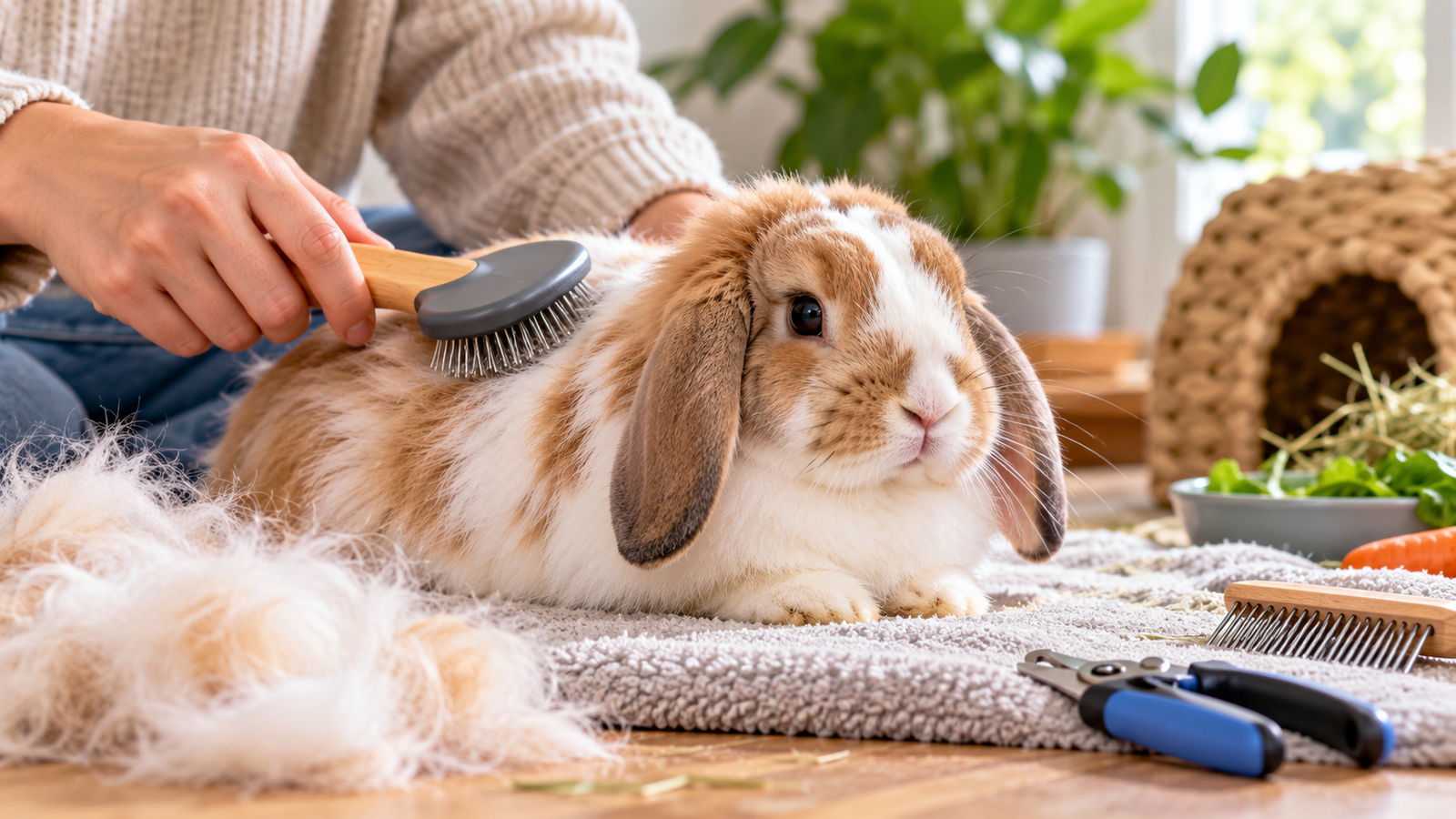

Gentle grooming removes loose fur and helps you spot tangles, soiling and skin changes without pulling delicate skin or forcing uncomfortable handling.
Start with your rabbit’s coat and comfort, rather than a fixed routine borrowed from another pet. Short-haired rabbits and long-haired breeds need different levels of care, and moulting can change how much loose fur needs removing.
How often should you groom a rabbit?
Check the coat daily. The Rabbit Welfare Association & Fund recommends daily grooming, while RSPCA Australia describes weekly grooming as usually sufficient for short coats outside moulting. Adjust brushing to the coat’s condition rather than waiting for tangles to appear.
Long-haired rabbits need daily attention throughout the coat. Brushing the surface can leave mats hidden underneath, particularly in areas where fur rubs together. Ask a rabbit-experienced veterinary nurse to demonstrate how to inspect and maintain your rabbit’s coat.
Choose tools that do not scrape or tug
A soft brush suits routine short-coat care. A suitable comb may help with longer fur, while a soft rubber grooming brush can lift loose hair during moulting. Test the tool gently and stop if it catches.
Avoid aggressive deshedding tools intended to strip dense dog or cat coats. Rabbit skin can tear easily. A tool’s usefulness depends on its design, the coat and how it is handled—not simply whether its packaging describes it as suitable for small pets.
Keep your rabbit supported and close to the ground
Prepare your tools before starting. Choose a quiet, enclosed area with a non-slip surface, preferably at floor level. Let your rabbit become comfortable with touch and a few gentle brush strokes before attempting a longer session.
If lifting is necessary, support the chest and hindquarters, keep the rabbit close to your body and avoid squeezing. Ask for a demonstration if you are unsure. Never lift a rabbit by its ears or leave it unsupported while reaching for equipment.
Do not turn a rabbit onto its back to make it stay still. The immobility sometimes called “trancing” is a fear response, not evidence that the rabbit is relaxed.
If your rabbit starts struggling, stop and return it safely to a supported position. Persistent difficulty with handling is a reason to seek help, rather than increase restraint.
Brush small areas and check beneath the fur
- Part the coat gently and look for tangles, dampness, redness or broken skin.
- Work through a small area with light strokes in the direction of the fur.
- Clear loose hair from the brush frequently so it continues to move smoothly.
- Check less visible areas without twisting the rabbit or forcing its legs apart.
- Finish before the rabbit becomes distressed; several manageable sessions may be easier than one prolonged groom.
Do not repeatedly brush a sore area or assume a new bald patch is ordinary shedding. Arrange veterinary advice for irritated skin, wounds, persistent scratching or a new reluctance to be touched.
Leave tight mats to experienced hands
A small, loose tangle may separate with your fingers if it comes apart without pulling. Stop if the fur resists or your rabbit reacts as though it hurts.
Do not slide scissors beneath a tight mat or cut close to the skin. Skin can be drawn into the tangle, making it difficult to see where it ends and the fur begins.
Arrange help from a rabbit-experienced veterinary professional when a mat cannot be loosened comfortably. Clippers are not automatically safer: fine fur can clog blades, and skin can catch and tear. Extensive matting, sore skin or a rabbit that cannot tolerate handling needs a veterinary assessment and an appropriate grooming plan.
Investigate a dirty bottom
Repeated soiling needs more than cosmetic cleaning. A rabbit may be having difficulty grooming itself or have an underlying health problem. Ask your vet how to clean the affected area safely and address the cause.
Rabbits do not need routine full-body baths. Avoid soaking your rabbit or trying to wash away extensive matting; wet fur is difficult to dry thoroughly, and handling a frightened, wet rabbit adds risk.
Fly eggs or maggots on a rabbit require immediate veterinary contact. Flystrike can become life-threatening quickly. Do not delay treatment to finish grooming or attempt a home remedy.
Watch appetite during moulting
Continue normal access to hay and water, and notice whether your rabbit is eating and passing droppings as usual. Reduced appetite or fewer droppings should not be dismissed as an expected part of shedding.
Contact a veterinarian immediately if your rabbit is eating less than normal, and use the out-of-hours service when necessary. Do not wait for grooming to resolve the problem or give oils, laxatives or hairball remedies without veterinary instructions.
For other changes that warrant attention, see our guide to rabbit illness and emergency signs.