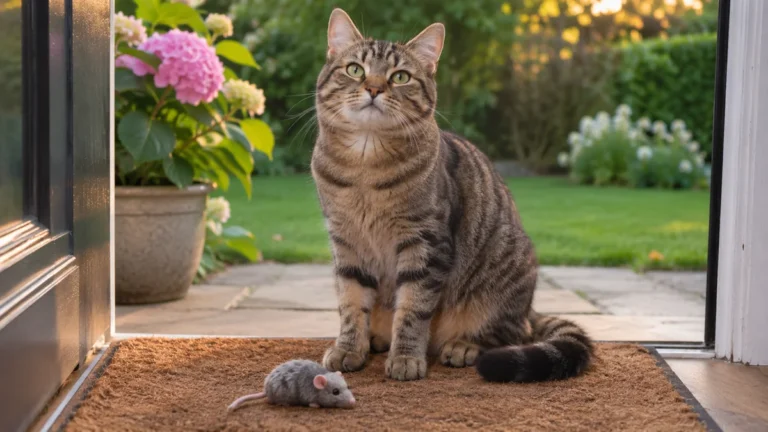
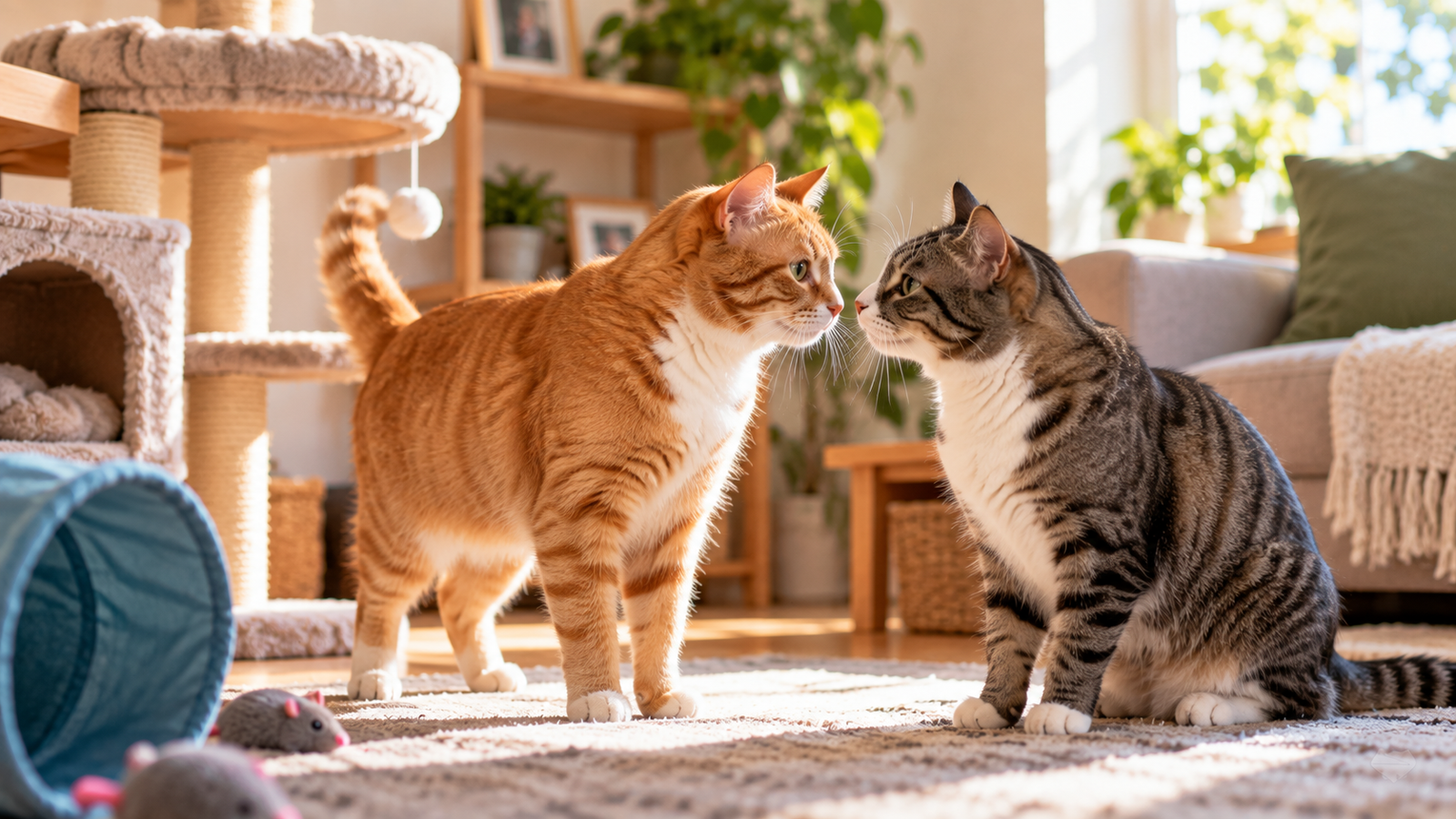

Should you get a second cat? The answer depends much more on your resident cat’s personality, social history, age, health and environment than on the simple idea that every cat needs a feline friend.
Some cats form close relationships with other cats and may sleep together, groom one another, play together and actively seek each other’s company. Other cats are perfectly comfortable living as the only cat in the home and may find the arrival of another cat stressful.
Therefore, getting another cat should not be treated as an automatic cure for boredom, loneliness or behavior problems.
The goal is to decide whether your current cat, the potential new cat and your household are all reasonably suited to multi-cat living.
Should You Get a Second Cat? Quick Decision Guide
| Factor | A Second Cat May Be Easier If… | Think More Carefully If… |
|---|---|---|
| Social history | Your cat has previously lived peacefully or affectionately with other cats. | Your cat has repeatedly shown strong distress around other cats. |
| Temperament | Your cat is adaptable, curious and generally relaxed around change. | Your cat is highly territorial, fearful or easily stressed by environmental changes. |
| Age | The cats have reasonably compatible energy and activity levels. | An energetic kitten would be paired with a frail or quiet senior cat. |
| Health | Your resident cat is medically stable and coping well. | Your cat has significant illness, chronic pain or other conditions that make change difficult. |
| Space | You can provide separate resting, feeding, toileting and hiding areas. | Both cats would be forced to share one small group of resources. |
| Time | You can manage a gradual introduction that may take weeks or longer. | You need the cats to live together immediately. |
| Finances | You can comfortably afford routine and unexpected care for two cats. | A second veterinary emergency would create serious financial strain. |
Does Your Cat Need Another Cat for Company?
Not necessarily.
Cats are socially flexible. Some develop strong social relationships with other cats, while others prefer more distance and independence.
A cat can have an excellent quality of life as the only cat in the household when its physical, emotional and behavioral needs are being met.
That means providing opportunities for:
- Interactive play
- Predatory-style activity
- Climbing
- Scratching
- Exploration
- Rest
- Hiding
- Food-related enrichment
- Positive interaction with people
If your main concern is that your indoor cat seems bored, first consider improving the environment.
For practical ideas, read: How to Keep an Indoor Cat Happy and Active .
Being Alone Is Not the Same as Being Lonely
People naturally interpret cat behavior through human social expectations.
However, a cat sleeping alone while you are at work does not automatically mean the cat wants another cat in its territory.
Likewise, following you around the house can reflect:
- Social attachment to you
- Curiosity
- A feeding routine
- A desire to play
- A learned habit
It does not prove that the cat wants a feline companion.
Signs Your Cat May Be Comfortable With Other Cats
No single behavior can guarantee that a new relationship will succeed.
However, certain history can make multi-cat living more promising.
Examples include:
- Previously living peacefully with another cat
- Previously having a bonded feline companion
- Showing relaxed rather than intensely defensive behavior around familiar cats
- Having a relatively adaptable personality
- Enjoying social play with another compatible cat
A positive history is useful information, but it does not mean your cat will automatically accept every new cat.
Signs Your Cat May Prefer Being the Only Cat
Be more cautious when your resident cat has a history of:
- Persistent distress around other cats
- Severe territorial behavior
- Repeated intercat conflict
- Strong resource guarding
- Hiding for long periods when other cats are present
- Stress-related behavior after previous cat introductions
Again, these factors do not predict the future perfectly.
They simply mean that adding another cat deserves especially careful consideration.
Do Not Adopt a Second Cat to Fix a Behavior Problem
If your current cat is scratching furniture, waking you at night, overeating, vocalizing or demanding attention, another cat may not solve the problem.
In some cases, adding another cat can create an additional source of stress.
Instead, first identify the reason behind the behavior.
Possible causes include:
- Insufficient enrichment
- An unsuitable feeding routine
- Environmental stress
- Pain
- Medical illness
- Learned behavior
- Fear or anxiety
Consider Your Resident Cat’s Personality
Personality is one of the most important considerations when choosing a potential companion.
Think about whether your cat is generally:
- Confident or cautious
- Active or relaxed
- Playful or sedentary
- Social or independent
- Adaptable or strongly routine-oriented
Then look for a potential new cat whose behavior is likely to fit reasonably well.
Matching Energy Levels Matters
Cats do not have to be identical.
However, extremely different play drives can create tension.
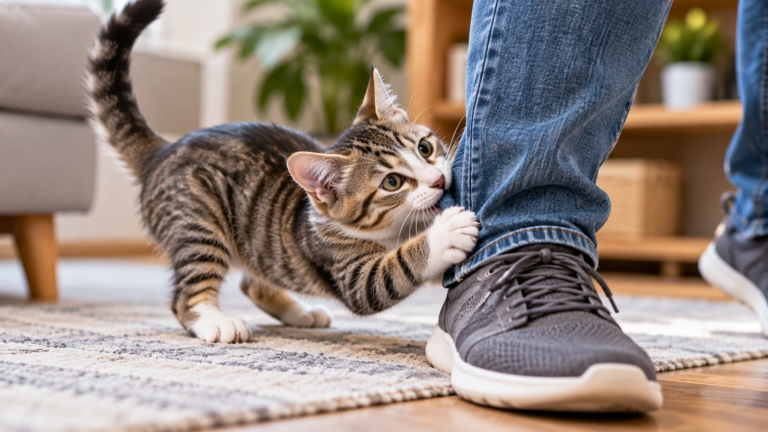
For example, an energetic young cat may repeatedly chase, pounce on or attempt to wrestle with an older cat that wants to sleep.
The younger cat may be trying to play rather than behaving aggressively, but the older cat can still find the interaction stressful.
Therefore, consider:
- How often each cat wants to play
- How physical the play tends to be
- How easily each cat disengages
- Whether one cat respects another cat’s attempts to leave
Should You Get a Kitten for an Adult Cat?
A kitten can sometimes be easier for an adult resident cat to tolerate than another confident adult.
However, that is not guaranteed.
Kittens can also be:
- Highly energetic
- Persistent
- Physically playful
- Poor at respecting an older cat’s boundaries
A calm adult cat may become irritated if a kitten repeatedly jumps on it throughout the day.
When a Kitten May Be a Reasonable Match
A kitten may fit better when the resident cat:
- Is relatively young
- Enjoys active play
- Has previously been comfortable around kittens
- Can retreat to areas the kitten cannot constantly invade
You will still need to provide the kitten with enough human-led play so that the resident cat does not become its only source of entertainment.
Should You Get Another Adult Cat?
An adult cat has one major advantage: its personality may be easier to evaluate.
A shelter, rescue or foster caregiver may already know whether the cat:
- Has lived with other cats
- Enjoys social interaction
- Prefers distance
- Has a high play drive
- Has difficulty sharing space
That information can be valuable when trying to make a compatible match.
Should You Pair Two Senior Cats?
It depends on the individual cats.
A calm older cat may appreciate another calm cat when both have compatible social histories.
However, major changes can be difficult for some senior cats, especially when health problems or reduced mobility are already present.
Before introducing a new cat to an older resident cat, consider:
- Arthritis or mobility limitations
- Kidney disease
- Hyperthyroidism
- Dental pain
- Vision or hearing changes
- Cognitive changes
- Overall stress tolerance
For broader senior-cat guidance, read: Common Health Problems in Senior Cats .
Health Should Be Considered Before Adoption
Both the resident cat and the potential new cat should receive appropriate veterinary care.
A new cat may need evaluation for:
- General health
- Vaccination status
- Parasites
- Contagious diseases
- Existing medical conditions
The resident cat’s health matters too.
A cat already coping with significant illness or chronic pain may have less ability to adapt to a major social change.
Is Your Resident Cat Healthy Enough for the Change?
Ask whether your current cat is:
- Eating normally
- Using the litter box normally
- Moving comfortably
- Maintaining weight
- Sleeping and resting normally
- Free from major untreated medical problems
A recent veterinary check can be particularly useful before changing the household.
Does the Sex of the Cats Matter?
Sex alone should not be the main matching criterion.
Once cats are appropriately spayed or neutered, individual temperament, social experience, health, age and play style are generally more useful considerations than simply choosing male versus female.
Two cats of the same sex can become close companions.
A male and female can also dislike one another.
There is no guaranteed combination.
Does Breed Matter?
Breed may influence general activity tendencies in some cats, but breed should not replace evaluation of the individual animal.
Two cats of the same breed may have completely different:
- Energy levels
- Confidence
- Social preferences
- Play styles
- Stress responses
Choose for compatibility rather than appearance.
Previous Social Experience Matters
Ask what is known about the potential new cat.
Useful questions include:
- Has the cat lived with other cats?
- Did the cat interact with them peacefully?
- Was the cat part of a bonded pair?
- Does the cat seek feline company?
- Has the cat shown fear or conflict around other cats?
- How does the cat play?
A foster-based rescue may sometimes provide especially useful behavioral observations because the cat has lived in a home environment.
What Is a Bonded Pair?
A bonded or strongly affiliated pair consists of cats that show a clear positive social relationship and actively choose to spend time together.
Possible signs include:
- Sleeping in physical contact
- Resting closely together by choice
- Mutual grooming
- Friendly nose-to-nose greetings
- Social rubbing
- Relaxed reciprocal play
- Seeking each other out
Simply tolerating another cat in the same home does not automatically mean the cats are bonded.
Coexistence Is Different From Friendship
Two cats can live in the same home without fighting and still not have a close social relationship.
They may:
- Sleep in separate rooms
- Use different resting areas
- Rarely groom one another
- Choose not to interact
That can still be an acceptable arrangement when both cats feel secure and have access to everything they need.
The goal does not have to be cuddling together.
Peaceful coexistence can be a successful outcome.
Do You Have Enough Space for Two Cats?
Square footage matters less than how the space is organized.
Even a reasonably sized home can create conflict when every important resource is concentrated in one small area.
Each cat needs opportunities to:
- Eat without being blocked
- Drink without being challenged
- Use a litter box privately
- Rest somewhere secure
- Scratch
- Climb
- Hide
- Move away from the other cat
Vertical Space Can Increase Usable Territory
Cat trees, shelves and elevated resting areas can make the home more flexible for multiple cats.
Vertical space can allow one cat to move upward while another remains at floor level.
However, avoid creating elevated areas with only one narrow entrance or exit where another cat can block access.
Can the Cats Get Away From Each Other?
This is an important question.
Two cats should not be forced to remain near one another throughout the day.
Ideally, the home should provide:
- Multiple resting rooms or zones
- Several elevated areas
- Multiple hiding places
- More than one path through important areas
Choice reduces the need for confrontation.
Resource Competition Is a Major Concern
Cats may compete without obvious fighting.
One cat can quietly control access to:
- Food
- Water
- Litter boxes
- Resting areas
- Doorways
- Scratching locations
- Human attention
Staring or sitting in a doorway may be enough to prevent another cat from approaching.
Provide Separate Food Stations
Do not assume two cats want to eat side by side.
Separate feeding areas allow each cat to eat without watching the other cat constantly.
This is particularly useful when:
- One cat eats quickly
- One cat steals food
- The cats eat different diets
- One cat needs medication with meals
For feeding guidance, read: How Often Should You Feed a Cat? Guide by Age & Life Stage .
How Many Litter Boxes Do Two Cats Need?
A commonly recommended starting point is one litter box per cat plus one extra.
For two cats, that usually means three boxes.
Placement matters as much as the number.
Three litter boxes placed directly beside one another may function more like one toileting area from the cats’ perspective.
Distribute them in useful, accessible locations.
For the complete guide, read: How Many Litter Boxes Do Cats Need? A Simple Guide .
Provide More Than One Scratching Area
Scratching surfaces are also important resources.
Each cat should have access to appropriate scratching areas without being blocked by the other cat.
Provide choices in different locations.
For detailed setup advice, read: How to Get a Cat to Use a Scratching Post Instead of Furniture .
Safe Resting Places Matter
Each cat should have places where it can rest without being constantly watched or approached by the other cat.
Useful options include:
- Covered beds
- Boxes
- Cat-tree cubbies
- Elevated shelves
- Quiet sleeping areas
Providing several options lets cats choose the distance they need.
Can You Afford a Second Cat?
The adoption fee is only the beginning.
A second cat adds recurring costs such as:
- Food
- Litter
- Routine veterinary care
- Vaccinations when appropriate
- Parasite prevention when needed
- Dental care
- Medication
- Carriers
- Scratching surfaces
- Emergency veterinary treatment
Two cats do not always cost exactly twice as much, but the long-term financial commitment is significantly greater.
Plan for Veterinary Emergencies
Before adopting, ask whether you could manage an unexpected medical problem involving either cat.
Potential expenses might arise from:
- Injury
- Urinary obstruction
- Dental disease
- Vomiting or diarrhea
- Chronic kidney disease
- Other emergencies
A realistic budget protects both cats.
Do You Have Time for Two Cats?
Having two cats does not mean they will entertain each other so completely that they need less attention from you.
Both cats still need:
- Individual observation
- Play
- Health monitoring
- Grooming when appropriate
- Veterinary care
- Positive human interaction
Some cats may also need separate play sessions because their activity levels differ.
Expect the Introduction to Take Time
Do not plan on bringing the new cat home and immediately allowing unrestricted face-to-face contact.
A proper introduction can take:
- Days
- Weeks
- Sometimes considerably longer
The pace should be determined by the cats’ responses rather than a fixed calendar.
You Need a Transition Room
Before adoption, ideally identify a separate room for the new cat.
It should contain:
- Food
- Water
- A litter box
- A comfortable bed
- Hiding places
- Scratching surfaces
- Toys
- An elevated area when possible
This allows the new cat to settle without immediate direct contact with the resident cat.
Do Not Force the Cats to “Work It Out”
Placing two unfamiliar cats together and expecting them to establish a hierarchy through fighting can create serious stress.
A gradual introduction allows both cats to experience the other’s presence in controlled stages.
Typical steps involve:
- Initial separation
- Scent introduction
- Positive experiences near a closed door
- Controlled visual contact
- Short supervised proximity
- Gradually increasing shared time
If either cat becomes significantly distressed, return to an easier stage rather than forcing progress.
This Article Is About the Decision, Not the Full Introduction
Once you have decided to adopt, the introduction becomes its own process.
Your existing resident cat should continue to have access to familiar routines and resources while the newcomer settles in.
For guidance on the settling-in phase, read: How to Help a New Cat Settle Into Your Home .
What Does Intercat Tension Look Like?
Conflict between cats is not always dramatic.
Many signs are subtle.
Possible signs include:
- Staring
- Blocking doorways
- Blocking litter-box access
- Stalking
- Avoiding certain rooms
- One cat always moving away
- Hiding more often
- Tail twitching around the other cat
- Waiting for the other cat to leave before approaching food
More Obvious Signs of Conflict
Tension can also become more noticeable.
Watch for:
- Chasing
- Fleeing
- Hissing
- Growling
- Swatting
- Screaming
- Physical fighting
- House-soiling
- Overgrooming
Repeated conflict should not simply be accepted as normal multi-cat behavior.
Play vs Fighting: How Can You Tell?
Healthy social play is usually relatively reciprocal.
The cats may:
- Take turns chasing
- Pause between bouts
- Return voluntarily
- Switch roles
- Remain relatively relaxed
Concern increases when one cat repeatedly tries to escape while the other continues pursuing it.
Hissing Does Not Automatically Mean Failure
A hiss communicates discomfort or a desire for more distance.
A brief hiss during an early introduction does not automatically mean the cats can never live together.
However, it tells you that the current level of interaction may be too intense.
Give the cats more distance and progress more slowly.
What Does a Good Cat-to-Cat Relationship Look Like?
Friendly cats may show:
- Relaxed greetings
- Mutual grooming
- Sleeping together
- Resting close together voluntarily
- Rubbing against each other
- Reciprocal play
However, cats do not have to display all of these behaviors to live successfully together.
Neutral Coexistence Can Be Successful
Some cats simply maintain respectful distance.
They may not groom or cuddle each other but can still:
- Eat comfortably
- Rest peacefully
- Use resources without blocking
- Walk past each other without distress
That may be a perfectly acceptable multi-cat relationship.
Should You Adopt Two Kittens Together?
Two kittens of similar age may enjoy high-energy social play and can sometimes be a good match.
Kittens that already have a strong social relationship may also transition well together.
However, adopting two kittens means committing to:
- Two veterinary-care schedules
- More food
- More litter resources
- More long-term expenses
- Enough individual human interaction for both cats
What if You Already Have an Adult Cat?
Adding two kittens to a home with one adult cat should be considered from the resident cat’s perspective.
Two energetic kittens may play with each other, which can reduce some pressure on the adult.
However, they also create a much larger change to the territory.
There is no universal rule that two newcomers are easier than one.
Should You Adopt Your Cat’s Littermate?
Being related does not guarantee lifelong compatibility.
Littermates may form strong relationships, but social relationships can also change as cats mature.
If two cats are currently known to be strongly bonded, keeping them together can be valuable.
Do not assume that two adult cats will automatically get along simply because they are siblings.
What if Your Cat Recently Lost a Companion?
Do not assume that replacing the companion immediately is necessary.
The surviving cat may show changes after losing another household cat, but its needs should be evaluated individually.
Give attention to:
- Appetite
- Sleeping patterns
- Activity
- Vocalization
- Searching behavior
- Human interaction
A sudden change can also indicate illness, so persistent appetite or behavior changes deserve veterinary attention.
Do Not Rush Into a Replacement Cat
If the cats were strongly affiliated, the surviving cat may need time to adjust.
If they merely tolerated each other, the surviving cat may actually appear more relaxed afterward.
Observe before deciding.
What if Your Cat Watches Outdoor Cats?
Interest in outdoor cats does not necessarily mean your cat wants one living inside the home.
Watching through a window gives your cat distance and control.
Sharing territory, food areas, resting spaces and litter-box access is very different.
Signs Outdoor Cats May Actually Be Stressing Your Cat
Some cats react to outdoor cats with:
- Staring
- Growling
- Tail lashing
- Urine marking
- Redirected aggression
- Agitation around windows
Those behaviors would not support the assumption that the cat wants a feline housemate.
Foster-to-Adopt Can Reduce Uncertainty
When available, a foster-to-adopt arrangement can be useful if you are uncertain about compatibility.
It gives the household an opportunity to evaluate the match without treating the decision casually.
However, the cats still need a proper gradual introduction.
Do not use a short face-to-face meeting as the only compatibility test.
Why a Shelter Meeting Cannot Guarantee Compatibility
Cats may behave differently in a shelter than they do once settled into a home.
Stress, unfamiliar smells, confinement and noise can alter normal behavior.
Therefore, use shelter or foster observations as useful information rather than a guarantee.
What Should You Ask a Shelter or Rescue?
Before choosing another cat, ask about:
- Age
- Medical history
- Vaccination status
- Previous homes
- History with other cats
- Known bonded relationships
- Play style
- Energy level
- Fearfulness
- Resource guarding
- Comfort around people
The more information you have, the easier it is to avoid choosing purely by appearance.
Do Not Choose Only by Appearance
A cat’s color, breed or coat pattern says very little about whether it will be compatible with your current cat.
A visually perfect pair can be behaviorally mismatched.
Prioritize:
- Temperament
- Energy
- Health
- Social history
- Environmental needs
Can Two Cats Share a Food Bowl?
It is better to provide separate feeding resources.
Separate bowls make it easier to:
- Monitor individual intake
- Prevent food stealing
- Feed different diets
- Reduce social pressure during meals
The feeding stations should also be positioned so one cat does not have to pass the other to eat.
Can Two Cats Share One Water Bowl?
Provide multiple water sources rather than relying on one bowl.
Placing water in different locations gives each cat options and reduces the chance that access can be controlled by another cat.
Should Two Cats Share One Bed?
They may choose to, but they should not have to.
Provide enough resting places for each cat to sleep separately.
Cats that are genuinely affiliated can then choose to share a bed voluntarily.
Can Two Cats Share One Cat Tree?
Possibly.
A large stable tree with several platforms may work well for compatible cats.
However, the home should offer additional elevated areas so access to vertical territory does not depend on one structure.
How Do You Know When Not to Get a Second Cat?
A second cat may be a poor decision when:
- Your resident cat is medically fragile
- Your cat has a strong history of severe conflict with other cats
- You cannot create a separate transition room
- You cannot provide multiple separated resources
- You cannot afford veterinary care for another animal
- You do not have time for a gradual introduction
- You are adopting mainly to fix a behavior problem
- You expect the cats to entertain each other instead of providing enrichment yourself
When Remaining a One-Cat Household Is Completely Fine
There is nothing wrong with having one cat.
A single cat can have a rich life when the home provides:
- Safe territory
- Human companionship
- Interactive play
- Climbing
- Scratching
- Foraging opportunities
- Resting choices
- Appropriate veterinary care
The goal is not to maximize the number of cats.
The goal is to create a home in which each cat can feel secure.
A Practical Pre-Adoption Checklist
Before saying yes to another cat, ask yourself:
- Has my resident cat previously lived comfortably with cats?
- Is my cat healthy and reasonably adaptable?
- Can I choose a new cat with a compatible temperament and energy level?
- Can I create a separate transition room?
- Can I provide multiple feeding and water areas?
- Can I provide enough litter boxes in separate locations?
- Can both cats access separate resting and hiding areas?
- Can I provide enough scratching and climbing resources?
- Can I afford routine and emergency veterinary care for both cats?
- Do I have time for an introduction that could take weeks or longer?
- Am I comfortable if the cats only coexist rather than becoming close friends?
- Would I still want the new cat if it does not “fix” my resident cat’s behavior?
If several of these questions are difficult to answer positively, it may be worth postponing adoption.
Common Mistakes When Getting a Second Cat
- Assuming every cat needs a feline companion
- Choosing only by appearance
- Ignoring the resident cat’s social history
- Pairing cats with dramatically different play drives without a plan
- Bringing home a kitten for a senior cat without considering the senior’s needs
- Expecting sex alone to predict compatibility
- Providing only one feeding area
- Providing too few litter boxes
- Concentrating all resources in one room
- Skipping the transition room
- Allowing immediate unrestricted contact
- Forcing cats to remain close together
- Punishing hissing or growling
- Assuming lack of fighting means the cats are friends
- Ignoring subtle staring, blocking and avoidance
- Expecting the cats to entertain each other all day
- Underestimating veterinary and food costs
- Rushing the decision because a particular cat is available today
Frequently Asked Questions
Should I get a second cat?
Consider your resident cat’s temperament, social history, age, health and play style, along with your available space, resources, time and budget. Some cats enjoy feline companionship, while others prefer being the only cat.
Does my cat need a friend?
Not necessarily. A cat can live happily as the only cat when its environmental, social and behavioral needs are met. Previous positive relationships with other cats can be useful evidence that your cat may enjoy feline companionship.
Will a second cat help my first cat feel less lonely?
Possibly, but you should not assume loneliness is the cause of your cat’s behavior. Some cats benefit from compatible feline company, while others may find another cat stressful.
Is it better to have one cat or two?
Neither arrangement is automatically better. The appropriate choice depends on the individual cats, their social compatibility and whether the home can meet each cat’s needs.
Is a kitten a good companion for an adult cat?
Sometimes. However, a highly energetic kitten can overwhelm a quiet adult. Consider the resident cat’s play drive, patience and ability to retreat from the kitten.
Should I get a kitten for my senior cat?
Use caution. Many kittens have intense play needs, while senior cats may prefer quiet routines and may have pain or mobility problems. A calm compatible adult may sometimes be easier, but every cat should be assessed individually.
Is it easier to introduce a male cat to a female cat?
Sex alone does not reliably determine compatibility. Temperament, age, social history, play drive, health and the quality of the introduction are more useful factors to consider.
Do two female cats get along?
They can. Cats of the same sex can form close relationships or coexist peacefully. Individual compatibility matters more than sex alone.
Can two male cats live together?
Yes. Appropriately neutered male cats can live peacefully together when they are compatible and have adequate resources and territory.
Does breed matter when choosing a second cat?
Breed should not be the main deciding factor. Evaluate the individual cat’s temperament, activity level, social history and health rather than assuming all members of a breed behave alike.
What is the best age for a second cat?
There is no single best age. Look for a cat whose energy level, play style and social behavior are reasonably compatible with your resident cat.
How many litter boxes do two cats need?
A common starting guideline is one litter box per cat plus one additional box, which means three boxes for two cats. They should be distributed in separate useful locations rather than placed together in one row.
Can two cats share food and water bowls?
It is better to provide separate food stations and multiple water sources. This makes intake easier to monitor and reduces competition or blocking around important resources.
How do I know if my cats like each other?
Affiliated cats may sleep together, groom one another, rub against each other, greet calmly and engage in reciprocal play. However, peaceful cats can also choose to spend much of their time separately.
Is hissing during an introduction normal?
A hiss communicates discomfort and a desire for distance. A brief hiss does not necessarily mean the relationship will fail, but it indicates that you may need to slow the introduction and give the cats more space.
How long does it take for two cats to get along?
There is no fixed timeline. Introductions may take days, weeks or several months. Progress should depend on the cats remaining comfortable at each stage rather than following a strict schedule.
What if my two cats never cuddle?
That does not necessarily mean the relationship has failed. Some cats coexist peacefully without grooming or sleeping together. Comfortable resource use and an absence of persistent tension are more important than cuddling.
What are signs of tension between cats?
Signs can include staring, blocking access to resources, stalking, hiding, avoidance, chasing, fleeing, hissing, growling and physical conflict. Some of the most important signs are subtle.
Should I let two cats fight it out?
No. Forced confrontation can increase fear and tension. Use a gradual introduction and separate the cats if interactions become unsafe or highly stressful.
Can foster-to-adopt help when choosing a second cat?
Yes, when the option is available. Foster-to-adopt can provide more information about compatibility before a permanent commitment, but the cats still need a gradual and carefully managed introduction.
Should I get another cat after one of my cats dies?
Do not rush the decision. Observe the surviving cat’s behavior and health first. Some cats may eventually benefit from another compatible companion, while others may be comfortable remaining alone.
Is having one cat cruel?
No. Many cats live very well as single cats when they receive appropriate enrichment, safe territory, social interaction, play, scratching opportunities, rest and veterinary care.
The Bottom Line
Getting a second cat can work extremely well when the match and environment are right, but another cat should never be considered an automatic requirement for feline happiness.
Start with your resident cat. Consider its temperament, previous experience with cats, age, health, activity level and tolerance for change.
Then consider the potential newcomer. Look beyond appearance and choose for compatible social behavior, play drive and energy level.
Your home matters too. Multi-cat households need multiple separated resources, including food, water, litter boxes, resting places, scratching areas, hiding spaces and opportunities for play. Cats also need enough territory to move away from one another when they choose.
Plan for the practical commitment. Another cat means additional veterinary care, food, litter, equipment, time and the possibility of unexpected medical expenses.
Finally, keep expectations realistic. The cats may become close companions, or they may simply learn to coexist peacefully. Either can be a successful outcome.
If your current cat is healthy, socially flexible and has previously enjoyed feline company—and you have the space, resources, finances and time for a gradual introduction—a second cat may be a reasonable addition to the household.
If your cat strongly prefers solitude, is medically fragile, or your home cannot provide enough separate resources, remaining a one-cat household can be the kinder and more appropriate choice.
References and Further Reading
Feline Veterinary Medical Association (FelineVMA)
Are You Thinking of Getting Another Cat(s)? — pre-adoption considerations including temperament, age, play drive, health, socialization, environmental resources and household preparation.
2024 AAFP Intercat Tension Guidelines: Recognition, Prevention, and Management
Feline social behavior, recognition of subtle intercat tension, prevention strategies, environmental management and introduction of new cats.
FelineVMA / Cat Friendly Homes
Introducing a New Cat Into Your Home — gradual introductions, transition rooms, scent introduction, visual access, supervised proximity and monitoring for tension.
FelineVMA Environmental Needs Guidance
Safe places, vertical territory, multiple separated environmental resources, play, predatory behavior and positive human-cat interactions.
AAFP/ISFM Feline Environmental Needs Guidelines
Environmental resources, feline social behavior, safe resting areas, scratching opportunities and management of multi-cat households.