

Many dogs love a bit of fruit, and some fruits make a healthy, low-calorie treat. Others are dangerous, even in small amounts, and a few common fruits have seeds, pits or skins that cause problems. If you’d like to share fruit with your dog, the key is knowing which ones are safe, how to prepare them, and how much to give.
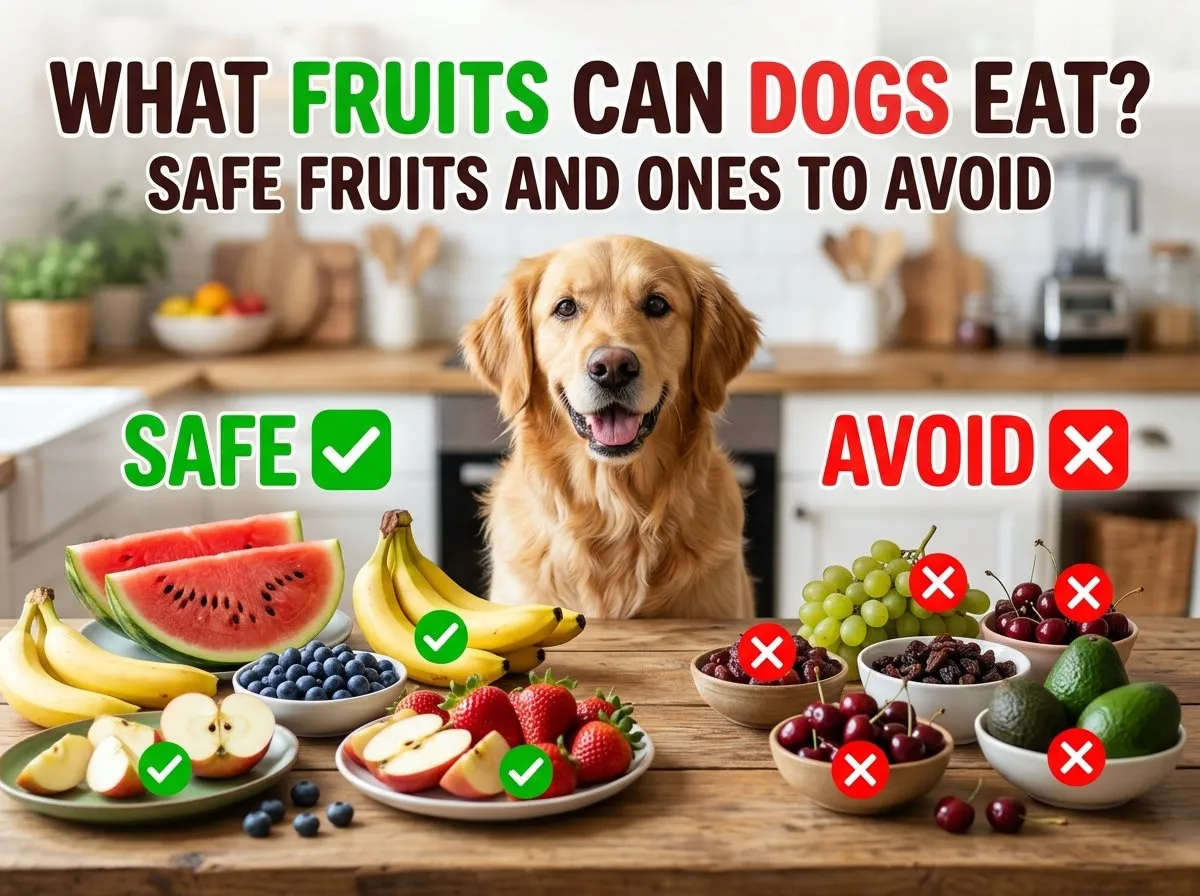
Quick answer: Safe fruits for most dogs, in small amounts, include apples (no core or seeds), bananas, blueberries, strawberries, raspberries, watermelon (no rind or seeds), cantaloupe, mango (no pit), pears (no seeds), pineapple, oranges (flesh only) and peaches (fresh, no pit). Never give grapes or raisins. Avoid cherries, avocado and the green parts of tomato plants. Introduce one fruit at a time and keep portions small.
Important: grapes and raisins can cause sudden kidney failure in dogs, even in small amounts, and it isn’t known why some dogs are affected and others aren’t. If your dog eats any grapes, raisins, sultanas or currants, contact your vet straight away, even if it seems fine.
Fruits dogs can eat
These fruits are generally safe for healthy dogs when prepared properly and given in moderation, according to the AKC and WebMD’s vet-reviewed guide.
| Fruit | How to serve it | Watch out for |
|---|---|---|
| Apples | Slices, with core and seeds removed | Seeds and core |
| Bananas | Small pieces, without the peel | High in sugar; occasional treat only |
| Blueberries | Fresh or frozen, whole | Can be a choking risk for very small dogs |
| Strawberries | Fresh, cut up, stem removed | Natural sugar; just a few |
| Raspberries | Fresh or frozen, a small handful | Contain small amounts of natural xylitol; keep portions small |
| Watermelon | Flesh only | Seeds and rind can cause a blockage |
| Cantaloupe | Flesh only, cut up | Sugary; limit for overweight or diabetic dogs |
| Mango | Flesh only, peeled | The pit is a choking hazard and contains cyanide compounds |
| Pears | Bite-size pieces, seeds and core removed | Seeds; avoid canned pears in syrup |
| Pineapple | Fresh chunks, peel and crown removed | Avoid sweetened canned pineapple |
| Oranges | A segment or two of flesh, no peel or seeds | Many dogs dislike citrus; can upset some stomachs |
| Peaches | Fresh flesh only | The pit; avoid canned peaches in syrup |
| Cranberries | A few plain fresh or dried | Sweetened dried cranberries |
Fruits dogs should not eat
- Grapes, raisins, sultanas and currants: highly toxic and can cause kidney failure. This includes baked goods, cereals and trail mixes that contain them.
- Cherries: the pits, stems and leaves contain cyanide compounds, and pits can cause a blockage.
- Avocado: the pit, skin and leaves contain persin, which can cause vomiting and diarrhea, and the fatty flesh can upset the stomach.
- Tomato plants: the green parts contain solanine. Ripe tomato flesh is generally considered safe in small amounts, but keep dogs away from tomato plants.
- Canned fruit in syrup: too much sugar, and some “sugar-free” products contain xylitol, which is very dangerous for dogs.
For a fuller list of dangerous foods, see our guide to foods toxic to dogs.
How to give your dog fruit safely
- Start small. Offer one new fruit at a time, in a tiny amount, and watch for vomiting, diarrhea or itching over the next day.
- Prepare it properly. Wash it, and remove seeds, pits, cores, stems, rinds and peels. Cut it into pieces the right size for your dog to avoid choking.
- Keep it a treat. Fruit should be a small extra, not a large part of the diet. Treats of any kind should stay a small share of your dog’s daily food so its complete diet stays balanced. See how often to feed a dog.
- Choose fresh or plain frozen. Avoid fruit with added sugar, syrup, chocolate, or sweeteners.
- Check with your vet first if your dog has diabetes, is overweight, has kidney disease, a sensitive stomach, or is on a special diet. Extra weight matters for joints and overall health; see how to tell if your dog is overweight.
Frozen blueberries or small pieces of frozen banana can make a refreshing treat in hot weather. They’re a good fit alongside our tips on keeping dogs safe in the heat.
If your dog eats something it shouldn’t
Contact your vet or an animal poison line straight away if your dog eats grapes or raisins, a large amount of pits or seeds, or a product that may contain xylitol. Don’t wait for signs to appear, and don’t try to make your dog vomit unless a vet tells you to.
Urgent: see a vet immediately if your dog is vomiting repeatedly, has a swollen or painful belly, is straining to poop, has trouble breathing, red gums or dilated pupils after eating fruit, pits or seeds.
Mild tummy upsets can happen with any new food. If your dog has vomiting or diarrhea that lasts more than a day, see our guides on dog vomiting and diarrhea in dogs.
Related guides:
Frequently asked questions
Can dogs eat bananas?
Yes, in small amounts. Bananas are safe for most dogs but are high in sugar, so they’re best as an occasional treat. Remove the peel and cut into small pieces.
Can dogs eat apples with the skin on?
Yes. Apple skin is fine for most dogs, but always remove the core and seeds. Cut the apple into slices that suit your dog’s size.
How many grapes are dangerous for a dog?
There’s no known safe amount. Some dogs become very ill after eating only a few grapes or raisins, while others don’t, and there’s no way to predict which. Contact your vet if your dog eats any.
Can puppies eat fruit?
Puppies can have tiny amounts of safe fruits, but their stomachs are sensitive and they need a complete puppy food to grow properly. Ask your vet before adding treats, and introduce any new fruit very slowly.