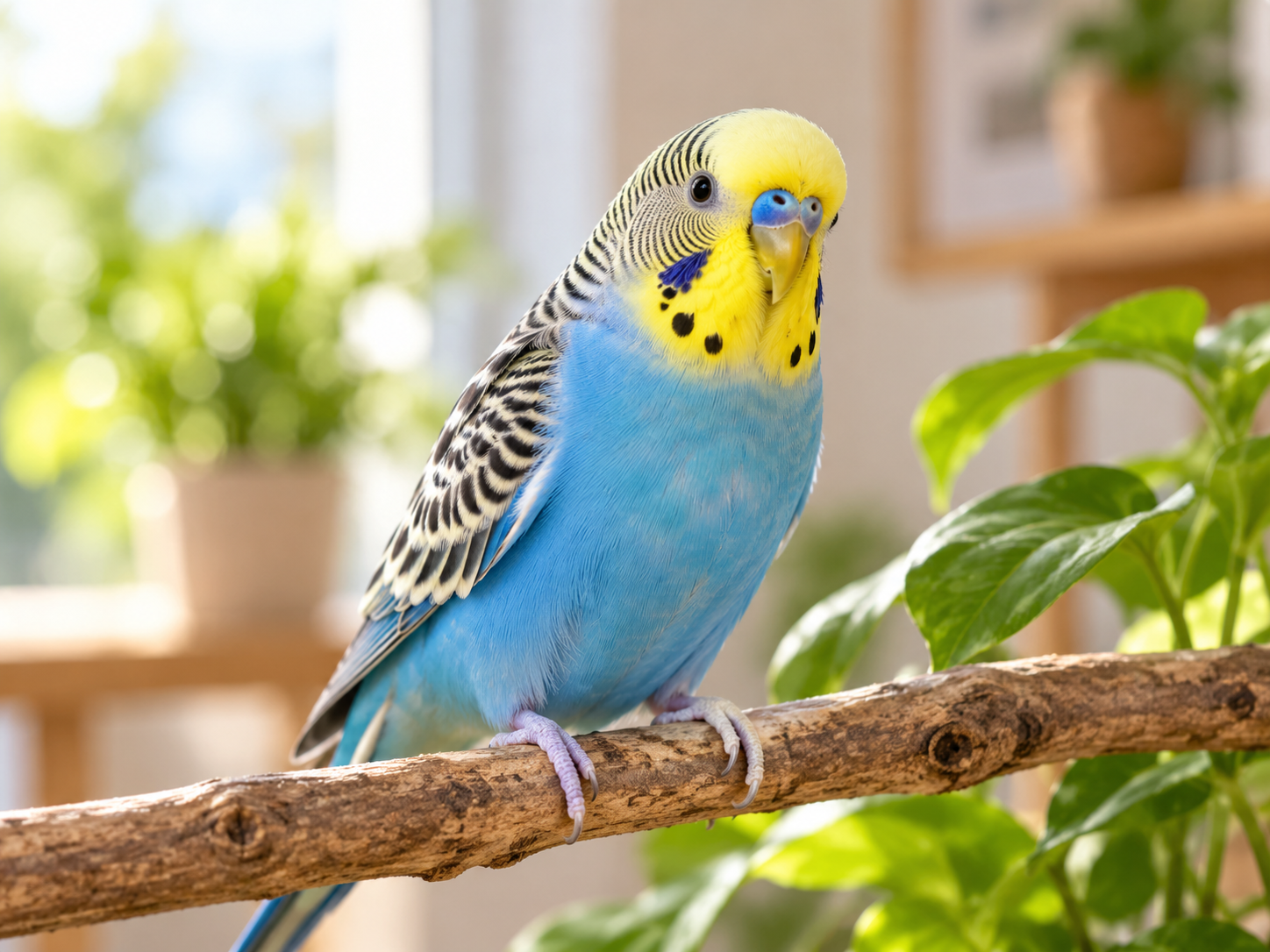

A healthy budgie diet needs more than a bowl of seeds. Budgies do best on a varied, balanced diet that gives them the nutrients they need for energy, bright healthy feathers, strong bones and a long life.
In short: build your budgie’s diet around a good-quality pellet, add fresh vegetables every day, and keep seeds, fruit and millet to smaller amounts. Never feed avocado, chocolate, caffeine or alcohol, and change the diet slowly while making sure your budgie is actually eating.
What should budgies eat?
Many avian vets recommend a diet based mainly on a quality pelleted or formulated bird food, with fresh vegetables and a smaller share of seeds and treats. The exact balance can vary with your bird’s age, health and current eating habits.
| Food | Role in the diet |
|---|---|
| Pellets or formulated food | The main part of the diet |
| Fresh vegetables and leafy greens | A small portion every day |
| Seeds | A smaller part of the diet, useful for training and variety |
| Fruit and millet | Occasional treats |
| Water | Fresh and available at all times |
These are general guidelines. Your avian vet can recommend the right balance for your budgie.
Pellets or formulated bird food
Pellets are made so that every piece contains a balanced mix of nutrients. That avoids the main problem with seed mixes, where budgies pick out their favorite seeds and leave the rest. Choose a pellet sized for budgies or small parrots, ideally without added sugar or artificial colors.
Fresh vegetables
Offer a small portion of bird-safe vegetables every day. Good options include:
- Leafy greens such as kale, romaine lettuce and dandelion greens
- Broccoli
- Carrots, grated or finely chopped
- Bell peppers
- Peas and sweetcorn, in small amounts
Wash everything well and chop it finely, as budgies are small and prefer tiny pieces. Many enjoy damp greens clipped to the side of the cage, which they can nibble and even bathe in. Remove fresh food after a few hours, before it spoils.
Fruit
Small pieces of bird-safe fruit, such as apple (with the seeds removed), berries, melon or pear, can add variety. Fruit is high in natural sugar, so offer it in small amounts a few times a week rather than making it a main food.
Seeds
Budgies love seeds, and they have their place in the diet. The problem is a seed-only diet, which is high in fat and lacks important nutrients. Over time, budgies fed only seeds are more prone to obesity, liver problems and vitamin A deficiency, and iodine deficiency can also lead to thyroid problems.
That doesn’t mean removing seeds altogether. A small daily amount, or seeds used as rewards during training, works well as part of a balanced diet. Millet sprays are a favorite treat, but keep them occasional.
Foods budgies should avoid
Some foods are dangerous for birds and should never be offered:
- Avocado, which is toxic to many pet birds
- Chocolate
- Caffeine, including coffee, tea and energy drinks
- Alcohol
- Fruit pits and apple seeds
- Onions and garlic
- Very salty, sugary or heavily processed foods
If you’re not sure whether a food is safe, check with an avian vet before offering it.
Fresh water matters too
Your budgie should always have clean, fresh drinking water. Change it at least once a day, or sooner if food or droppings get into it, and wash the dish or bottle daily to stop bacteria building up.
Introduce new foods slowly
Budgies are naturally cautious about unfamiliar foods, and many ignore new foods at first. Never switch a seed-eating budgie to pellets overnight. A small bird that won’t eat can lose weight and become ill very quickly.
- Mix a small amount of pellets into the usual food, then slowly increase the proportion over several weeks.
- Offer new vegetables again and again. Many budgies need to see a food several times before they try it.
- Try serving food in different ways, such as chopped, grated or as whole leaves.
- Check that your budgie is actually eating the new food, not just scattering it around the cage.
If you can, weigh your budgie in grams on a small kitchen scale while changing its diet. A steady drop in weight is a sign to slow down and speak to your avian vet.
Keep the diet balanced
Variety, balance and consistency are what matter most. A nutritious diet, fresh water and regular checkups with an avian vet all help your budgie stay healthy, active and full of energy.
Food is only part of the picture. Our guide on keeping a budgie happy and mentally stimulated covers toys and enrichment, and cockatiel owners can see what cockatiels should eat.
Frequently asked questions
What is the best diet for a budgie?
Many avian vets recommend a diet based mainly on quality pellets, with fresh vegetables every day and smaller amounts of seeds, fruit and treats. Fresh water should always be available.
Can budgies live on seeds only?
A seed-only diet isn’t recommended. Seeds are high in fat and low in important nutrients, and budgies fed only seeds are more prone to obesity, liver problems and vitamin deficiencies. Seeds work best as a smaller part of a balanced diet.
What foods are toxic to budgies?
Never feed avocado, chocolate, caffeine or alcohol. Fruit pits, apple seeds, onions, garlic and very salty or sugary processed foods should also be avoided.
How do I get my budgie to eat vegetables?
Be patient and keep offering them. Try finely chopped, grated or whole damp leaves clipped to the cage, and offer new vegetables repeatedly, as many budgies need to see a food several times before trying it.