
How many litter boxes you have, and where you put them, can make a big difference to whether your cat uses them reliably. The most widely used guideline is simple: one litter box per cat, plus one extra.
In short: follow the “one per cat, plus one” rule, spread the boxes around the home rather than lining them up together, scoop at least once a day and choose a box that’s roomy enough for your cat to turn around and dig.
The one-per-cat-plus-one rule
A single cat does well with two litter boxes. Two cats usually need three. Having an extra box means a cat always has a clean option, and in multi-cat homes it cuts down on competition and stops one cat from blocking another’s access.
| Number of cats | Recommended litter boxes |
|---|---|
| 1 cat | 2 boxes |
| 2 cats | 3 boxes |
| 3 cats | 4 boxes |
| 4 cats | 5 boxes |
Where should litter boxes go?
Put boxes in quiet, easy-to-reach spots where your cat can get in and out without feeling cornered. A few things to keep in mind:
- Keep boxes away from food and water bowls.
- Avoid noisy spots next to washing machines or other loud appliances.
- In a home with more than one floor, put at least one box on each level.
- Choose spots where your cat can see around it and has more than one way out, especially in a multi-cat home.
Don’t line all the boxes up side by side. Cats often treat boxes placed together as one big toilet, which defeats the purpose of having extras.
Keeping litter boxes clean
Cats are naturally clean animals, and many will avoid a box that’s dirty. Scoop out waste at least once a day, and top up the litter as needed. With clumping litter, empty and wash the whole box every few weeks using mild, unscented soap and warm water.
Skip strong disinfectants and heavily scented cleaners. A box that smells of chemicals can put a cat off just as much as a dirty one.
Choosing the right size box
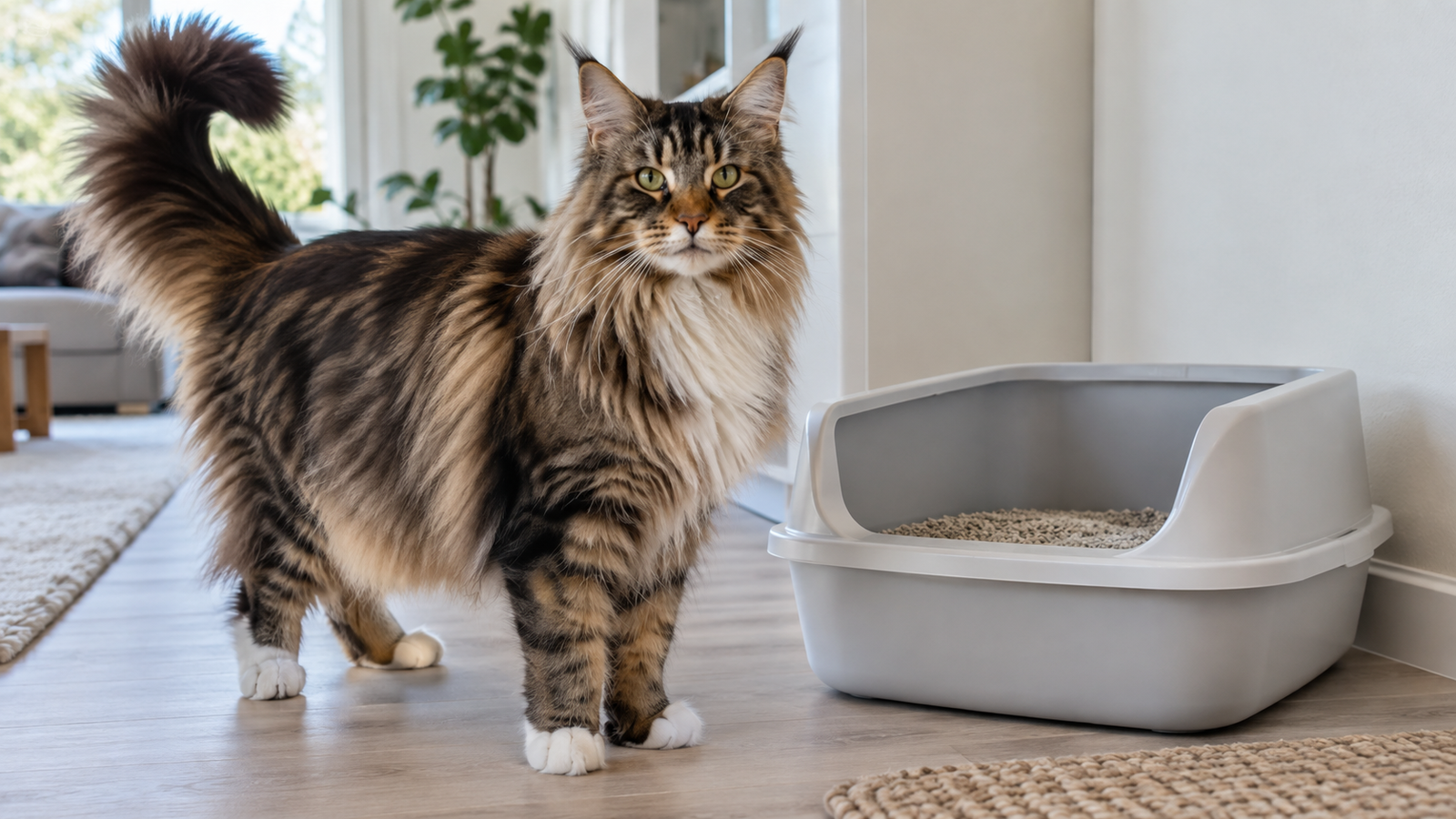
Your cat needs enough room to step in, turn around and dig comfortably. A common recommendation is a box at least one and a half times the length of your cat, measured from nose to base of tail. Many commercial boxes are smaller than that, so larger cats often do better with an extra-large box or a large storage tub.
Kittens, senior cats and cats with stiff joints will find a box with a low entry side much easier to use.
Paying attention to your cat’s preferences
Every cat has its own preferences. Some happily use covered boxes, while many prefer open ones, partly because covers trap odor inside. Most cats also tend to prefer fine, unscented clumping litter. If your cat seems hesitant, try changing one thing at a time, like the litter type, box style or location, and see what it responds to.
If your cat stops using the litter box
A cat that suddenly stops using the box isn’t being naughty. Stress, pain, changes at home, a dirty box or a medical problem such as a urinary tract issue can all be behind it. If the change lasts more than a day or two, talk to your vet.
Urgent: if your cat, especially a male cat, is straining in the litter box and passing little or no urine, contact a vet immediately. A urinary blockage is a medical emergency.
Keep the setup simple
Enough clean, roomy litter boxes in separate, quiet spots will prevent most litter box problems before they start. Watch how your cat uses them and adjust from there.
If you’ve just adopted a cat, our guide on helping a new cat settle into your home covers setting up a safe first room, including the litter box.
Changes in drinking often show up in the litter box first, so our guide on why a cat isn’t drinking much water is worth a read too.
Frequently asked questions
How many litter boxes do I need for one cat?
Two. The common guideline is one litter box per cat plus one extra, so a single cat should have two boxes, ideally in different parts of the home.
Can two cats share one litter box?
It’s not recommended. Two cats should have three litter boxes. Sharing one box can lead to competition, a dirtier box and one cat avoiding it altogether.
How big should a litter box be?
A common recommendation is at least one and a half times your cat’s length from nose to base of tail. Your cat should be able to step in, turn around and dig comfortably.
Why has my cat stopped using the litter box?
Common causes include a dirty box, a change in litter or location, stress, pain or a medical problem such as a urinary tract issue. If it lasts more than a day or two, see your vet. If your cat is straining and passing little or no urine, contact a vet immediately.