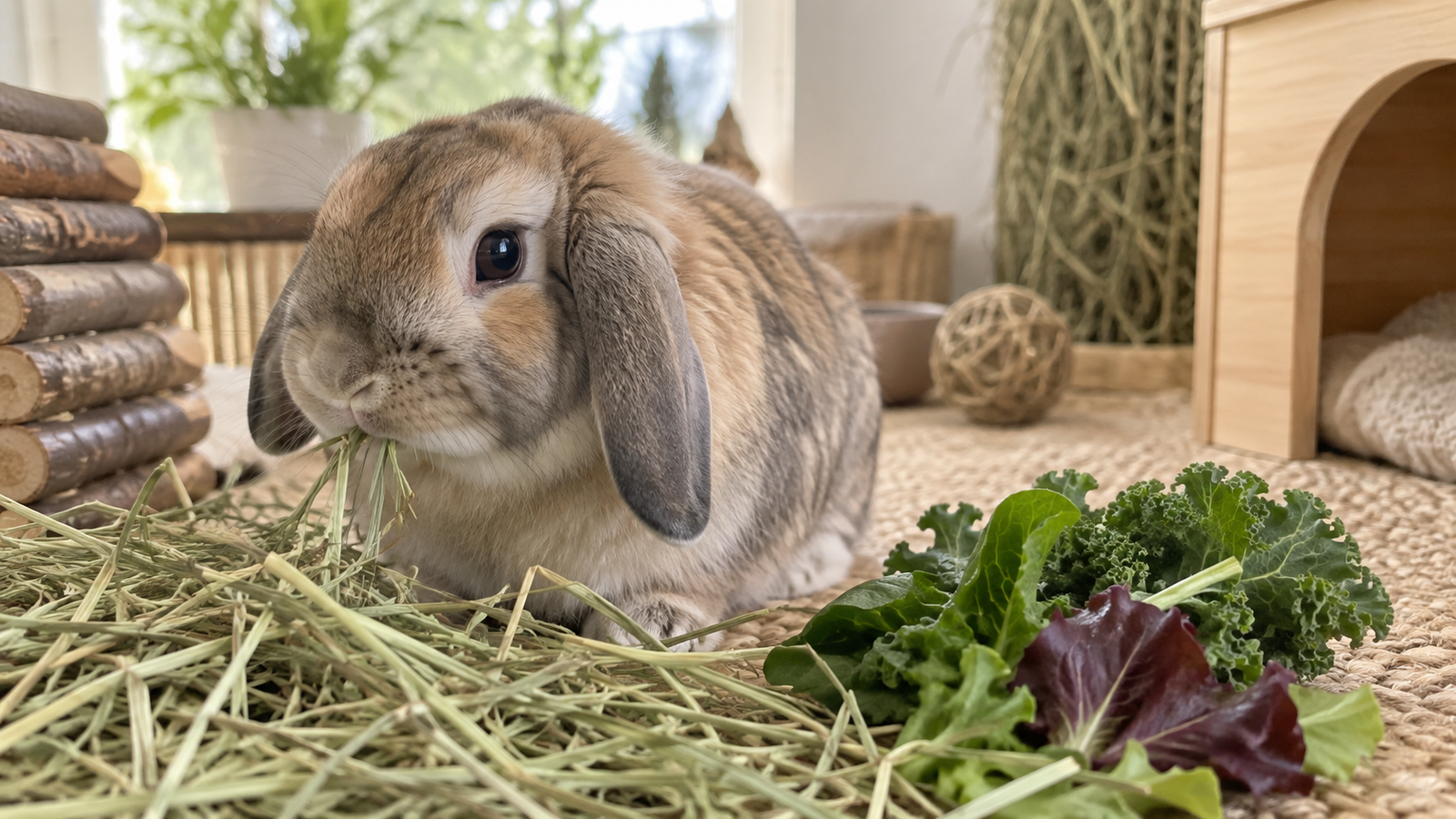

A healthy rabbit diet is built around one thing above all else: plenty of good-quality hay. Add fresh water, a daily portion of leafy greens and a small, measured amount of pellets, and you’ve covered what most rabbits need. Getting that balance right keeps their digestion moving, their teeth in good shape and their weight healthy.
In short: unlimited grass hay should make up most of an adult rabbit’s diet, with leafy greens every day, a small daily portion of plain pellets, fruit only as an occasional treat and fresh water available at all times.
| Food | How much |
|---|---|
| Grass hay | Unlimited. It should make up the large majority of the diet, roughly a pile as big as your rabbit every day. |
| Leafy greens | A varied portion every day |
| Pellets | A small, measured amount, often around an eggcup’s worth for an average-sized adult |
| Fruit and root vegetables | Occasional small treats only |
| Water | Fresh and available at all times |
Hay should be the main food
Adult rabbits should have constant access to grass hay, such as timothy, meadow or orchard grass hay. Hay gives them the fiber their gut needs to keep working properly, and all that chewing wears down their teeth, which never stop growing. A rabbit that doesn’t eat enough hay is far more likely to develop dental and digestive problems.
Choose hay that’s green, dry and sweet-smelling, and top it up at least once a day so there’s always a fresh supply.
Young rabbits, usually under about six months old, have different needs and are often fed alfalfa hay and more pellets while they grow. Switch gradually to an adult diet as they mature, and ask your vet if you’re unsure.
Offer fresh leafy greens every day
A varied mix of rabbit-safe leafy greens and herbs can be offered daily. If your rabbit isn’t used to fresh food, introduce one new item at a time in small amounts, and watch its droppings for a few days before adding another. Good options include:
- Romaine lettuce
- Coriander (cilantro)
- Basil
- Parsley
- Dill
- Carrot tops
Skip iceberg lettuce. It’s mostly water with very little nutritional value and can upset some rabbits’ digestion.
Keep pellets measured
A good-quality pellet adds useful vitamins and minerals, but pellets should be measured, not left in an endlessly refilled bowl. Too many pellets fill a rabbit up so it eats less hay, and that can lead to weight gain and dental problems.
Choose plain, high-fiber pellets where every piece looks the same. Avoid colorful muesli-style mixes with seeds, corn and sugary bits, because rabbits tend to pick out the tasty pieces and leave the rest.
Fruit is a treat, not a meal
Small pieces of rabbit-safe fruit, such as apple (without seeds), banana or berries, are fine now and then. Fruit is high in natural sugar, though, so keep portions tiny and don’t offer it every day. Carrots fall into the same category. Despite the cartoon image, they’re a sugary treat rather than a staple food.
Fresh water every day
Your rabbit should always have clean drinking water. Many rabbits drink more from a heavy ceramic bowl than a bottle, and some owners provide both. Refill water daily, and wash bowls and bottles regularly.
Foods to avoid
Some foods are unsuitable or harmful for rabbits. Don’t feed:
- Chocolate, sweets or other sugary snacks
- Bread, crackers, biscuits or cereals
- Avocado
- Onions, garlic, leeks and chives
- Rhubarb
- Potatoes
- Processed or cooked human food
If you’re not sure whether something is safe, don’t offer it until you’ve checked with a reliable source or your vet.
Watch eating and droppings
Healthy rabbits eat and produce round droppings throughout the day. You may also see small, soft, shiny droppings called cecotropes, which rabbits normally eat straight from their bottom to absorb extra nutrients. That’s normal.
Urgent: if your rabbit stops eating, or produces far fewer droppings or none at all, contact a vet straight away. Many vets advise treating it as an emergency if a rabbit hasn’t eaten or passed droppings for around 12 hours. A rabbit’s digestive system can shut down quickly, and waiting to see if it improves can be dangerous.
Keep the diet simple
For most adult rabbits, unlimited grass hay, fresh water, a daily mix of leafy greens and a measured amount of plain pellets are all they need. Keep treats small and occasional, make any changes slowly and pay attention to appetite and droppings every day.
To get your rabbit’s living space right too, read our guide on setting up a comfortable rabbit home. If you also keep guinea pigs, note that their diet differs in important ways, as our guide on what guinea pigs eat every day explains.
Frequently asked questions
What should rabbits eat every day?
Adult rabbits should have unlimited grass hay, fresh water, a varied portion of rabbit-safe leafy greens and a small, measured amount of plain, high-fiber pellets every day. Hay should make up most of their diet.
Can rabbits eat carrots?
Yes, but only as an occasional treat. Carrots are high in sugar, so they shouldn’t be a daily food. Carrot tops, the leafy greens, can be fed more often.
How many pellets should I give my rabbit?
A small, measured amount each day, often around an eggcup’s worth for an average-sized adult rabbit. Follow the guidance on your pellet packaging or ask your vet, and avoid free-feeding pellets, as it reduces how much hay your rabbit eats.
What should I do if my rabbit stops eating?
Contact a vet straight away. A rabbit that stops eating or stops producing droppings can become seriously ill quickly, and many vets treat around 12 hours without food or droppings as an emergency.