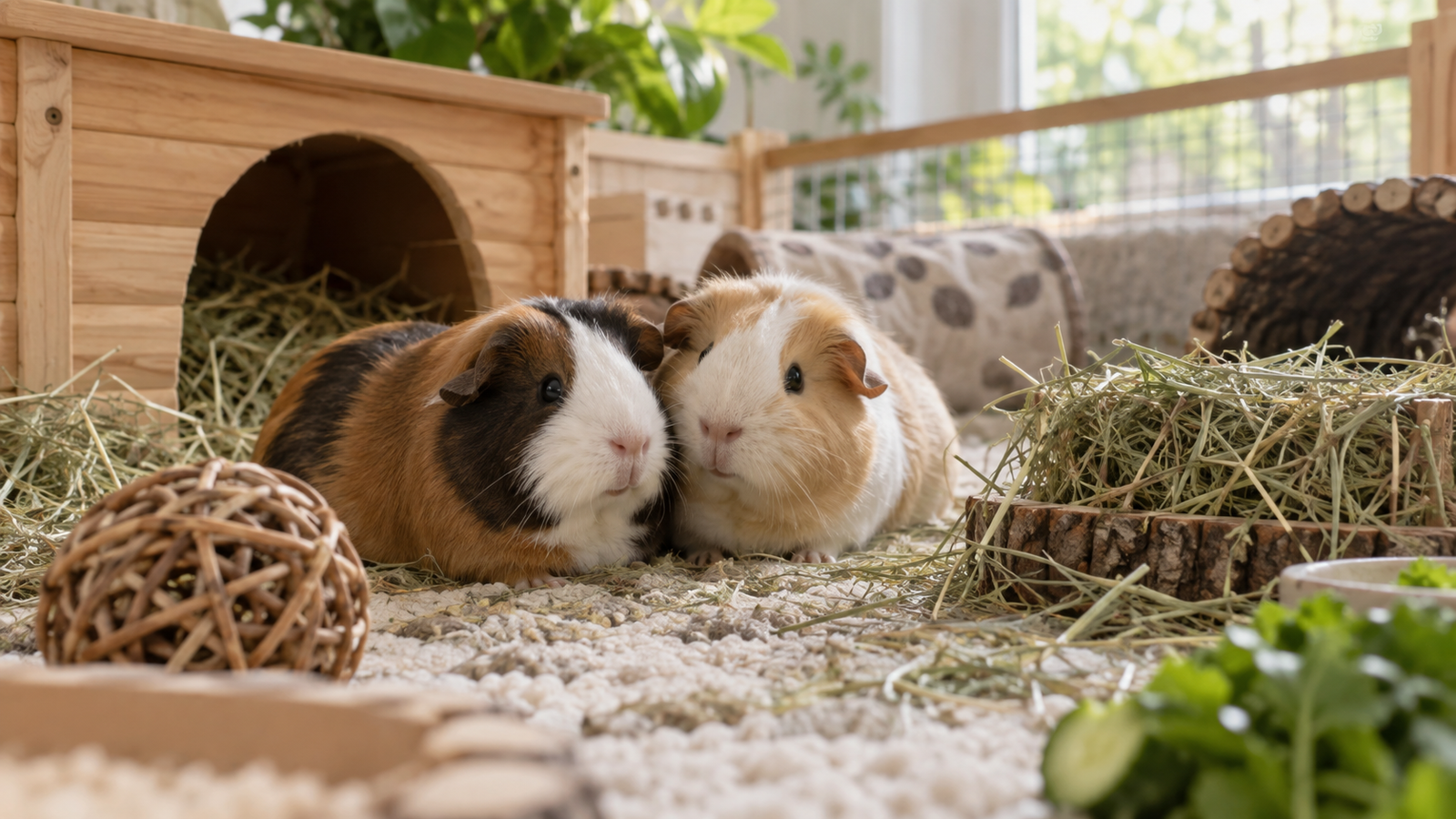

Guinea pigs are herd animals, and most are happiest living with at least one other guinea pig they get along with. Your time and attention matter, but they can’t fully replace the constant company, chatter and body language another guinea pig provides.
In short: keep guinea pigs in pairs or small groups, choose a combination that avoids unwanted litters, introduce new companions slowly on neutral ground and give them enough space to get away from each other when they want to.
Are guinea pigs happier in pairs?
Generally, yes. Guinea pigs that live with a compatible companion tend to be more confident, more active and more relaxed. They eat together, explore together, rest near each other and keep up a near-constant conversation of squeaks, purrs and rumbles throughout the day.
Their need for company is widely recognized. In Switzerland, for example, animal welfare law requires guinea pigs to have social contact with other guinea pigs.
Choosing a compatible companion
Whether a pairing works depends on personality, sex, age and how much space you have. Some combinations tend to be easier than others.
| Pairing | What to know |
|---|---|
| Two females (sows) | Often a straightforward pairing, though personalities still need to match. |
| Neutered male with one or more females | A popular, usually stable combination. A male stays fertile for several weeks after neutering, so keep him apart from females until your vet confirms it’s safe. |
| Two males (boars) | Can work well, especially with plenty of space and no females nearby, but personality matching matters more. |
| Unneutered male with a female | Not suitable. Females can become pregnant at a very young age, and pregnancy carries real health risks for them. |
Guinea pigs shouldn’t be housed with rabbits. Rabbits can injure them, have different dietary needs, and can carry bacteria that cause respiratory illness in guinea pigs.
How to introduce two guinea pigs
Never put two unfamiliar guinea pigs straight into the same cage. Introduce them gradually and supervise closely.
- Meet on neutral ground, such as a floor pen neither of them has lived in.
- Scatter hay and vegetables around to keep them busy and relaxed.
- Provide hides with two entrances so neither gets trapped.
- Give them time. The first meeting often lasts a few hours.
- Clean the cage thoroughly before moving them in together, so it doesn’t smell like one guinea pig’s territory.
Rescue centers can often help with “dating,” letting your guinea pig meet a few potential companions to find a good match.
Provide enough space
Even well-bonded guinea pigs need room to get away from each other. Cramped housing is one of the most common causes of fighting. For two guinea pigs, a floor area of at least 7.5 square feet (about 0.7 m²) is a common minimum, and more is better, especially for boars.
- Provide at least one hide per guinea pig, plus a spare.
- Offer more than one feeding area and hay pile.
- Make sure water and hay are easy for both to reach.
- Choose hides with two entrances so one guinea pig can’t corner the other.
Can a guinea pig live alone?
Sometimes a guinea pig has to live alone for a while, for example after losing a companion, during illness or because it truly can’t get along with others. In that case, give it plenty of enrichment and daily interaction, and talk to your vet or a guinea pig rescue about finding a suitable companion when the time is right.
Watch their behavior
Some squabbling is normal, especially while guinea pigs work out who’s in charge. You may see:
- Rumblestrutting, a low rumble while swaying from side to side
- Chasing and mounting
- Nose-raising contests
- Brief teeth chattering
These usually settle down within days to a couple of weeks. Separate them if you see any of the following:
- Real biting or open wounds
- Lunging or fights that keep escalating
- One guinea pig being blocked from food, water or hides
- Constant hiding, weight loss or signs of severe stress
If a serious fight breaks out, don’t reach in with bare hands. Use a towel or thick gloves, or put a barrier between them, as guinea pigs can bite hard when they’re fighting.
Social care matters
Good guinea pig care is about more than food and a clean cage. The right companion, enough space, enrichment and close observation all add up to a healthier, more interesting life.
Once your pair has settled in, our guide on what guinea pigs eat every day covers their daily diet, including the vitamin C they can’t make themselves.
Frequently asked questions
Do guinea pigs need to live in pairs?
Most guinea pigs are happiest with at least one compatible guinea pig companion. They are herd animals, and human attention alone can’t fully replace the company of their own kind.
What is the best guinea pig pairing?
Two females or a neutered male with one or more females are usually the easiest combinations. Two males can also work well with enough space and the right personalities. Never house an unneutered male with a female.
Can guinea pigs live with rabbits?
No. Rabbits can injure guinea pigs, they need different diets, and rabbits can carry bacteria that cause respiratory illness in guinea pigs. Each should live with its own species.
How do I know if my guinea pigs are fighting or just establishing dominance?
Rumblestrutting, chasing, mounting and brief teeth chattering are normal dominance behavior. Separate them if there’s real biting, open wounds, escalating lunging or one guinea pig is blocked from food, water or hides.