
You don’t need to buy half the pet aisle before bringing a new cat home. A handful of well-chosen essentials will give your cat a safe, comfortable start, and you can add extras later once you know what your cat actually likes.
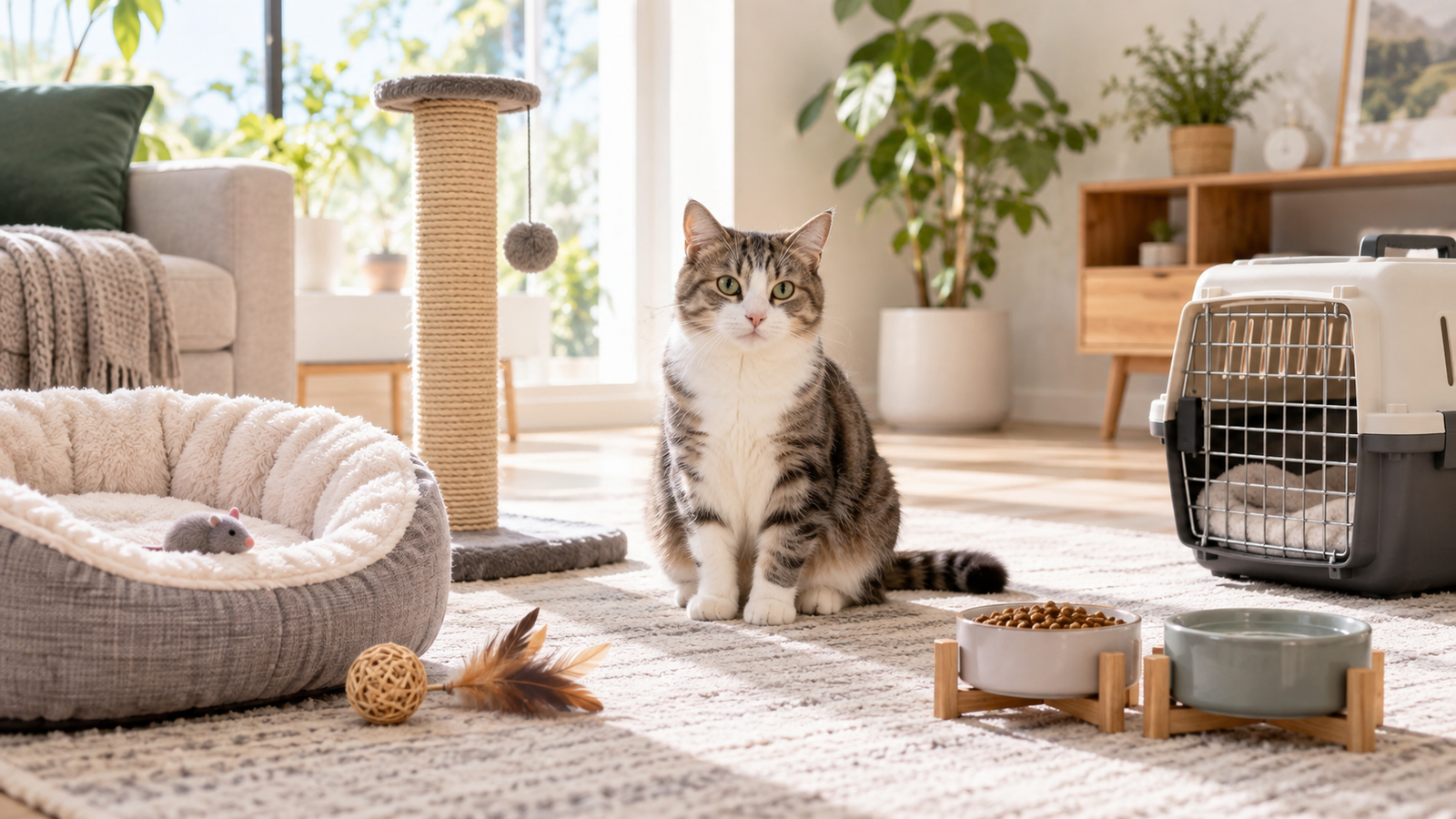
In short: before your cat arrives, get food and water bowls, the food it’s already eating, a litter box and litter, a bed and hiding spot, a scratching post, a secure carrier, a few safe toys and basic grooming tools.
| Item | What to look for |
|---|---|
| Food and water bowls | Wide, shallow and easy to clean |
| Cat food | The same food your cat has been eating, to start with |
| Litter box and litter | Roomy box and unscented clumping litter |
| Bed and hiding place | Somewhere soft, quiet and partly enclosed |
| Scratching post | Tall, sturdy and covered in a rough material like sisal |
| Carrier | Secure, well ventilated, ideally with a removable top |
| Toys | A wand toy and a few small chase toys |
| Grooming tools | A brush suited to the coat and cat nail clippers |
Food and water bowls
Choose sturdy bowls made from ceramic, glass or stainless steel, which are easy to keep clean. Many cats prefer wide, shallow dishes that don’t brush against their whiskers. Keep fresh water available at all times.
Put food and water well away from the litter box. Some cats also drink more when their water is placed a little apart from their food, or when it’s moving, which is why some owners use a cat water fountain.
Cat food
Find out what your cat has been eating at the shelter, breeder or previous home, and buy the same food for the first few weeks. Moving house is stressful enough, and a sudden change of diet can upset your cat’s stomach. If you want to switch foods later, mix the new food in gradually over about a week or so.
Litter box and litter
Pick a litter box big enough for your cat to step in, turn around and dig comfortably. Most cats prefer an unscented, fine-textured clumping litter. The usual guideline is one box per cat plus one extra, so a single cat does best with two boxes in different spots, and that matters even more in a larger home or with more than one cat.
A comfortable bed and a place to hide
Give your cat a quiet bed or soft blanket in a spot where it won’t be disturbed. A new cat will also want somewhere to hide while it settles in. A covered bed or a simple cardboard box on its side works perfectly. Many cats also love a raised spot like a cat tree or a cleared windowsill where they can watch the world.
Scratching post
Scratching is normal, healthy cat behavior. It keeps claws in good condition and lets cats stretch and leave their scent. Have at least one scratching post ready from day one, so your cat learns to use it instead of your sofa.
Choose a post that’s tall enough for your cat to stretch out fully and heavy enough not to wobble. Sisal rope is a popular surface. Some cats prefer to scratch horizontally, so a flat cardboard scratcher is a useful second option.
A safe carrier
A secure carrier is essential for vet visits, travel and emergencies. Choose a sturdy, well-ventilated one that’s easy to clean. Carriers with a removable top are especially helpful, as a vet can often examine a nervous cat while it stays in the bottom half.
Leave the carrier out at home with a soft blanket inside, rather than bringing it out only for vet trips. A cat that’s used to it is far less stressed when it’s time to travel.
Toys and enrichment
- Wand toys for interactive play
- Lightweight balls and other chase toys
- Puzzle feeders to slow down eating and add a challenge
- Safe climbing spots or perches for watching the room
Rotate toys every so often to keep them interesting, rather than leaving everything out all the time. Put wand toys away after play, and never leave string, ribbon or yarn lying around. If swallowed, they can cause serious intestinal damage.
Grooming basics
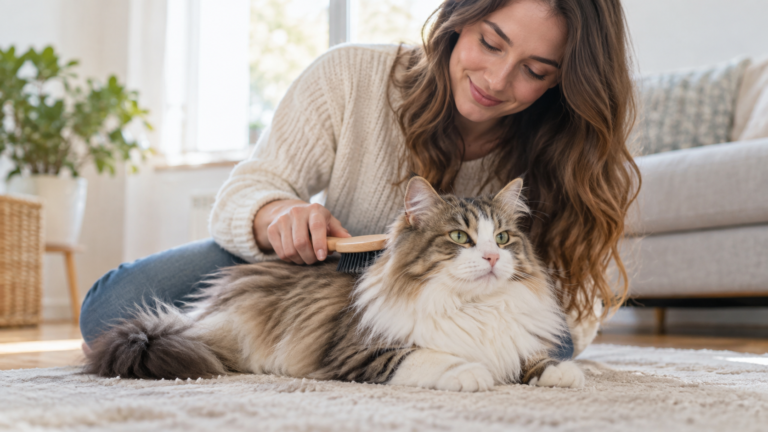
A brush suited to your cat’s coat and a pair of cat nail clippers will cover most routine care. Short-haired cats usually need only occasional brushing, while long-haired cats often need brushing every day to prevent mats. Get your cat used to gentle handling of its paws early, and nail trims will be much easier.
Identification
Make sure your cat is microchipped and that the chip is registered with your current contact details. If your cat wears a collar, choose a quick-release (breakaway) design, which opens if it gets caught, and attach an ID tag with your phone number.
Start with the essentials
Focus on food, water, litter, rest, scratching, safe transport and play first. Once you get to know your cat’s personality and preferences, you can add the extras it will actually use and enjoy.
Once your supplies are ready, our guide on helping a new cat settle in walks you through the first few days. For grooming, see how often you should brush a cat.
Frequently asked questions
What do I need before bringing a new cat home?
The essentials are food and water bowls, the food your cat is already eating, a litter box and unscented litter, a bed and a hiding place, a scratching post, a secure carrier, a few safe toys and basic grooming tools.
How many litter boxes does one cat need?
The usual guideline is one litter box per cat plus one extra, so a single cat should ideally have two boxes, placed in different parts of the home.
Should I change my new cat’s food straight away?
No. Start with the food your cat was eating before, as a sudden change can upset its stomach. If you want to switch, mix in the new food gradually over about a week.
Are collars safe for cats?
Choose a quick-release (breakaway) collar that opens if it gets caught on something. A microchip is still the most reliable form of identification, so make sure it’s registered with your current details.