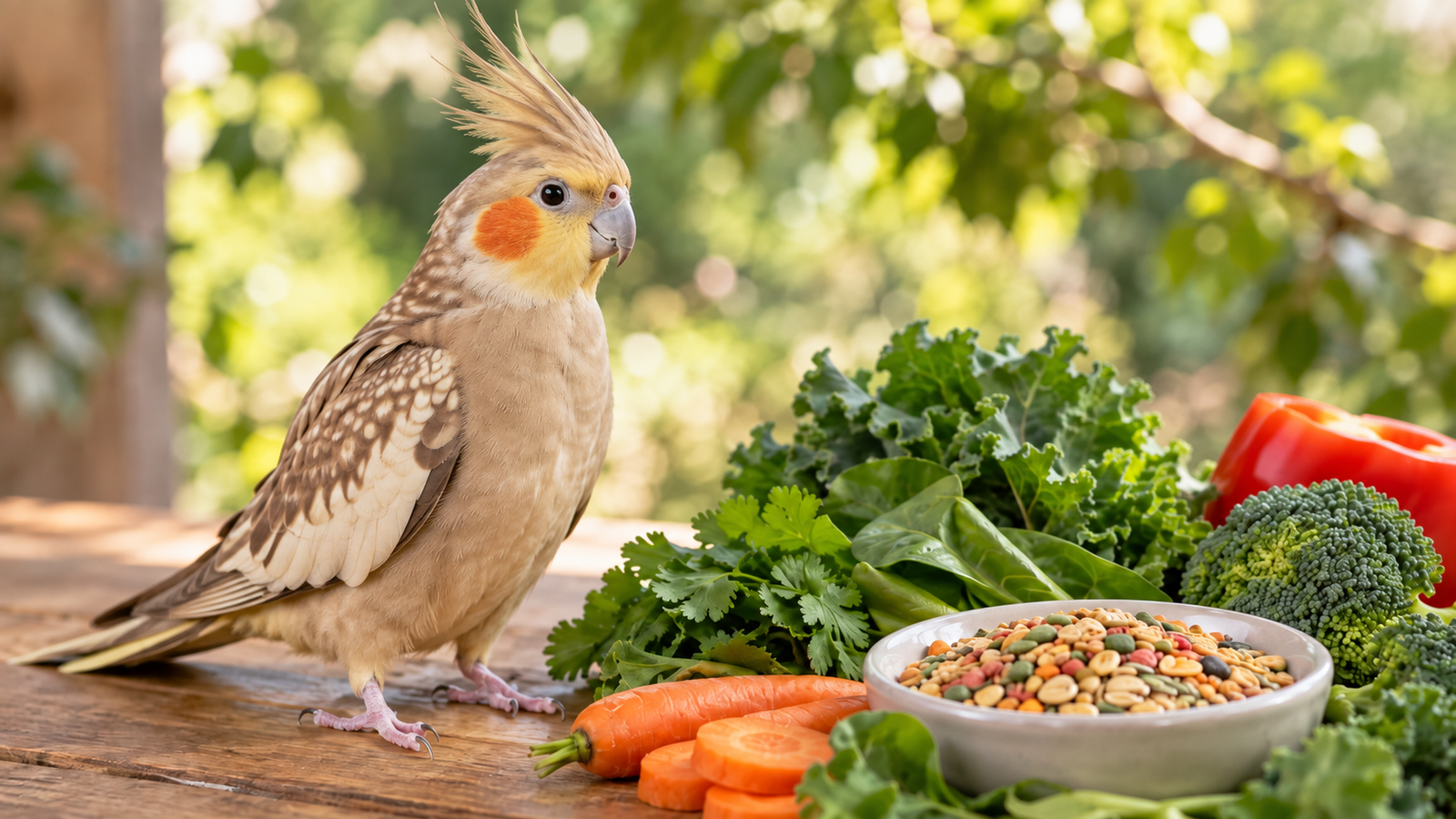

A healthy cockatiel diet is about balance, not seeds alone. A good-quality pelleted food, a daily mix of fresh vegetables and a smaller amount of seeds and treats will give your bird the nutrition it needs for strong feathers, steady energy and good long-term health.
In short: make pellets the main part of your cockatiel’s diet, add fresh vegetables every day, and keep seeds, fruit and treats to smaller amounts. Never feed avocado, chocolate, caffeine or alcohol, and switch foods gradually while checking that your bird is actually eating.
What should a cockatiel eat?
Many avian vets recommend a diet built mainly on a quality pelleted or formulated bird food, with fresh vegetables and a smaller share of seeds and treats. The exact proportions vary between sources, but the table below reflects a commonly used approach.
| Food | Role in the diet |
|---|---|
| Pellets or formulated food | The main part of the diet, often around 60–70% |
| Fresh vegetables and leafy greens | A daily portion, making up much of the rest |
| Seeds | A smaller part of the diet, useful as treats and for training |
| Fruit | Small, occasional portions |
| Water | Fresh and available at all times |
These are general guidelines. Your avian vet can recommend the right balance for your bird’s age, weight and health.
Pellets and formulated food
Pellets are made so that every bite contains a balanced mix of nutrients. That solves the biggest problem with seed mixes, where birds tend to pick out their favorite seeds and leave the rest. Choose a pellet sized for cockatiels or small parrots, ideally without added sugar or artificial colors.
Fresh vegetables
Offer a variety of bird-safe vegetables every day. Good options include:
- Dark leafy greens such as kale, romaine lettuce and dandelion greens
- Broccoli
- Carrots, grated or finely chopped
- Bell peppers
- Sweet potato, cooked and cooled
- Peas and green beans
Wash all produce thoroughly and chop it into small pieces. Many cockatiels also enjoy greens clipped to the side of the cage or served damp, which they can forage through. Remove fresh food after a few hours, before it spoils.
Seeds shouldn’t be the whole diet
Cockatiels love seeds, but a seed-only diet is high in fat and lacks important nutrients, especially vitamin A. Over time, this can contribute to obesity, poor feather condition and other health problems.
That doesn’t mean cutting seeds out completely. A small daily amount, or seeds used as rewards during training, can be part of a balanced plan. Millet sprays are a favorite treat, but keep them occasional.
Fruit in small amounts
Bird-safe fruits such as apple (with the seeds removed), berries, melon and banana add variety, but they’re high in natural sugar. Offer them in small portions a few times a week rather than making them a large part of every meal.
Foods to avoid
Some foods are dangerous for birds and should never be offered:
- Avocado, which is toxic to many pet birds
- Chocolate
- Caffeine, including coffee, tea and energy drinks
- Alcohol
- Fruit pits and apple seeds
- Onions and garlic
- Very salty, sugary or heavily processed foods
If you’re not sure whether a food is safe, don’t offer it until you’ve checked with your avian vet.
Fresh water every day
Provide clean drinking water at all times and change it at least once a day, or more often if food or droppings get into it. Wash food and water dishes daily to stop bacteria building up.
Make diet changes gradually
Cockatiels are often wary of unfamiliar foods, and some refuse pellets at first. Never switch a seed-eating bird to pellets overnight, as a bird that won’t eat can lose weight quickly and become ill.
- Mix a small amount of pellets into the usual food and slowly increase the proportion over several weeks.
- Offer new vegetables repeatedly. Many birds need to see a food several times before they try it.
- Eat alongside your bird or show interest in the food yourself. Cockatiels are flock birds and often copy what they see.
- Check that your bird is actually eating, not just scattering food around the bowl.
If you can, weigh your cockatiel regularly on a small kitchen scale while changing its diet. A steady drop in weight is a sign to slow down and talk to your avian vet.
Keep the diet varied
A varied, balanced diet works best alongside a suitable cage, daily exercise and regular checkups with an avian vet. Together, they give your cockatiel the strongest foundation for a long, healthy life.
If your cockatiel is noisy as well as fussy, read why cockatiels scream. Budgie owners will find similar advice in our guide on what budgies eat.
Frequently asked questions
What is the best diet for a cockatiel?
Many avian vets recommend a diet based mainly on quality pellets, with fresh vegetables every day and smaller amounts of seeds, fruit and treats. Fresh water should always be available.
Can cockatiels live on seeds only?
A seed-only diet isn’t recommended. Seeds are high in fat and low in important nutrients such as vitamin A, which can lead to weight gain and health problems over time. Seeds work best as a smaller part of a balanced diet.
What foods are toxic to cockatiels?
Never feed avocado, chocolate, caffeine or alcohol. Fruit pits, apple seeds, onions, garlic and very salty or sugary processed foods should also be avoided.
How do I switch my cockatiel from seeds to pellets?
Do it gradually over several weeks by mixing a small amount of pellets into the usual food and slowly increasing the proportion. Check that your bird is eating and, ideally, weigh it regularly. Talk to your avian vet if it loses weight.