
Pet ducks need a balanced diet to grow well, keep their feathers in good condition and stay active. Most of what they eat should come from a complete feed made for ducks or poultry, with safe vegetables, foraging and treats adding variety in smaller amounts.
In short: feed a complete waterfowl or suitable poultry feed as the main diet, always with water nearby deep enough for ducks to dip their whole bill. Add leafy greens and vegetables as extras, keep treats to a small share, and skip bread. Ducklings and laying ducks have their own needs, covered below.
Choose a complete duck feed
A quality waterfowl feed, or a suitable poultry feed, should make up most of your ducks’ diet. It’s formulated to provide balanced protein, vitamins and minerals, which bread, kitchen scraps or grain alone can’t do.
| Life stage | What to feed |
|---|---|
| Ducklings (first few weeks) | Waterfowl starter, or unmedicated chick starter with added niacin |
| Growing ducks | Waterfowl grower or a suitable poultry grower feed |
| Adult ducks, not laying | Waterfowl maintenance or a suitable poultry feed |
| Laying ducks | Layer feed, plus crushed oyster shell offered separately for extra calcium |
Ducklings need more niacin (vitamin B3) than chicks for healthy legs and joints. If you use chick starter, choose an unmedicated one and add a niacin source such as brewer’s yeast, or ask your feed supplier or vet for guidance.
Crumble or pellet feeds work best. Wetting the feed slightly can make it easier for ducks to eat, but throw away any wet feed that isn’t eaten within a few hours, as it can go moldy.
Offer safe vegetables and greens
Ducks enjoy a variety of fresh foods alongside their main feed. Good options include:
- Leafy greens such as lettuce (not iceberg), kale and chard
- Peas, fresh or thawed from frozen
- Chopped cucumber
- Sweetcorn
- Chopped zucchini and other soft vegetables
- Weeds and grass from an untreated lawn
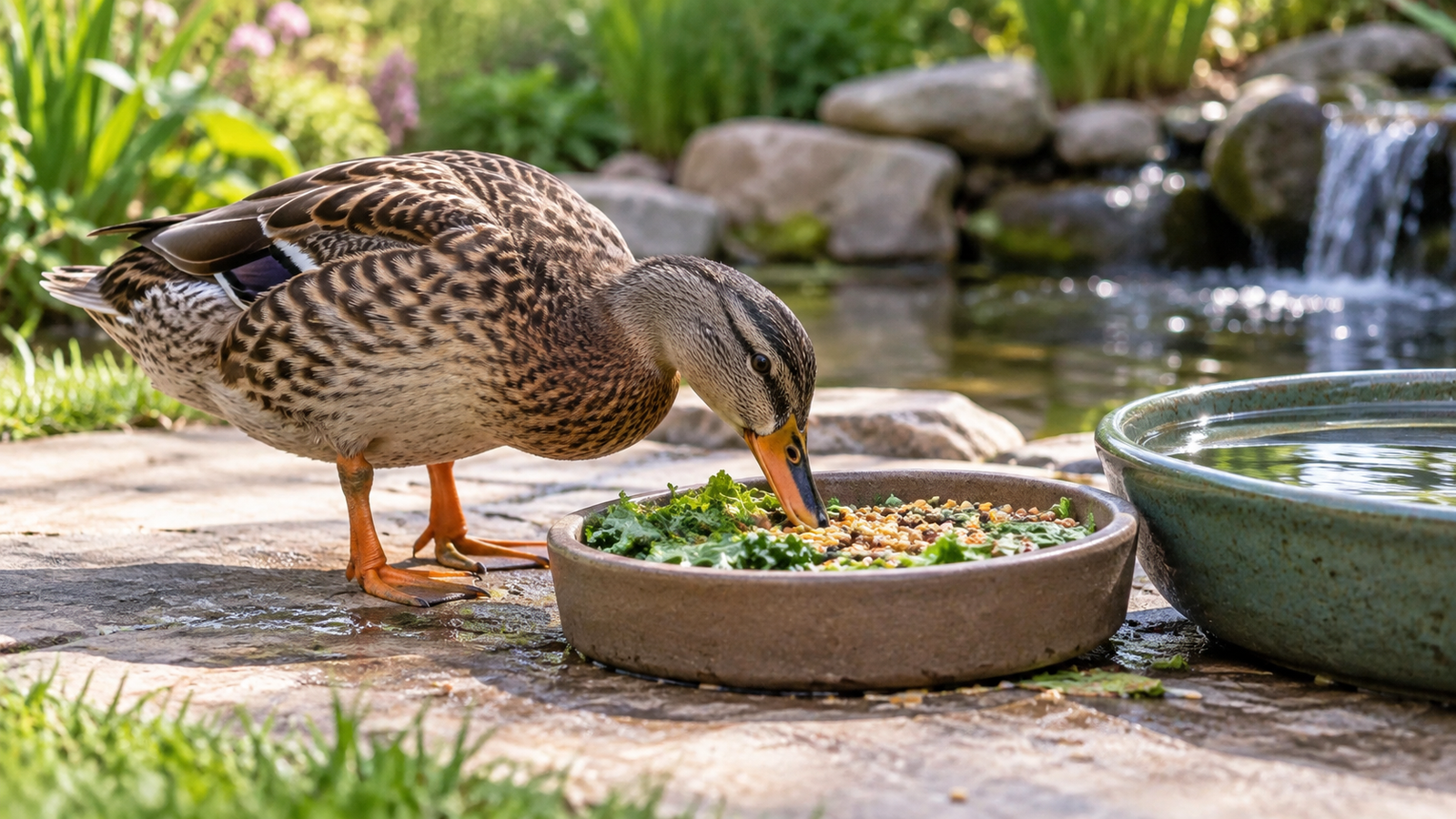
Cut food into small pieces. Many ducks love having greens floated in a shallow tub of water. Ducks also forage for slugs, snails and insects in the garden, which is good exercise and natural food, as long as the area hasn’t been treated with slug pellets or other chemicals.
Avoid bread
Bread is filling but offers very little useful nutrition. When ducks fill up on bread, they eat less of the food they actually need. A diet high in bread and other carbohydrates is also linked to “angel wing,” a condition in young, growing ducks where the wing feathers twist outward. It’s best to leave bread out of your ducks’ diet altogether.
Foods to avoid
- Bread, crackers, chips and other processed or salty foods
- Avocado
- Chocolate
- Onions and garlic in large amounts
- Raw or dried beans
- Moldy or spoiled food
- Medicated feeds not intended for ducks
If you’re unsure whether something is safe, check with a vet or an experienced waterfowl keeper before offering it.
Provide fresh water with food
Ducks must always have clean drinking water available, especially while eating. They need water to swallow their food and to rinse their bills, eyes and nostrils, so it should be deep enough for them to dip their whole bill and head.
Ducklings are the exception when it comes to depth. They can tire and drown in deep water, so give them a shallow dish, or add pebbles or marbles to the dish so they can drink without climbing in. Ducks make water dirty quickly, so refresh it often.
Keep treats limited
Treats, including fruit, mealworms and corn, should stay a small part of the diet. A common guideline is no more than about 10% of what your ducks eat each day. Too many extras can unbalance their nutrition, cause weight gain and, in laying ducks, affect egg production.
If your ducks eat any grain, seeds or treats beyond their feed and don’t free-range on soil, offering insoluble grit in a separate dish helps them digest it.
Watch appetite and condition
Healthy ducks are alert, active, eager at feeding time and have smooth, well-kept feathers. Watch for:
- Loss of appetite
- Weight loss, or a keel bone that feels sharp
- Changes in droppings
- Limping, reluctance to walk or wobbly legs
- Tired, sitting apart from the flock or fluffed up
Contact a vet experienced with poultry or waterfowl if these changes last more than a day or two.
Keep feeding simple
A suitable complete feed, fresh water nearby and modest amounts of safe fresh foods give your ducks a strong foundation for everyday health.
For housing, water and predator protection, see our guide on what pet ducks need in a backyard.
Frequently asked questions
What is the best food for pet ducks?
A complete waterfowl feed, or a suitable poultry feed, should make up most of their diet. Add leafy greens and vegetables as extras, and always provide fresh water nearby when they eat.
Is bread bad for ducks?
Yes, bread should be avoided. It offers very little nutrition, fills ducks up so they eat less of the food they need, and a diet high in bread is linked to angel wing in young ducks.
Can ducklings eat chick starter?
They can eat unmedicated chick starter, but ducklings need more niacin than chicks. Add a niacin source such as brewer’s yeast, or use a waterfowl starter instead.
Why do ducks need water when they eat?
Ducks use water to help swallow their food and to rinse their bills, eyes and nostrils. Their water should be deep enough to dip their whole bill and head, except for young ducklings, who need shallow water.