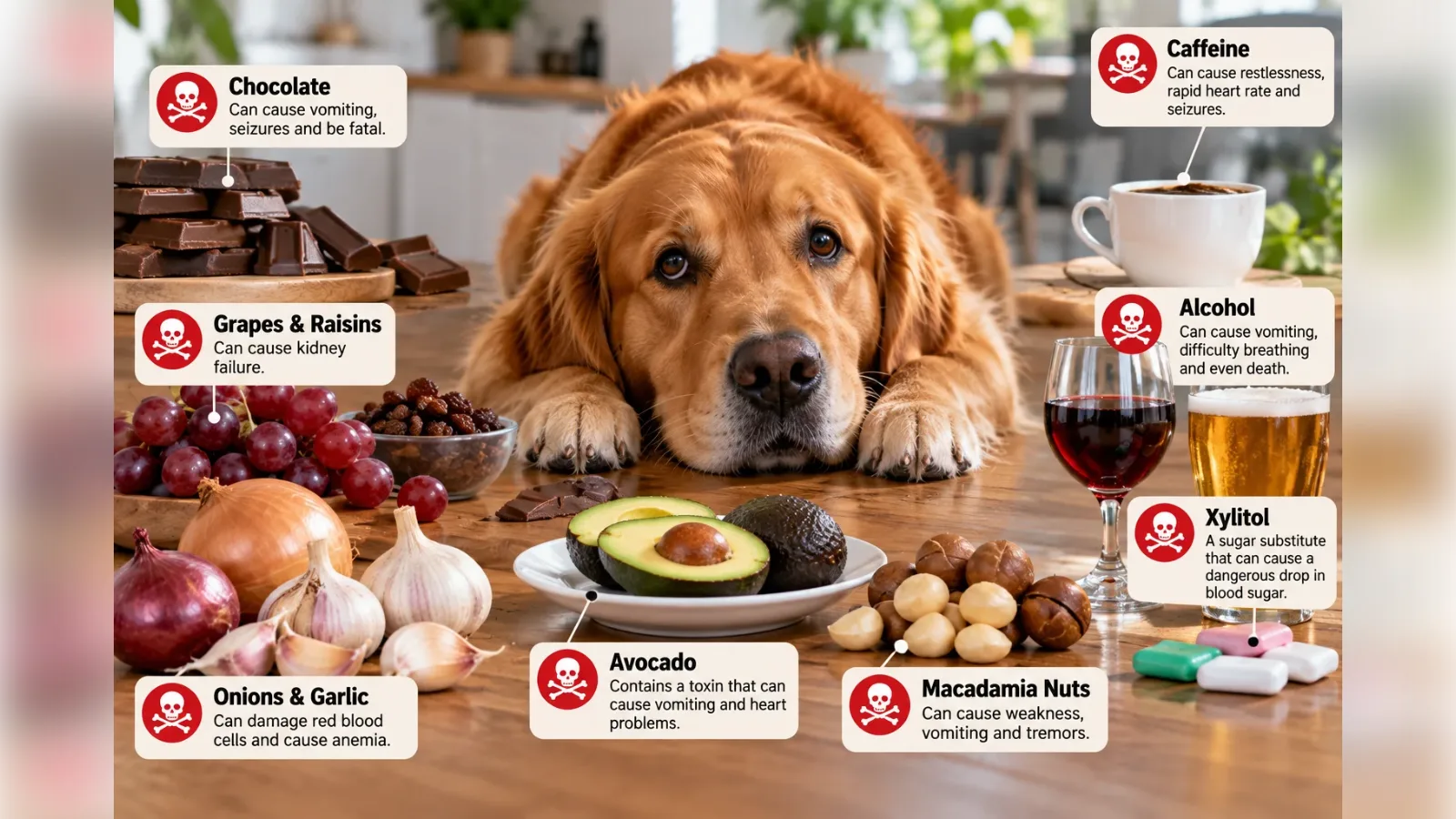

Chocolate, xylitol, grapes and raisins, onions, garlic, macadamia nuts, alcohol and caffeine can poison dogs. Raw yeast dough is dangerous too. If your dog may have eaten one of these, call your vet or an animal poison service now with the packaging, amount and time of exposure. A dog can look well before signs develop.
Key points: foods toxic to dogs include chocolate, xylitol, grapes and raisins, onions and garlic, macadamia nuts, alcohol, caffeine and raw yeast dough. Cooked bones can splinter and injure the gut. If your dog eats something on this list, call your vet or an animal poison control center straight away, even if your dog seems fine.
Urgent: if your dog has eaten something toxic, contact your vet or a local emergency clinic right away. In the United States, you can also call the ASPCA Animal Poison Control Center at (888) 426-4435. The line is open 24 hours a day, every day, and a consultation fee may apply. Don’t wait for signs to appear, as some poisons cause serious damage before a dog looks unwell.
Toxic foods and other food hazards for dogs
How badly a dog is affected depends on what they ate, how much, and their size and health. Treat any of these as a reason to call for advice rather than trying to judge the risk yourself.
| Food | Why it’s dangerous |
|---|---|
| Chocolate and cocoa | Contains theobromine and caffeine, which overstimulate the nervous system and heart. Dark chocolate, baking chocolate and cocoa powder are the most dangerous. |
| Xylitol (a sweetener) | Can cause a rapid, severe drop in blood sugar and, in larger amounts, liver failure. |
| Grapes, raisins, dried grape currants and sultanas | Can cause kidney failure. There’s no known safe amount, and dogs vary widely in how they react. |
| Onions, garlic, leeks and chives | Damage red blood cells and can cause anemia. Raw, cooked, dried and powdered forms are all toxic. |
| Macadamia nuts | Cause weakness, vomiting, tremors and a raised temperature. |
| Alcohol | Causes vomiting, wobbliness, low blood sugar and low body temperature. Severe cases can lead to breathing problems, seizures and coma. |
| Caffeine | Found in coffee grounds and beans, tea bags, energy drinks and some supplements. Causes restlessness, a racing heart, tremors and seizures. |
| Raw yeast dough | Expands in the stomach and ferments, producing alcohol. Can cause bloating and alcohol poisoning. |
| Cooked bones (an injury hazard, not a poison) | Can splinter, causing choking, mouth injuries, blockages or damage to the gut. |
A closer look at the most dangerous foods
Chocolate
The darker and more bitter the chocolate, the more dangerous it is. Cocoa powder and unsweetened baking chocolate contain far more theobromine than milk chocolate, so a small piece of baking chocolate can be riskier than a larger bar of milk chocolate. Signs can be delayed and include vomiting, diarrhea, thirst, restlessness, a racing heart, tremors and seizures. Keep an eye out around holidays, when chocolate gifts and baking are everywhere.
Xylitol
Xylitol is a sugar substitute found in some sugar-free gum, candies, baked goods and peanut butters, and in some toothpastes and medicines. In dogs it triggers a surge of insulin, and blood sugar can fall dangerously low in as little as 10 to 60 minutes, or many hours later if it was eaten in something that slows absorption. Signs include vomiting, weakness, wobbliness, collapse and seizures. Liver injury can also occur, and its signs may be delayed. Xylitol may appear on labels as birch sugar or wood sugar. Check labels, keep gum and mints out of bags your dog can reach, and never use human toothpaste on your dog.
Grapes and raisins
Grapes, raisins, dried grape currants and sultanas can cause sudden kidney failure. Here, “currants” means the dried grapes used in baking, not fresh blackcurrants or redcurrants. Some dogs eat them with no obvious effect while others become seriously ill, and there’s no way to predict which. Watch for raisins in trail mix, cereals, fruit cakes, cookies and bagels. Vomiting or diarrhea may start within hours, with kidney problems developing over the next few days.
Onions and garlic
All members of the onion family are toxic, including garlic, leeks, shallots and chives, whether fresh, cooked or powdered. Onion and garlic powders are concentrated, so gravy, stock, soups and seasoned leftovers can be a problem. Signs of anemia, such as weakness, tiredness, pale gums and fast breathing, often take a few days to appear.
Macadamia nuts
Macadamia nuts can make dogs weak, wobbly, depressed and feverish, with signs usually appearing within 12 hours. Most dogs recover with supportive care, but they still need a vet’s advice, especially if the nuts were in chocolate or a baked good containing other risky ingredients.
Cooked bones and fatty scraps
Cooked bones become brittle and can splinter into sharp pieces. The FDA has warned that bones and bone treats can cause choking, mouth injuries, blockages in the gut and bleeding. Fatty leftovers, such as meat trimmings and skin, can cause stomach upset and may trigger pancreatitis, a painful inflammation of the pancreas.
Other foods to be careful with
Some foods aren’t poisonous in the same way but can still cause problems:
- Salty foods such as chips and pretzels can cause excessive thirst, and large amounts can be dangerous.
- Other nuts like almonds, pecans and walnuts are high in fat and can cause vomiting, diarrhea and pancreatitis.
- Milk and dairy can cause diarrhea, since many dogs don’t digest lactose well.
- Raw meat and eggs can carry bacteria such as Salmonella and E. coli, which can affect both dogs and people.
What to do if your dog eats something toxic
- Move your dog away from the food and pick up anything left.
- Call for help immediately. Contact your vet or emergency clinic. U.S. poison-service options include the ASPCA Animal Poison Control Center at (888) 426-4435 and Pet Poison Helpline at (855) 764-7661; elsewhere, use your local veterinary emergency service. Fees may apply to poison control calls.
- Have the details ready: what your dog ate, roughly how much, when it happened and your dog’s weight. Keep the packaging or ingredient list if you have it.
- Don’t make your dog vomit unless a vet or poison control expert tells you to. It isn’t safe for every exposure and can cause harm. Do not give salt, oil, milk, activated charcoal or other home treatments unless the professional handling the case directs you.
- Follow the advice you’re given, even if your dog seems fine. With grapes, xylitol and onions in particular, damage can develop before signs show.
Get to a vet at once if your dog is collapsing, having seizures, struggling to breathe, vomiting repeatedly, has a swollen belly or is very weak or wobbly.
Keeping dangerous food out of reach
Most poisonings happen by accident. A few habits make a big difference: keep bags and purses off the floor, use a lidded trash can, put leftovers away promptly, and ask guests and children not to share their food with your dog. During busy times like holidays and parties, it can help to keep your dog in a separate room while food is out.
If you want to give your dog the odd treat from the kitchen, plain cooked meat without bones or seasoning is usually a safer choice, in small amounts. Treats count toward your dog’s daily food, so our guides on how often to feed a dog and signs your dog is overweight are useful places to start.
Share your home with a cat as well? Several of the same foods, plus some plants and medicines, are dangerous for cats too, as our guide to plants and foods poisonous to cats explains.
Frequently asked questions
How much chocolate is toxic to a dog?
It depends on the type of chocolate and your dog’s size. Dark chocolate, baking chocolate and cocoa powder are much more dangerous than milk chocolate. Rather than trying to work it out yourself, call your vet or a poison control center with details of what and how much your dog ate.
My dog ate one grape. Should I worry?
Yes, call your vet or a poison control center. There’s no known safe amount of grapes or raisins for dogs, and some dogs are affected by small amounts. Early treatment gives the best chance of preventing kidney damage.
Is peanut butter safe for dogs?
Plain peanut butter is often used as a treat, but some brands contain xylitol, which is highly toxic to dogs. Always check the ingredient list, and give it in small amounts because it’s high in fat.
Should I make my dog throw up if they eat something toxic?
No, not unless a vet or poison control expert tells you to. Making a dog vomit isn’t safe for every poison. Call for advice first so you get the right treatment quickly.
Sources and further reading
- ASPCA: people foods to avoid feeding pets
- FDA: xylitol and dogs
- FDA: food, bone and other holiday hazards
- Pet Poison Helpline: emergency contact details
This list is not exhaustive and cannot establish a safe dose for an individual dog. Read our Pet Health Disclaimer. Editorial update: September 27, 2026.