
An indoor cat is safe from traffic, fights and many infections, but the trade is a much smaller world. A cat that would have spent hours patrolling, stalking and climbing outside now has a few rooms, a food bowl that fills itself and a lot of time on their paws.
The good news is that keeping an indoor cat happy doesn’t take a huge home or expensive gear. It comes down to giving your cat regular chances to do the things cats are built to do: hunt, climb, watch, scratch and hide.
Key points: play with your cat in short, hunting-style bursts every day, ideally ending with a catch and a meal. Let them work for some of their food with puzzle feeders. Add height with shelves or cat trees, give them a window seat, sturdy scratching posts and a few private hiding spots. A secure catio or harness walks can add outdoor time safely. Overgrooming, weight gain, nighttime chaos or ambushing ankles can point to boredom, but check with your vet first.
Is your indoor cat bored?
Cats rarely look bored in the way a dog does. More often, a cat without enough to do finds their own entertainment, and you may not like it. Common signs include:
- Pouncing on feet, hands or ankles as you walk past
- Scratching furniture, knocking things off shelves or chewing plants
- Yowling or racing around at night
- Constant demands for attention or food
- Gaining weight, or sleeping far more than usual
- Overgrooming, sometimes leaving thin or bald patches
- Picking on another cat in the home
Many of these also show up with pain, skin problems, thyroid disease and other medical issues, so a vet check comes first, especially if the change is sudden. Once health problems are ruled out, the ideas below are a good place to start.
Play that feels like hunting
Cats are sprinters. They are designed for short, intense bursts of effort, which means a few minutes of the right kind of play several times a day beats one long session. Dawn and dusk, when many cats are naturally most active, are ideal times.
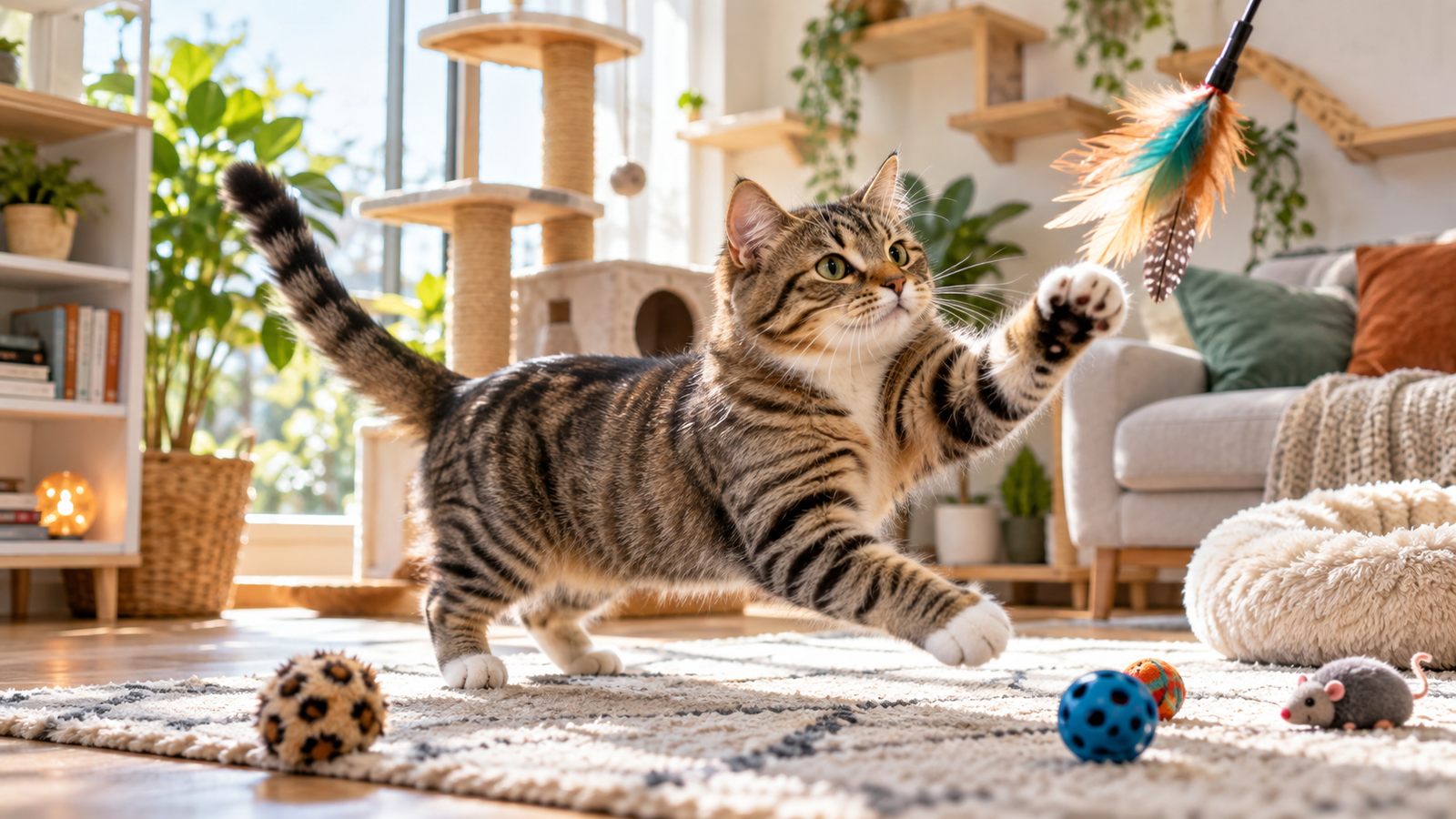
The best play copies a real hunt. A wand toy (a stick with a toy on a cord) works well because you control the “prey”:
- Let the toy creep along the floor and disappear behind a chair or around a doorway.
- Move it away from your cat, not toward them. Prey never runs at a predator.
- Alternate quick dashes with pauses so your cat can stalk and wiggle before the pounce.
- Let them catch it, often. A game with no wins is frustrating.
- Finish with a final catch, then offer a meal or a few treats. Hunt, catch, eat is the natural order.
Laser pointers get cats moving, but there is nothing to catch at the end. If you use one, switch to a toy your cat can grab before you stop. Rotate small toys too: keep most in a drawer and bring out two or three at a time so they stay interesting.
Safety note: put wand toys, string, ribbon, hair ties and yarn away after play. Swallowed string can cause a serious intestinal blockage that needs surgery.
Let them work for dinner
A wild cat eats many small meals and has to find every one of them. An indoor cat’s food simply appears. Puzzle feeders, treat balls and snuffle-style mats bring some of that effort back, and they slow down fast eaters as well.
Start with something easy, such as a toy that drops kibble with a gentle nudge, so your cat succeeds straight away. You can also hide small portions around the house or make simple puzzles from egg cartons and cardboard tubes. Any food used this way comes out of the daily allowance, not on top of it.
Go up, not just out
Floor space is limited in most homes, but walls and furniture tops aren’t. Cats like high spots where they can rest while keeping an eye on the room. Cat trees, sturdy wall shelves arranged like steps, a cleared bookcase top or a perch on a dresser all add usable territory.
Put climbing spots in the rooms where your family actually spends time, not in a back bedroom. In homes with more than one cat, extra high perches also let cats share a room without having to share the same patch of floor.
Somewhere to disappear
Hiding is a normal way for a cat to cope with anything unsettling, from visitors to a vacuum cleaner. A cardboard box on its side, a covered bed, space under a bed or a cubby in a cat tree all count. Your cat should be able to reach at least one hiding place without crossing a busy room, and nobody (children included) should pull them out of it.
Scratching done right
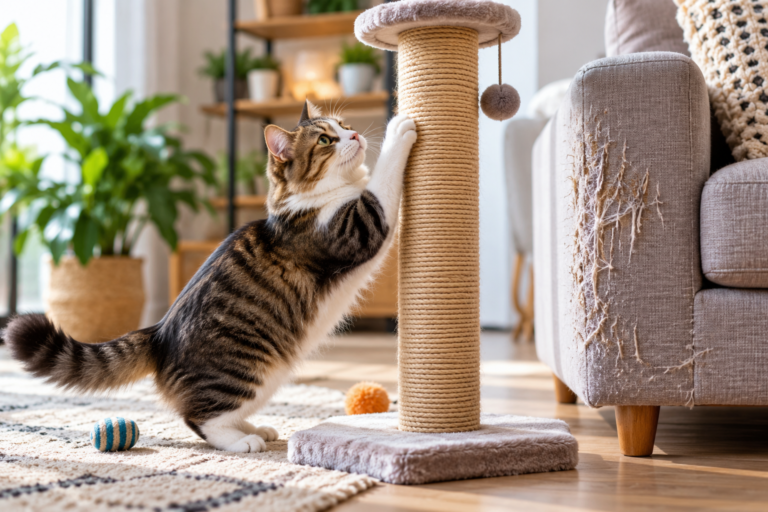
Scratching keeps claws in shape, stretches the body and leaves scent marks. An indoor cat needs outlets for it, or the sofa will do. Choose posts that are tall enough for a full stretch and heavy enough not to wobble, and offer a horizontal scratcher as well, since some cats prefer scratching flat. Place them near sleeping spots and by the furniture your cat already targets.
A window on the world
Watching birds, people and passing cars is genuine entertainment for many cats. A window perch or a cleared sill with a cushion is easy to set up. A bird feeder outside can make the view more interesting, though a few cats find prey they can’t reach frustrating; if your cat chatters, paces or becomes agitated, move the feeder further off.
Make sure any window that opens has a secure screen. Cats can fall from open windows and balconies, and falls from height cause serious injuries.
Safe time outside
Outdoor access is an option, not a requirement, but some indoor cats clearly enjoy fresh air. A catio (an enclosed outdoor run, from a small window box to a large garden structure) gives sun, smells and sounds without the risks of roaming. Some cats can also learn to walk on a harness and lead in a quiet yard, if you introduce the harness slowly indoors first. Never tie a cat up outside unattended.
You can also bring a little of the outdoors in. A pot of cat grass gives your cat something safe to chew. Check every houseplant and cut flower before it comes home, because lilies in particular can cause kidney failure in cats, even from a small amount of pollen.
What a good day looks like
None of this needs to take hours. A realistic day for many indoor cats might be a short play session and a puzzle-feeder breakfast before you leave, a window perch and a few hidden treats while you are out, another play session before dinner, and quiet time with you in the evening. Consistency matters more than length.
Toilet setup affects contentment more than many owners realize, and how many litter boxes cats need is a common sticking point. If your cat also shadows you from room to room, here’s more on why cats follow their owners everywhere.
Frequently asked questions
How much play does an indoor cat need each day?
There is no fixed number, but several short, active sessions spread through the day work better than one long one. Even a few minutes of hunting-style play, finished with a catch and some food, makes a real difference for most cats.
Is it cruel to keep a cat indoors?
No, as long as the home meets the cat’s needs for play, climbing, scratching, hiding and company. Many cats live full, contented lives indoors. The problems come from a bare environment, not from being indoors itself.
Would a second cat stop my indoor cat being bored?
Not always. Some cats enjoy company, but many prefer to be the only cat, and a poorly matched pair can create stress for both. Improve play, feeding and climbing options first, and think carefully before adding another cat.
Are laser pointers bad for cats?
They are fine in moderation, but a laser gives your cat nothing to catch. End each laser game by switching to a toy your cat can pounce on and hold, so the hunt has a satisfying finish.