
Metabolic bone disease, usually shortened to MBD, is one of the most common serious health problems in pet reptiles, and one of the most preventable. It develops slowly, often over months, as a reptile’s body runs short of usable calcium and starts taking it from the skeleton. By the time bones visibly bend or swell, the damage is well advanced.
Almost every case of metabolic bone disease in reptiles traces back to the setup: lighting, diet or temperature. That makes it frustrating when it happens, but it also means owners have a great deal of control over preventing it.
In short: MBD happens when a reptile can’t get or absorb enough calcium, usually because of missing or weak UVB, a diet with too little calcium compared with phosphorus, or an enclosure that is too cold. Early signs are vague (lethargy, poor appetite, weakness). Later signs include a soft or swollen jaw, swollen limbs, twitching and fractures. It needs a reptile vet, and prevention comes down to correct UVB, diet, supplements and heat.
What goes wrong inside the body
A reptile’s blood calcium has to stay within a narrow range for nerves and muscles to work. When the diet doesn’t supply enough, or the body can’t absorb what’s there, hormones step in and release calcium from the bones to keep blood levels steady. For a while, the reptile may look fine. Meanwhile the skeleton is being thinned out and replaced with weaker, fibrous tissue.
Vets often call the most common form nutritional secondary hyperparathyroidism, which simply means the parathyroid glands are working overtime because of a nutritional shortfall. Young, fast-growing lizards and tortoises are most at risk because their skeletons are building bone rapidly, but adults can develop it too. A less common form is linked to kidney disease in adult reptiles, which is one reason a vet diagnosis matters.
The three usual causes
Not enough UVB
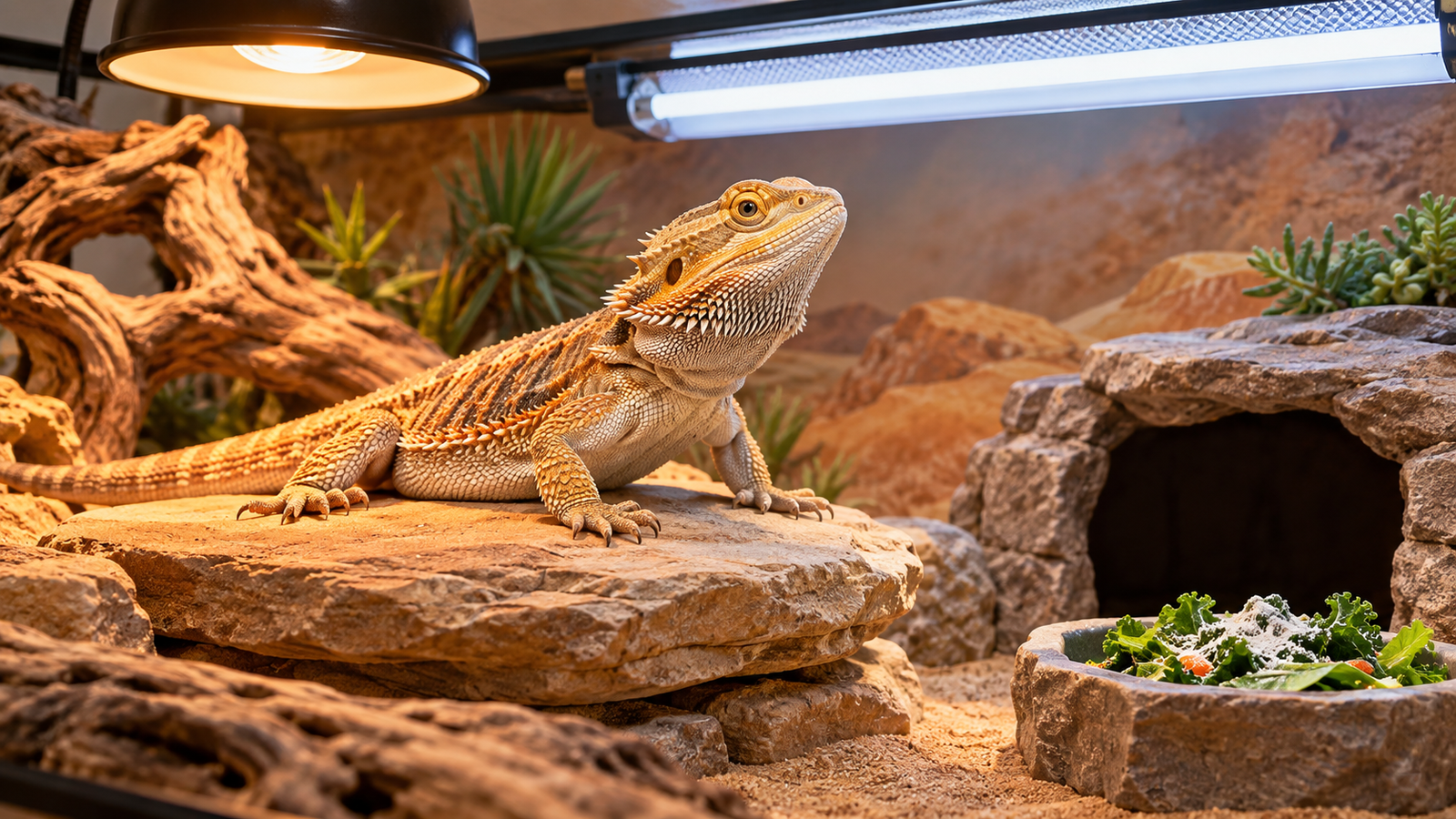
Reptiles need vitamin D3 to absorb calcium from their gut, and many species make it in their skin under UVB light. No UVB lamp, a lamp that has passed its useful life, a lamp mounted too far away, or UVB filtered through glass or plastic can all leave a reptile short even on a good diet. This is the single most common gap in species that bask in daylight, such as bearded dragons, iguanas, chameleons and tortoises.
An unbalanced diet
Bones need more calcium than phosphorus in the diet. Most feeder insects have the opposite balance, with very little calcium and plenty of phosphorus. Insects fed without a calcium dusting, or without being fed a nutritious diet beforehand, can tip an insect-eating reptile into deficiency. Herbivores are at risk when fed lots of fruit or low-calcium vegetables instead of calcium-rich leafy greens. Some greens, such as spinach, also contain compounds that bind calcium and are best kept as occasional items.
Temperatures that are too low
Reptiles depend on outside heat to digest food and run their metabolism. In an enclosure that is too cool, or lacks a proper basking spot, food is processed poorly and vitamin D3 production and calcium use are less efficient. A reptile kept too cold can develop MBD even with good lighting and diet.
Signs to watch for
Early MBD is easy to miss because the signs are general. Watch for changes from your reptile’s normal routine:
- Less activity and more time sitting still
- Reduced appetite or weight loss
- Weakness, such as struggling to lift the body off the ground or climb
As the disease progresses, the signs become more specific:
- A soft, rubbery or swollen lower jaw, sometimes with difficulty eating
- Swollen or thickened legs, which can look deceptively plump
- Bowed limbs or a kinked spine or tail
- Twitching or trembling in the toes, legs or body
- Walking with the belly dragging, or not being able to walk normally
- Fractures from minor bumps or falls
- In tortoises and turtles, a shell that feels soft or grows unevenly
Important: twitching, trembling, muscle spasms, seizures, sudden paralysis or a reptile that can’t move properly can mean dangerously low blood calcium. Contact a reptile vet the same day, or an emergency clinic that sees exotics. Don’t try to treat MBD at home with extra supplements, because dosing calcium or vitamin D3 without guidance can cause harm and delays proper care.
What happens at the vet
Your vet will examine your reptile and ask detailed questions about its enclosure, lighting, temperatures, diet and supplements, so it helps to bring photos of the setup, the age of the UVB lamp and the names of any supplements you use. X-rays show how much bone density has been lost and whether there are fractures. Blood tests can check calcium and other levels and help rule out kidney disease.
Treatment depends on how severe the disease is. It often involves calcium given by the vet, sometimes by injection, followed by oral supplements at a dose the vet sets, along with fluids, assisted feeding for reptiles that won’t eat and pain relief. Fractures may need support and strict cage rest in a simplified enclosure. Just as important is fixing the cause: the vet will tell you what needs changing in the lighting, heat and diet.
Recovery is slow. Reptiles that are still eating when treatment starts generally have a better outlook, and many improve well with prompt care. Severe cases can take months to recover, and bone deformities that have already formed may be permanent even once the disease is controlled.
How to prevent it
Prevention means covering all three causes at once. Good UVB won’t make up for a cold enclosure, and a perfect diet won’t make up for no UVB.
- Provide suitable UVB for your species, with no glass or plastic in the way, and replace lamps on the manufacturer’s schedule even if they still glow.
- Get the temperatures right. Use thermometers at the basking spot and the cool end, and a thermostat on heat sources.
- Feed a species-appropriate diet. Insect eaters need a variety of feeders that have been well fed before being offered. Herbivores need mostly calcium-rich greens.
- Supplement as your vet advises. Many reptiles need a calcium dusting on some or all meals, with vitamin D3 and multivitamin products used at set intervals. Needs vary with species, age and UVB setup.
- Book a check-up with a reptile vet soon after you get a new reptile and at least once a year after that. Early changes can show up on an exam before you notice them at home.
Since most cases start with the enclosure, it’s worth checking yours against a species-specific setup. The lighting and heating basics are covered for two of the most popular pet lizards in how to set up a bearded dragon tank and our beginner’s leopard gecko tank guide.
Frequently asked questions
Can a reptile recover from metabolic bone disease?
Many can improve with prompt veterinary treatment and corrected husbandry, especially if they are still eating. Recovery often takes months, and bone deformities that have already formed may not fully reverse.
Which reptiles are most likely to get MBD?
Young, fast-growing lizards and tortoises that eat insects or plants are most at risk, including bearded dragons, leopard geckos, iguanas, chameleons and tortoises. Any reptile can develop it if its lighting, diet or temperatures are wrong.
Is calcium powder enough to prevent MBD?
Not on its own. A reptile also needs vitamin D3 to absorb calcium, which for many species means proper UVB lighting, plus the right temperatures to digest its food. Ask your vet which supplements your reptile needs and how often.
What are the first signs of metabolic bone disease?
Early signs are often vague: lethargy, reduced appetite, weight loss and weakness. More specific signs such as a soft or swollen jaw, swollen legs or twitching usually appear as the disease progresses.