
A freshly filled aquarium can look spotless and still be dangerous for fish. Clear water tells you nothing about the invisible waste fish produce, and a brand new filter has no way of dealing with it yet.
Cycling is the process of growing the helpful bacteria that make a tank safe to live in. Knowing how to cycle a new aquarium properly takes patience rather than skill, and doing it before any fish go in is the kindest and most reliable approach.
At a glance: cycling builds up bacteria in your filter that turn toxic ammonia into nitrite and then into much less harmful nitrate. The fishless method feeds those bacteria with an ammonia source before fish arrive. Use a test kit to track progress. It commonly takes around 4–6 weeks, sometimes longer. The tank is ready when ammonia and nitrite both drop to zero within a day of adding ammonia. Then add fish a few at a time.
The nitrogen cycle in plain terms
Fish constantly release ammonia through their gills and in their waste, and uneaten food and decaying plant matter add more. In a sealed box of water, it has nowhere to go. Ammonia is highly toxic to fish, even at low levels.
Two groups of bacteria solve the problem. The first group converts ammonia into nitrite. Nitrite is also toxic, so a second group converts it into nitrate. Nitrate is far less harmful, though it builds up over time and is kept low with regular partial water changes. These bacteria live mainly on surfaces, especially the sponges and media inside your filter, rather than floating in the water.
| Compound | Where it comes from | How harmful to fish | Target in a cycled tank |
|---|---|---|---|
| Ammonia | Fish waste, uneaten food, decaying matter | Highly toxic | Zero |
| Nitrite | Bacteria breaking down ammonia | Toxic | Zero |
| Nitrate | Bacteria breaking down nitrite | Much less harmful, but not harmless at high levels | Kept low with water changes |
Fishless cycling, step by step
Fishless cycling means supplying ammonia yourself so the bacteria can grow without any fish being exposed to it. It’s widely recommended as the kinder option.
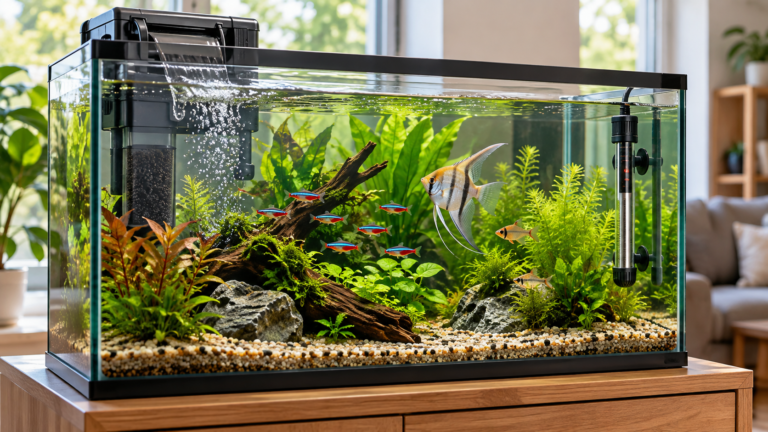
- Set up the tank fully. Add substrate, decorations and any plants, then fill with tap water treated with a water conditioner to neutralize chlorine and chloramine, which can harm bacteria as well as fish.
- Run the equipment. Switch on the filter and keep it running around the clock. In a tropical tank, run the heater too. Bacteria grow faster in warmer water, so heated tanks usually cycle more quickly than unheated ones.
- Add an ammonia source. The two common options are pure liquid ammonia sold for fishless cycling (or household ammonia with no added scent, soap or surfactants) and a small amount of fish food left to break down in the tank. Liquid ammonia is easier to measure. Recommended doses vary between methods and products, so follow the instructions for the one you choose rather than guessing.
- Test every couple of days. Keep a note of ammonia, nitrite and nitrate readings. You’re looking for a pattern rather than a single result.
- Keep feeding the bacteria. Top up the ammonia whenever the level has fallen, so the bacteria always have something to process.
Bottled bacteria products can give the process a head start, though results vary. Filter media or a sponge from an established, healthy tank can speed things up considerably, but only take it from a tank you trust, since it can carry diseases and parasites as well as bacteria.
Test kits: what to measure
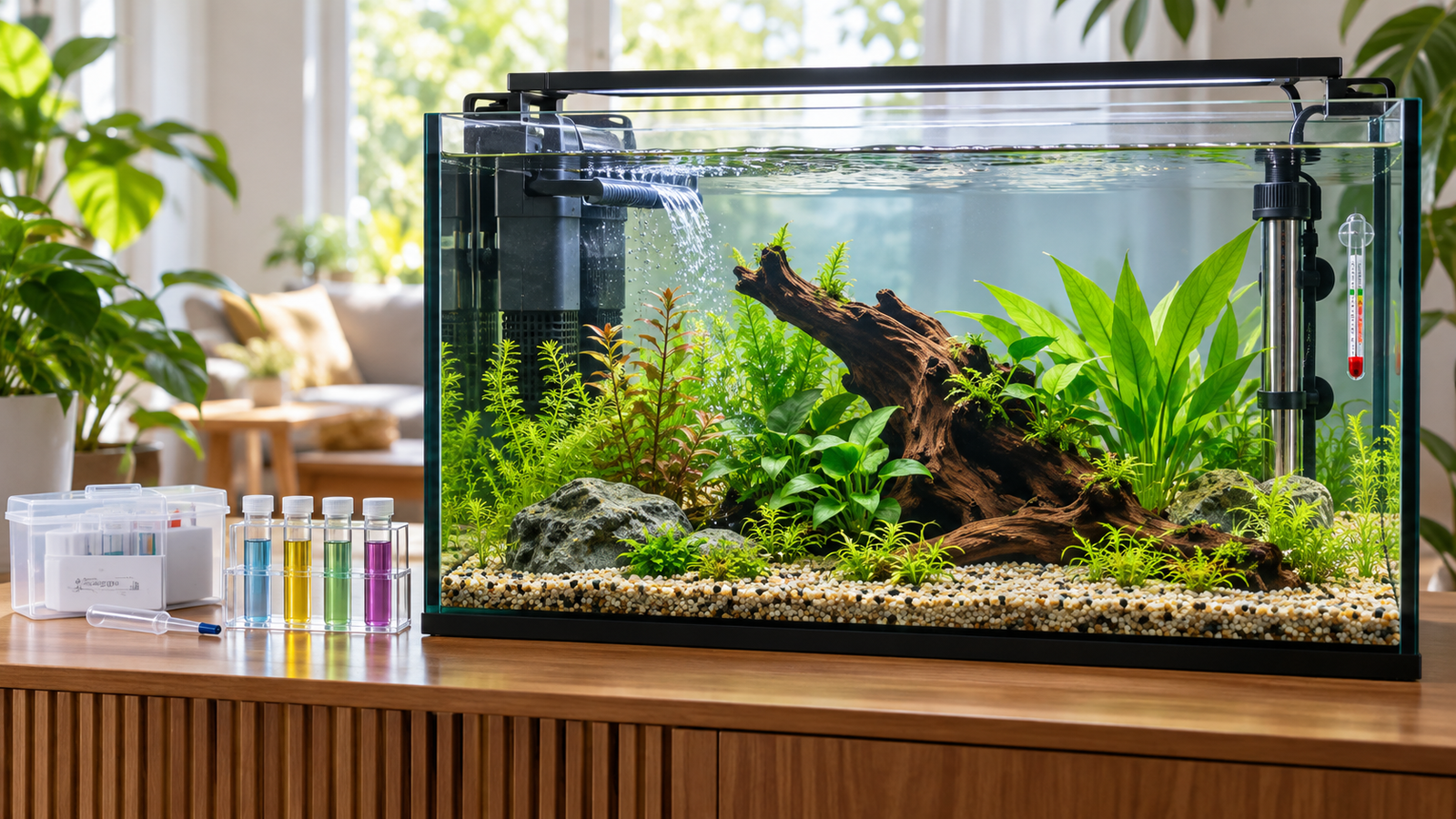
During cycling you need to measure ammonia, nitrite and nitrate. A pH test is useful too, because the bacteria slow down in very acidic water, and a cycle that seems to stall is sometimes linked to a low pH. Liquid test kits cost a little more than dip strips but are generally considered more accurate and last for many tests. Whichever you use, check the expiry date, follow the timing instructions exactly and read the colors in good daylight.
How long does cycling take?
Around 4–6 weeks is a common estimate, but it varies with water temperature, pH, the ammonia source and whether you’ve seeded the filter with established media. Some tanks finish sooner and others take longer, especially cool-water setups. Try not to judge progress by the calendar. The test results tell you when you’re done.
A typical pattern looks like this: ammonia readings are high at first, then start to drop as nitrite appears. Nitrite often climbs quite high and lingers, which is the stage where many people lose patience. Eventually nitrite falls too, while nitrate steadily rises.
How to tell the cycle is complete
Your tank is cycled when you can add your usual dose of ammonia and, 24 hours later, both ammonia and nitrite read zero, with nitrate showing. Ideally, see that result for several days in a row before calling it finished.
At that point, do a large partial water change with conditioned water to bring nitrate down, check the temperature matches what your fish need, and add fish soon afterward. If the tank sits empty for long, the bacteria start to die back without food, so keep dosing ammonia until the fish arrive.
Adding fish gradually
A cycled filter only has enough bacteria to handle the amount of ammonia it has been getting. Stocking the whole tank in one go can overwhelm it. Start with a few fish, then wait a couple of weeks, testing regularly, before adding more. Feed sparingly at first, as uneaten food adds to the load.
Keep testing for ammonia and nitrite every few days during the first weeks with fish, and any time you add new ones.
New tank syndrome: if fish are already in
New tank syndrome is the name for the illness and deaths that happen when fish go into a tank before the filter bacteria can cope. It’s one of the most common reasons fish are lost in new setups. Signs include:
- Lethargy or sitting on the bottom
- Loss of appetite
- Gasping at the surface or rapid gill movement
- Clamped fins or a cloudy, excess slime coating on the skin
- Sudden deaths
If you see these, test the water right away. If ammonia or nitrite is above zero, do a partial water change with conditioned, temperature-matched water. Change no more than half the water at once, and repeat daily if needed until readings stay at zero. Feed very lightly, and don’t add more fish until the tank is stable. If fish keep struggling once the water is under control, speak to a vet with experience in fish or an aquatic specialist.
Mistakes that undo your hard work
- Rinsing filter media under the tap. Chlorine in tap water can kill the bacteria. Rinse media gently in old tank water during a water change instead.
- Replacing all the filter media at once. Most of your bacteria live there. Only replace media when it is falling apart, and not all of it at the same time.
- Skipping the water conditioner when topping up or changing water.
- Overstocking or overfeeding soon after cycling finishes.
Planning a coldwater tank? How to set up a goldfish tank properly covers size and equipment. And if a fish ever starts hanging at the top of the water, why fish gasp at the surface walks through what to check first.
Frequently asked questions
How long does it take to cycle a new aquarium?
Often around 4–6 weeks, but it can be faster or slower depending on temperature, pH and whether you seed the filter with established media. Rely on your test results rather than a set number of days.
Can I add fish while the tank is cycling?
It’s possible, but it exposes the fish to ammonia and nitrite and needs daily testing and frequent water changes. Fishless cycling, where you add an ammonia source instead of fish, is the safer option.
How do I know my aquarium is fully cycled?
When ammonia and nitrite both read zero 24 hours after you add ammonia, and nitrate is present, the tank is cycled. Seeing that result for several days in a row gives extra confidence.
Should I do water changes during fishless cycling?
Usually not. With no fish to protect, water changes mostly remove the ammonia the bacteria are feeding on. Do a large water change once the cycle is complete to lower nitrate before adding fish.