
Bettas, also called Siamese fighting fish, have a reputation for aggression, and it’s partly deserved. Male bettas will fight each other, sometimes to the death. But that doesn’t mean a betta can never share a tank. With the right setup and carefully chosen companions, some bettas live peacefully in a community tank. Others never settle, and that’s something you only find out once they’re together.
So can betta fish live with other fish? Sometimes, if you plan for it properly and have a backup plan ready.
The short version: never keep two male bettas together. A male betta can sometimes live with small, peaceful, short-finned fish, snails or shrimp in a heated tank of at least 10 gallons (about 40 liters), but it depends on the individual fish. Female groups (sororities) are risky and not a beginner project. Always have a spare tank ready in case things go wrong.
Why male bettas can’t share a tank
This is the one rule with no exceptions. Male bettas are territorial and were selectively bred for fighting. Two adult males in the same tank will fight, and one will usually be badly injured or killed. A divider may keep them physically apart, but seeing another male all day can keep a betta in a constant state of flaring and stress.
Keeping a male and female together outside of a short, supervised breeding setup is also a bad idea. Males can be rough with females, and breeding bettas is a specialist job.
What about groups of female bettas?
Female bettas are generally less aggressive than males, and some keepers do house them together in groups known as sororities. It can work, but it often doesn’t. Females still establish a pecking order, and fighting, fin damage and bullying of weaker fish are common. A sorority needs a large, heavily planted tank with plenty of hiding places, careful monitoring and a separate tank ready for any fish that needs removing.
If this is your first betta, a sorority is not the place to start. A single betta, on its own or with a few carefully chosen tankmates, is far easier to get right.
Tank size and temperature come first
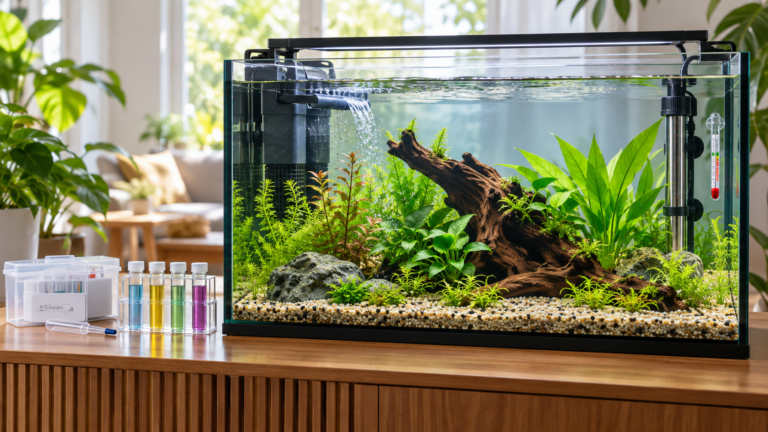
A betta kept alone needs more room than the small bowls and cups often seen in stores. Many care guides suggest around 5 gallons (about 19 liters) or more for a single betta. For a community tank, plan on at least 10 gallons (about 40 liters), and bigger is better. More space means more territory, more hiding places and more stable water.
Bettas are tropical fish. They need a thermostat-controlled heater keeping the water warm and steady, commonly given as around 76–80°F (24–27°C), though guidance varies slightly between sources. Any tankmate needs to be comfortable at the same temperature, which rules out coldwater fish such as goldfish straight away.
Flow matters too. Bettas come from still or slow-moving water and breathe partly at the surface, so choose a filter with gentle or adjustable flow. That also narrows your choice of tankmates: fast, active fish that love a strong current won’t suit a betta setup.
Possible tankmates for a betta
None of these is guaranteed. Think of them as “sometimes works” rather than “safe”.
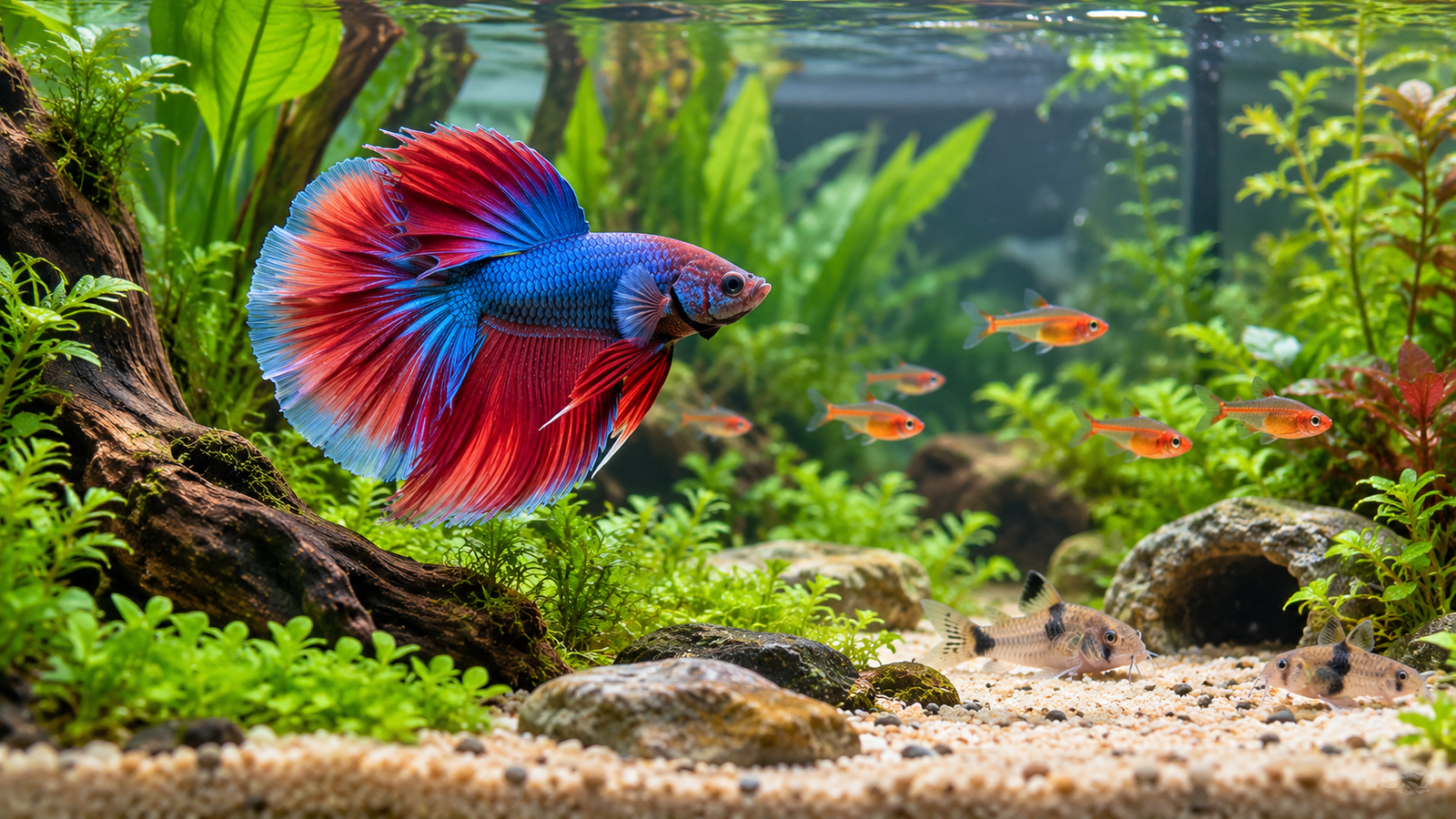
- Corydoras catfish: peaceful bottom-dwellers that mostly stay out of a betta’s way. They need to be kept in a group and prefer a soft substrate, so they need a tank big enough for several of them.
- Otocinclus: small, peaceful algae grazers. They also do best in groups and need a mature tank with enough algae and biofilm to graze.
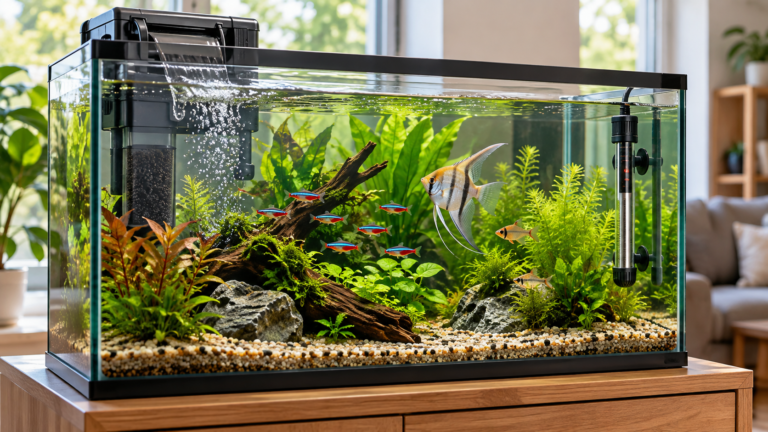
- Small, calm schooling fish: some small tetras and rasboras can work, kept in a proper group. Choose species with short fins and a calm temperament, and check their temperature needs overlap with your betta’s.
- Snails: larger aquarium snails are often left alone, though some bettas pick at snails’ tentacles. Watch for this in the first few weeks.
- Shrimp: bettas are meat eaters and many will hunt small shrimp, especially babies. Larger shrimp species have a better chance, but think of small shrimp as possible food rather than safe companions.
Fish to keep away from bettas
Some fish are poor choices for almost every betta:
- Other bettas, for the reasons above.
- Fin-nippers such as tiger barbs. A betta’s long, slow-moving fins are an easy target, and torn fins can become infected.
- Brightly colored, long-finned fish such as fancy male guppies. A betta may see them as rivals and attack.
- Gouramis, which are close relatives, also use the surface for air and can be territorial in similar ways.
- Large, boisterous or aggressive fish, which can bully a betta or outcompete it at feeding time.
- Coldwater fish such as goldfish, which need very different temperatures.
Watching for stress and trouble
Even a well-planned community can go wrong, and individual bettas vary a lot. Some ignore tankmates completely. Others chase anything that moves. Watch closely for the first few weeks, and keep checking after that.
Signs that the arrangement isn’t working include:
- Torn, ragged or shrinking fins on the betta or its tankmates
- Constant chasing, nipping or flaring
- A fish hiding all the time, or hanging near the surface or in a corner
- Clamped fins held close to the body
- Loss of appetite, or one fish being kept away from food
Stress weakens fish over time, which makes illness more likely. Damaged fins can develop infections, so if you see fin damage, act on the cause quickly and keep the water especially clean.
Have a backup plan
Before you add tankmates, have a spare, heated and filtered tank you can use at short notice. If your betta turns on its companions, or they start picking on it, separating them quickly can prevent serious injury. Many experienced keepers see this as a basic part of trying a community tank, not an extra.
It’s also wise to quarantine new fish in a separate tank for a few weeks before adding them, so you don’t introduce disease to your betta’s tank.
Important: if a fish has open wounds, fins that are rotting away rather than simply torn, or stops eating and becomes lethargic, separate it and speak to a vet with fish experience or an aquatic specialist.
Clean, stable water makes every betta setup easier. Our guide on how often to change betta fish water explains a sensible routine.
Frequently asked questions
Can two male betta fish live together?
No. Male bettas are territorial and will fight, often until one is seriously hurt or killed. Each male needs his own tank.
Can a betta live with a snail?
Often, yes. Larger aquarium snails are usually left alone, but some bettas pick at snails’ tentacles, so watch them closely for the first few weeks.
Will my betta eat shrimp?
It might. Bettas are meat eaters and many will hunt small shrimp, particularly babies. Larger shrimp have a better chance, but there is no guarantee.
What size tank does a betta need for tankmates?
Plan on at least 10 gallons (about 40 liters) for a community tank, and more if you can. Extra space gives every fish room to claim territory and hide.
Are betta sororities a good idea for beginners?
No. Female bettas can still be aggressive toward each other, and sororities need a large, well-planted tank, close monitoring and a backup tank. A single betta is a much better first setup.