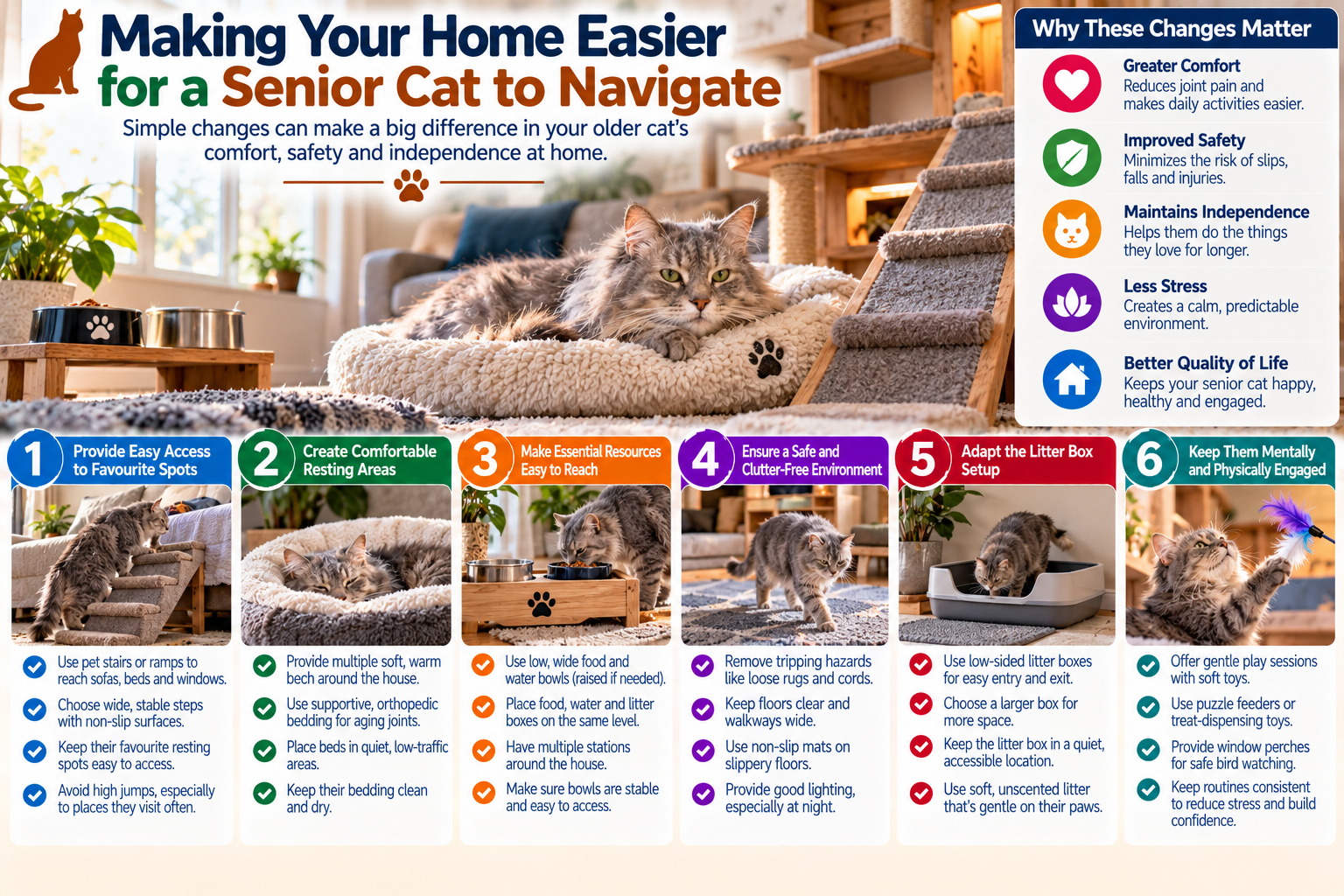

An older cat may still want the same favorite window, bed and food bowl even when jumping becomes harder. Small changes can keep those places accessible without forcing a complete rearrangement of the home.
Bring essentials within easy reach
Place food, water and a litter tray on the floor the cat uses most. In a multi-level home, duplicate resources so stairs are optional. Keep pathways clear and avoid moving every item at once; familiar locations can help a cat navigate confidently.
Walk the route with your cat
Follow your cat’s usual route through the home. The difficult step may be one you had not noticed.
| What you notice | Try this | Check next |
|---|---|---|
| Cat hesitates at a high-sided tray | Offer a low-entry option nearby | Comfortable toileting |
| Cat stops jumping to a favorite spot | Add stable steps and consult the vet | Mobility and pain signs |
Offer easy routes to favorite places
A stable step or ramp can make a sofa or window perch easier to reach. Add nonslip surfaces and check that the route does not wobble. A low-sided litter tray may help a cat that struggles to step over a high edge, while still keeping enough depth for litter.
Keep rest comfortable
Provide a warm, quiet bed away from drafts, with an easy exit and no need for a large jump. Some cats appreciate a raised position but need steps to get there. Watch which place the cat chooses rather than assuming a newly purchased bed is best.
Discuss changes with a veterinarian
Reluctance to jump, grooming changes, accidents outside the litter tray or new withdrawal may signal pain or illness. Home adjustments help access, but they do not replace diagnosis and treatment.
International Cat Care’s home modification guide describes ways to make resources accessible: International Cat Care guide.
Start with the route to the litter tray
Watch your cat travel from its usual resting place to the tray. A high-sided box, slippery floor or staircase may be the obstacle. Offer a low-entry tray nearby and stable steps to favored places. New stiffness or behavior changes deserve veterinary evaluation; see our cat pain signs guide.
Make one route easier today
Start with the route your cat uses most: from its bed to the litter tray, or from the floor to a favorite window. Add a stable step, a non-slip mat or a low-entry tray, then observe whether the cat chooses the easier route.
Keep familiar options nearby while the new arrangement becomes known. If your cat still hesitates, avoids the tray or changes its grooming habits, ask a veterinarian about pain and other medical causes.
Frequently asked questions
Is slowing down just normal aging?
Do not assume so. Pain and illness can be treatable; ask your veterinarian about new mobility changes.
Should I move every resource at once?
Add easier options first while keeping familiar ones available, then watch what your cat uses.