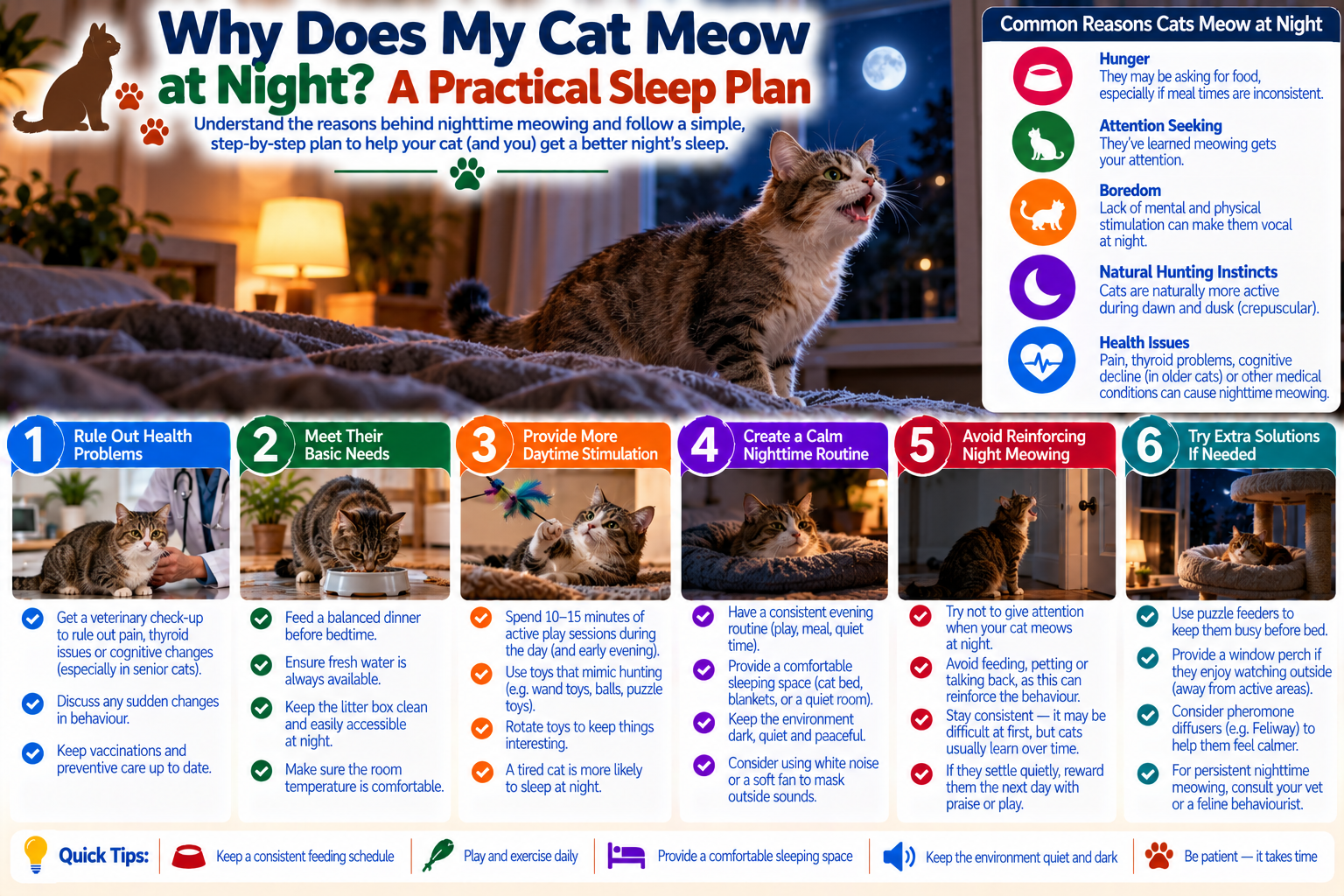

A cat calling outside the bedroom at 3 a.m. can leave everyone tired. Nighttime meowing is a behaviour to investigate, not a diagnosis. The pattern may involve activity, food expectations, access to resources, or a health problem. A useful plan begins by separating a familiar routine from a new change.
Quick answer: Check your cat’s health and basic needs, then build predictable daytime activity and a calm evening routine. Do not punish vocalising or keep your cat awake all day. New, intense, or persistent night calling—especially in an older cat—deserves a veterinary check.
Start with what changed
Note when the calling began, where your cat stands, and what happens afterward. Record changes in appetite, drinking, litter-box use, mobility, and interactions. A cat who calls beside an empty bowl presents a different puzzle from one who wanders apparently disoriented.
Arrange a vet appointment for a new or worsening pattern. Pain and other medical conditions can affect sleep and vocalisation. If there is straining to urinate with little or no urine, difficulty breathing, collapse, or severe distress, seek urgent care rather than trying a behaviour routine first.
Make the overnight essentials easy to reach
Check water, a clean litter tray, a comfortable resting place, and an unobstructed route between them. In a multi-cat household, one cat may block a hallway without an obvious fight. Spread resources so the quieter cat does not have to pass a rival to use them.
For an older cat, consider whether stairs, high bed edges, or slippery floors have become difficult. Keep the arrangement predictable. A gentle night light may help navigation where appropriate, but it does not replace assessment of a cat who seems confused.
| Pattern | Check | Practical response |
|---|---|---|
| Calling before breakfast | Meal timing and total ration | Plan feeding rather than repeatedly adding snacks |
| Calling at a closed door | Access expectations and available resting areas | Introduce a consistent sleeping arrangement gradually |
| Restless wandering | Health, pain, sensory or age-related changes | Arrange veterinary assessment |
| Conflict near resources | Other cats and narrow routes | Add separated resources and seek behaviour support |
Build a repeatable evening
Offer suitable interactive play earlier in the evening, adapting speed and duration to age and mobility. Let your cat stalk and catch a safe toy rather than chasing light endlessly. Put string and wand toys away after supervised play. Follow with an appropriate part of the normal food ration if that suits the feeding plan.
Think of this as an invitation, not a workout quota. A senior cat may prefer several gentle movements across a rug. A young cat may enjoy several short sessions. Do not deprive your cat of daytime sleep to force exhaustion at night.
Be consistent without ignoring illness
Once health and access needs are addressed, decide on a routine the household can sustain. If one person feeds at every meow and another shouts, the response is unpredictable. A timed feeder can separate breakfast from your waking up, but introduce and test it first, check portions, and ensure each cat can eat safely.
For example, record play, dinner, bedtime, and the first calling episode for several nights. Change one part of the routine at a time. This makes improvement or deterioration easier to interpret than trying four new products together.
Avoid punishment: Shouting, spraying water, and startling a cat can increase stress and damage trust. If the pattern persists, ask your vet about a qualified feline behaviour professional.
For daytime ideas, see indoor cat enrichment. Also review subtle signs of pain and feeding amounts.
Frequently asked questions
Should I ignore all nighttime meowing?
No. First check safety, health, and access to resources. A planned response to a familiar attention pattern is different from overlooking a new symptom.
Will a second cat solve the problem?
Not reliably. Another cat may add social stress and needs a careful introduction. Work out the cause before changing the household.
Is night calling normal in older cats?
Do not dismiss a new change as normal ageing. Your vet can investigate medical, sensory, pain-related, and cognitive causes.