
Brushing your cat’s teeth is easier to introduce as a series of tiny, comfortable steps than as a full-mouth task on day one. The goal is regular plaque control on healthy, comfortable teeth. Brushing cannot remove established tartar or treat a painful mouth, so start with a veterinary dental assessment if you have concerns.
Quick answer: Use a small soft brush and toothpaste made for cats. Build gradually from gentle facial touch to brushing the outer tooth surfaces. Aim for daily care once tolerated, but stop for pain or distress and ask your vet about a suitable plan.
Check whether the mouth needs treatment first
Bad breath, drooling, bleeding, dropping food, chewing differently, or reluctance to eat may indicate dental disease. Cats can continue eating despite discomfort. Do not assume a full bowl being emptied proves the mouth is healthy.
Arrange an examination before starting if you see these changes. Home brushing complements professional care; it does not replace treatment for diseased teeth. After a dental procedure, follow the vet’s instructions about when and how home care can restart.
Choose equipment your cat can accept
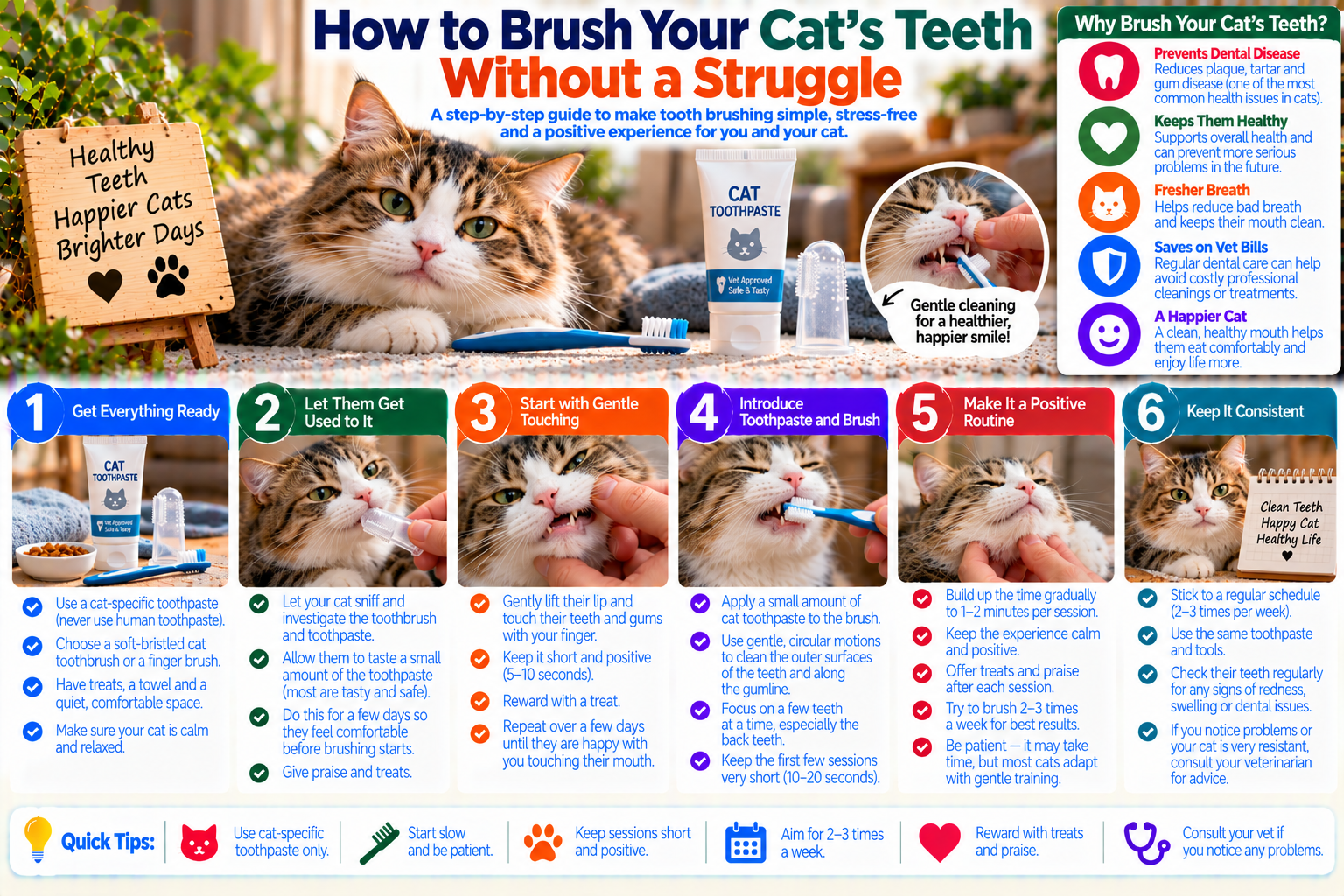
A small, soft cat toothbrush gives better access than an oversized human brush. Your vet may suggest an initial alternative while your cat learns. Use feline toothpaste and avoid human toothpaste, baking soda, or improvised cleaning products. Keep each pet’s brush separate and clean it after use.
Choose a calm location with a secure footing and an easy exit. Prepare everything before inviting your cat over. A lap works for some cats; a stable low surface or familiar bed suits others. Do not turn a high tabletop into a place where a startled cat can fall.
Teach one stage at a time
- Briefly touch the cheek, then offer a reward or another interaction your cat enjoys.
- When that is comfortable, lift the lip for a moment without forcing the jaw open.
- Let your cat investigate a small amount of feline toothpaste according to its directions.
- Introduce the brush beside the mouth, then a brief touch to an easy-to-reach outer tooth surface.
- Add a few gentle strokes before gradually expanding the area.
Keep the session short enough that you can finish before avoidance begins. If your cat turns away, flattens their ears, lashes their tail, or struggles, step back to an easier stage. There is no benefit in winning a wrestling match and making tomorrow’s session harder.
| Stage | Comfortable response | Next small step |
|---|---|---|
| Cheek touch | Cat stays relaxed | Brief lip lift |
| Lip lift | No withdrawal or tension | Brush touches one outer tooth |
| One area | A few gentle strokes accepted | Add a neighbouring area |
| Routine | Voluntary, predictable participation | Maintain regular care |
Brush gently along the gumline
Follow your veterinary team’s demonstration. Focus on accessible outer surfaces, using gentle movements where the teeth meet the gums. You generally do not need to force the mouth wide open to reach these surfaces. Work within your cat’s tolerance and avoid scrubbing irritated tissue.
Daily brushing is the useful long-term target. If you can currently manage only one area, build from that instead of postponing all care until a perfect session is possible. Ask your vet about appropriate additional dental products when brushing remains limited.
Make the routine easy to repeat
Link practice to an existing calm moment, such as after your evening meal. Store the kit together, out of reach. A simple calendar mark can help the household avoid both missed care and repeated handling by different people.
Stop for discomfort: New bleeding, pain, sudden resistance, or changes in eating need veterinary attention. Do not keep brushing through them.
Read signs your cat may be in pain and making veterinary trips easier for related support.
Frequently asked questions
Can dental treats replace brushing?
They may be useful additions when appropriately chosen, but they do not automatically replace mechanical plaque removal or veterinary dental treatment. Ask which products suit your cat.
Must I open my cat’s mouth fully?
Usually not for the outer surfaces. A gentle lip lift offers access; your vet can demonstrate safe positioning.
Is it too late to start with an adult cat?
No. Check oral health first and introduce each handling step gradually. The pace depends on comfort and experience.